

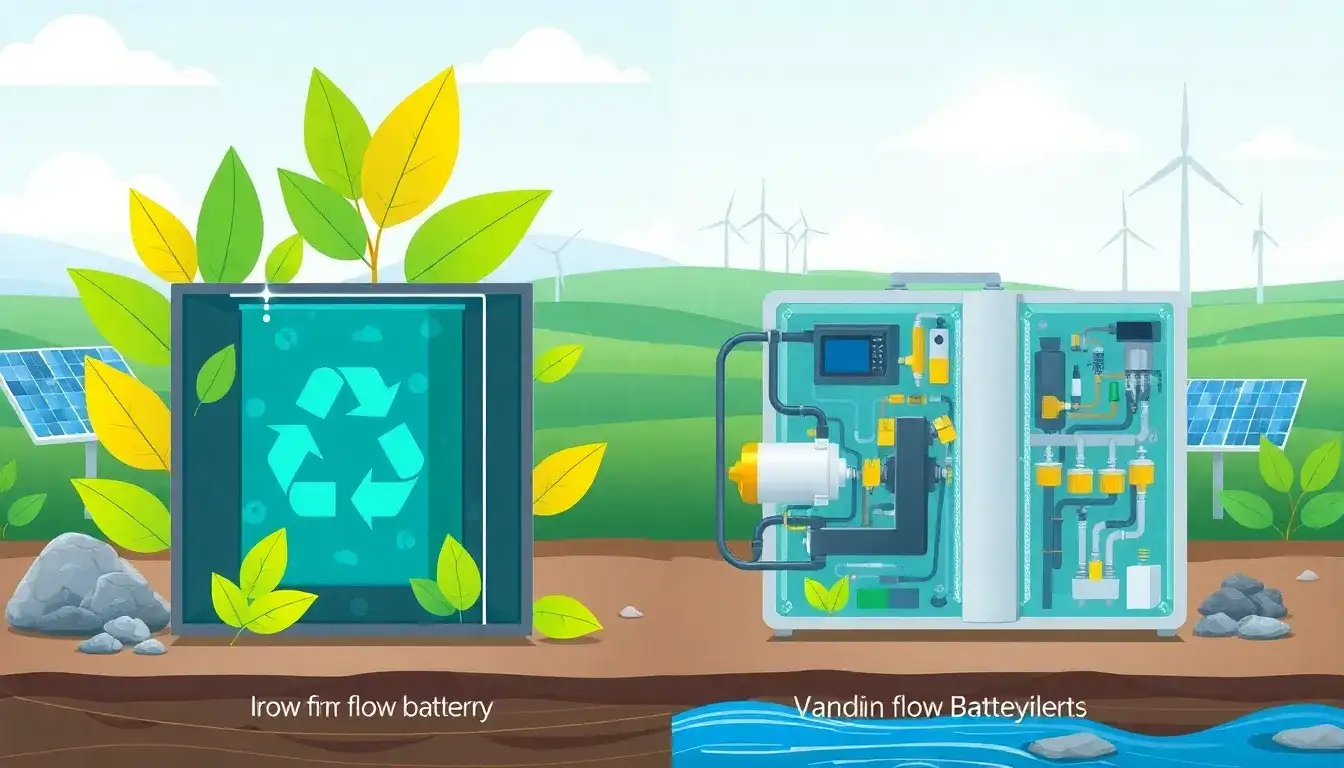
- Lower environmental impact in production and end-of-life: Iron flow batteries use earth-abundant, easy-to-source materials like iron, salt, and water, which results in cleaner production processes with less environmental footprint compared to vanadium-based batteries. They are easier to recycle and their electrolyte can be reused, reducing waste and environmental harm at disposal.
- Reduced climate and environmental footprint: Independent lifecycle assessments show iron flow batteries have the lowest climate and environmental footprint among flow battery technologies evaluated, including vanadium flow batteries, zinc, and lithium-ion. This includes lower impacts from raw material extraction, manufacturing, and assembly.
- No reliance on critical or scarce minerals: Iron is abundantly available globally and does not fall under critical minerals categories, unlike vanadium which can be limited and supply-constrained. This improves sustainability by avoiding supply chain risks and environmental damage from critical mineral extraction.
- Longer lifespan reducing resource use: Iron flow batteries have long durability and lifespan (about 20 years), which means fewer batteries need to be produced and replaced over time compared to other chemistries, decreasing the overall environmental impact across the battery lifecycle.
- Safety and low environmental risks: Iron flow batteries feature non-flammable, non-toxic chemistry with minor safety risks, contributing to a lower environmental risk profile during operation and after disposal, enhancing sustainability.
In summary, iron flow batteries offer a more sustainable energy storage solution than vanadium flow batteries due to their use of abundant, non-critical materials, lower environmental footprint in manufacturing and disposal, longer lifetime, and safer chemistry.
Original article by NenPower, If reposted, please credit the source: https://nenpower.com/blog/what-are-the-main-advantages-of-iron-flow-batteries-over-vanadium-flow-batteries-in-terms-of-sustainability/

