

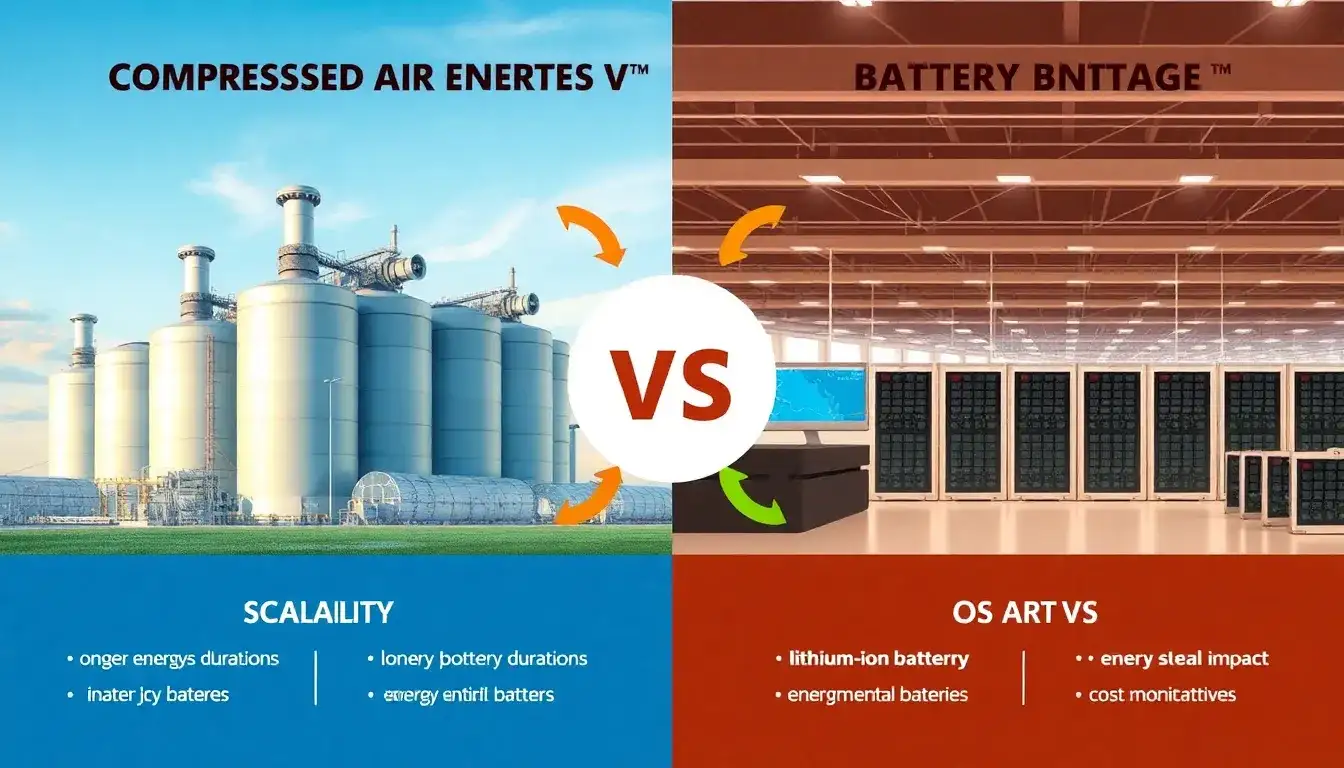
Advantages of CAES over Battery Energy Storage
-
Longer Lifespan and Lower Maintenance:
- CAES systems have a longer lifespan compared to batteries. The components of CAES, like pressure vessels, require less maintenance and can operate for decades with little upkeep.
- In contrast, batteries like lithium-ion have a shorter lifespan, typically lasting only a few years before needing replacement.
-
Environmental Sustainability:
- CAES systems do not use toxic materials found in some batteries, reducing environmental impact and making them more sustainable.
- CAES can be more environmentally friendly because it doesn’t contribute to electronic waste or require rare materials.
-
Capacity and Scalability:
- CAES can store large amounts of energy, making it suitable for both small-scale and large-scale applications.
- While batteries are more efficient for smaller applications, CAES can handle higher energy demands without requiring extensive infrastructure expansion.
-
Cost-Effectiveness:
- Implementing and maintaining CAES is generally more cost-effective compared to some other energy storage technologies like pumped hydro storage.
- Although less efficient than battery systems, CAES offers economic benefits due to lower costs and long-term operating life.
-
Flexibility and Versatility:
- CAES can be used not only for electrical energy storage but also for powering pneumatic tools and machinery, making it versatile across various industries.
- Additionally, CAES can provide “black start” capabilities, allowing operations to resume without an external power source during outages.
However, it is important to note that CAES systems typically have lower round-trip efficiency compared to batteries due to energy loss during compression and expansion processes. But advances in thermal energy management are improving CAES efficiency.
Original article by NenPower, If reposted, please credit the source: https://nenpower.com/blog/what-are-the-main-advantages-of-caes-over-battery-energy-storage-2/

