

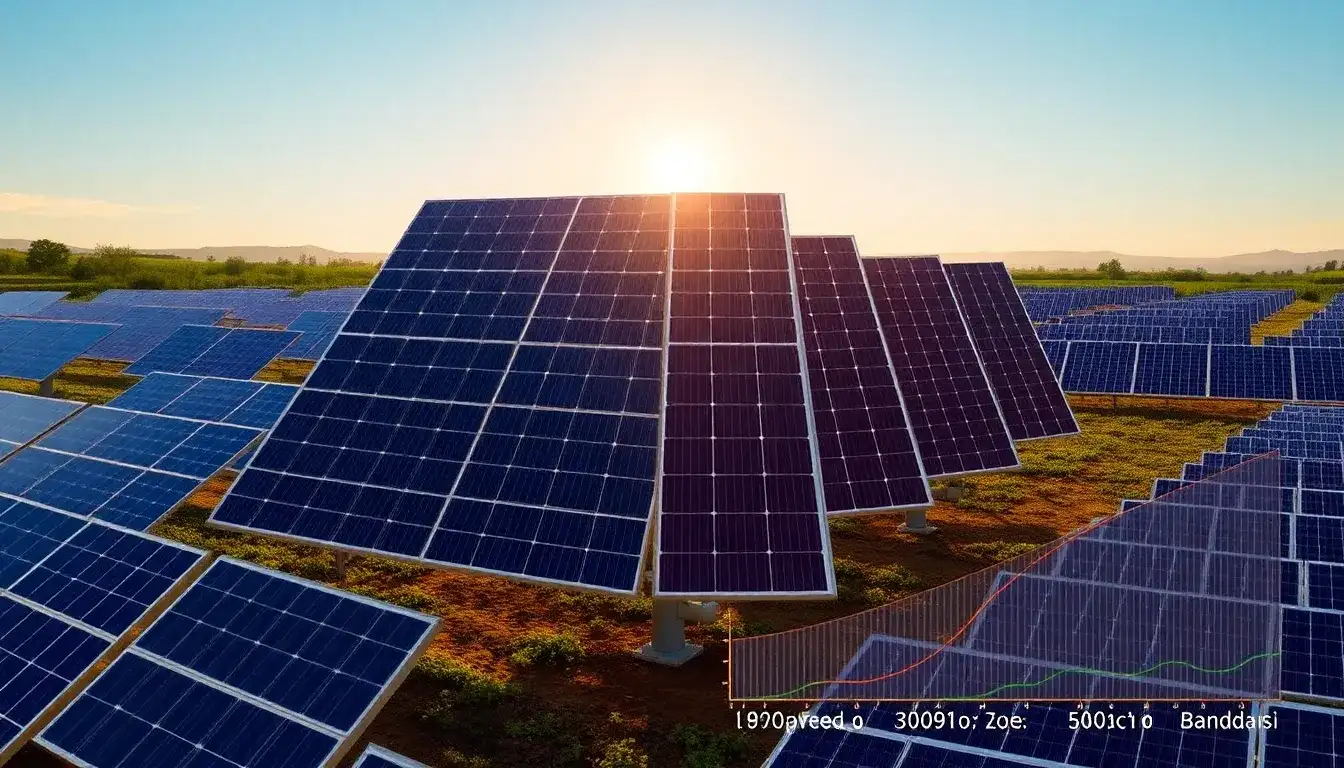
Bifacial solar panels offer several main advantages over traditional monofacial (single-sided) solar panels, stemming primarily from their ability to capture sunlight from both the front and back sides of the panel. The key benefits include:
1. Increased Energy Production and Efficiency
- Higher energy yield: Bifacial panels can generate significantly more energy—often cited as up to 30% more than monofacial panels—by capturing direct sunlight on the front and reflected light (albedo effect) from the rear side, enhancing overall power output.
- Better performance in diffuse and low-light conditions: Their ability to absorb light from both sides allows bifacial panels to perform better during cloudy days or in shaded environments compared to monofacial panels.
- Maximized energy capture: When installed elevated or at angles that allow light reflection onto the rear side (e.g., over reflective surfaces like white gravel, snow, or sand), bifacial panels maximize energy generation.
2. Enhanced Durability and Longevity
- Robust construction: Typically featuring tempered glass on both sides instead of a polymer backsheet, bifacial panels have improved resistance to weather, UV rays, high temperatures, and mechanical stress such as strong winds or hail.
- Longer lifespan and warranties: The glass-glass design helps extend panel lifespan and many manufacturers offer longer performance warranties, sometimes up to 30 years.
- Reduced potential-induced degradation (PID): The absence or minimization of metal framing in some bifacial designs reduces risks of degradation related to grounding and electrical losses, improving durability.
3. Aesthetic and Design Flexibility
- Sleek, modern appearance: Bifacial panels often have a frameless or minimal-frame design with transparent back layers, which many find visually appealing. This makes them suitable for architectural integration in both residential and commercial projects.
- Versatile installation options: Bifacial panels can be installed in various configurations—ground-mounted, vertically, or at angles—that optimize light capture from both sides, unlike monofacial panels which rely solely on front exposure.
4. Space Optimization and Maintenance Benefits
- Higher energy per panel footprint: The increased efficiency means fewer panels may be required to meet energy needs, saving space and potentially reducing balance-of-system costs.
- Lower maintenance: The glass surfaces are easier to clean and maintain, with some bifacial panels having hydrophobic coatings that reduce dirt accumulation.
- Less shading impact: The mounting systems for bifacial panels minimize shading on the backside, further improving energy yield.
Summary Table of Bifacial vs. Monofacial Panels
| Feature | Bifacial Solar Panels | Monofacial Solar Panels |
|---|---|---|
| Energy generation | Up to 30% more due to dual-side light absorption | Single-side light absorption |
| Performance in diffuse light | Superior | Standard |
| Durability | Glass-glass design; more resistant to weather & PID | Glass front + polymer backsheet; less durable |
| Aesthetic appeal | Sleek, frameless, transparent back | Traditional opaque backsheet, framed |
| Installation flexibility | Can be ground-mounted, angled, vertical | Usually fixed angle, front-facing only |
| Maintenance | Easier cleaning, hydrophobic surfaces available | Standard cleaning needs |
| Warranty | Often longer (up to 30 years) | Typically shorter warranties |
In conclusion, bifacial solar panels provide clear advantages in energy production, durability, and design flexibility, making them ideal for commercial and utility-scale projects or residential ground-mounted systems where reflected light can be harnessed effectively. Their benefits are most pronounced in installations that allow light to reach the rear of the panel and on reflective surfaces. However, for traditional rooftop installations with limited rear exposure, monofacial panels may remain more practical.
Original article by NenPower, If reposted, please credit the source: https://nenpower.com/blog/what-are-the-main-advantages-of-bifacial-solar-panels-over-monofacial-ones/

