

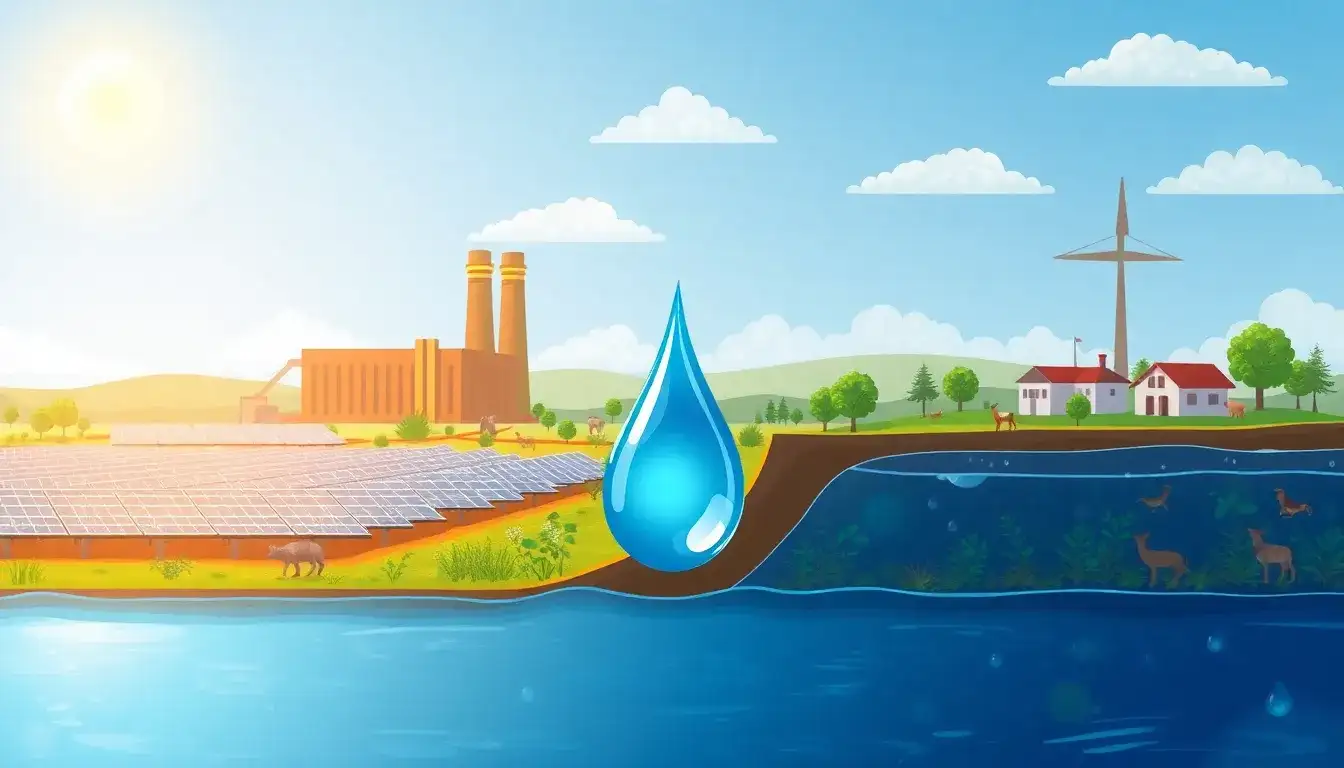
Long-term water savings from using solar energy are substantial due to the fundamentally different way solar power generates electricity compared to traditional thermoelectric power plants. Here are the key points summarizing these savings:
Water Savings from Solar Energy Use
- No Water Needed for Operation: Unlike conventional fossil fuel and nuclear power plants that use large volumes of water for cooling (wet cooling systems), solar photovoltaic (PV) panels require virtually no water during electricity generation. This eliminates the massive water withdrawals associated with thermoelectric plants, which are among the largest industrial consumers of water.
- Household Water Savings: A typical U.S. household installing rooftop solar panels can save an average of about 16,200 gallons of water per year because the solar system reduces reliance on grid electricity generated by water-intensive power plants. In some high-demand or arid states like California, this saving can increase to as much as 53,000 gallons annually, equivalent to about 60% of average household water use in the U.S.
- Massive National Impact: Scaling to the entire residential energy sector, the U.S. consumes about 2.6 trillion gallons of water annually for electricity generation. Transitioning to solar in homes significantly cuts this virtual water footprint, contributing to large-scale conservation of water resources vital for ecosystems and human consumption.
- Indirect Water Conservation Benefits: Beyond avoiding water use for cooling, solar energy also reduces water loss in energy transmission and lowers environmental impacts related to water treatment and pollution from fossil fuel extraction and combustion.
- Use in Water-Scarce Regions: Solar energy also enables sustainable water management technologies like solar-powered desalination, which treats seawater or brackish water to produce potable water without heavy water use or pollution, especially critical in arid regions.
Summary Table of Water Savings
| Aspect | Details |
|---|---|
| Water use in operation | Solar panels use essentially no water for electricity generation |
| Household annual water saving | ~16,200 gallons nationally; up to 53,000 gallons in some states |
| Percentage of average household water use | Up to 60% in states like California |
| National water saving | Reduction of trillions of gallons of water use annually |
| Additional benefits | Supports water-efficient technologies, reduces water pollution |
| Special applications | Solar-powered desalination for sustainable water supply |
In conclusion, solar energy’s long-term water savings come primarily from eliminating the water-intensive cooling needs of conventional power plants. This results in significant conservation of freshwater resources, benefiting households, communities, and ecosystems alike. The adoption of solar thus offers a sustainable, water-wise energy future.
Original article by NenPower, If reposted, please credit the source: https://nenpower.com/blog/what-are-the-long-term-water-savings-from-using-solar-energy/

