

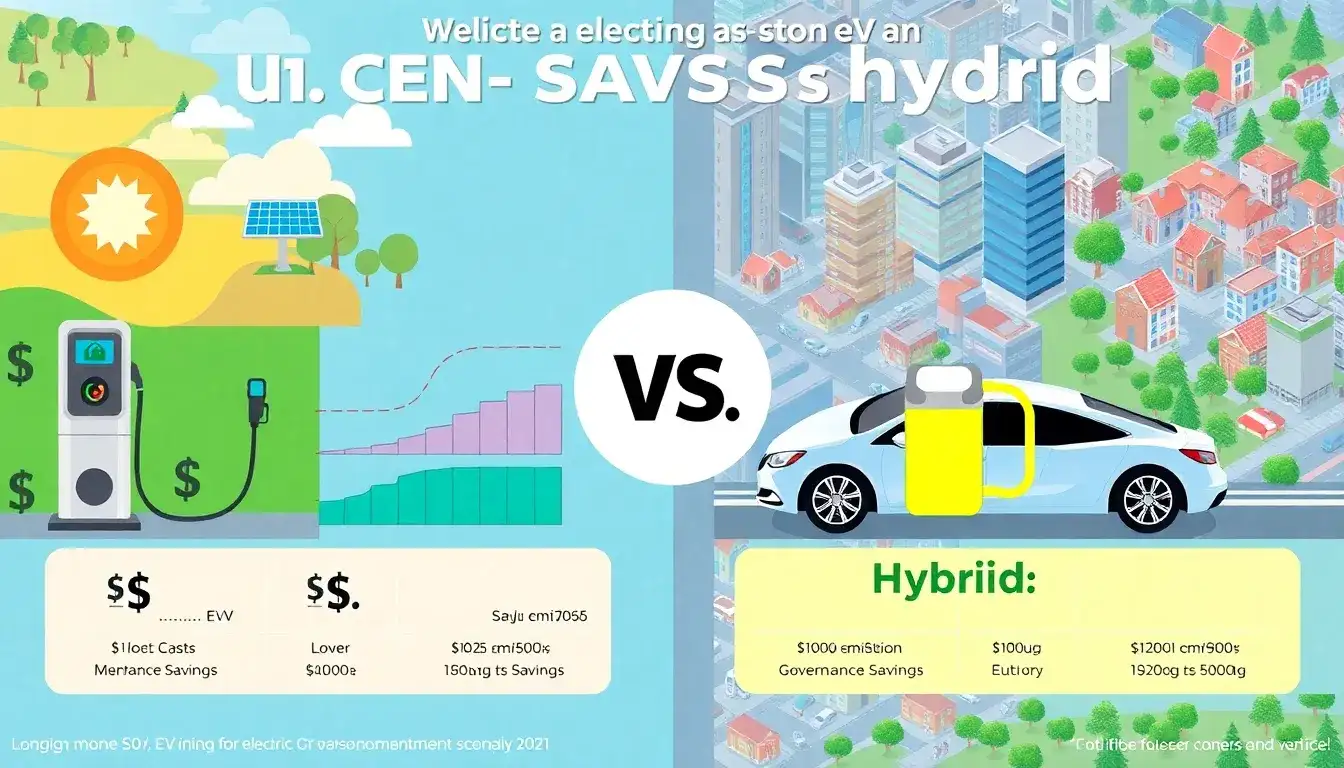
Electric vehicles (EVs) and hybrids offer significant long-term savings compared to conventional gasoline vehicles, though the extent varies by vehicle type, location, and usage patterns. Here’s a detailed comparison:
Fuel Savings
- EVs: Lower electricity costs vs. gasoline result in annual savings of up to $2,200 in states like Idaho, where gas prices are high and electricity is cheap. On average, EVs cost half as much per mile to operate compared to gas vehicles.
- Hybrids: Save up to $1,500 annually by combining electric power with gasoline, though savings depend on fuel efficiency and local gas prices.
Maintenance Costs
- EVs: Reduce repair and maintenance costs by ~50% due to fewer moving parts (no oil changes, transmission repairs, or exhaust system upkeep).
- Hybrids: Maintenance costs fall between EVs and gas vehicles but still benefit from regenerative braking and reduced engine wear.
Incentives
- EVs: Qualify for federal tax credits (up to $7,500), state rebates, and local discounts (e.g., reduced registration fees, carpool lane access).
- Hybrids: Often qualify for smaller state-specific incentives but lack access to some federal EV-specific programs.
Environmental Savings
- EVs: Emit 75% fewer greenhouse gases (up to 1 lb. CO2 savings per mile driven) when accounting for the full energy lifecycle.
- Hybrids: Offer moderate emissions reductions, typically 20-35% less than gas-only vehicles.
State-Specific Savings (Annual)
| State | EV Savings | Hybrid Savings |
|---|---|---|
| Idaho | $2,200 | $1,500 |
| West Virginia | $1,800 | ~$1,100 |
| Arkansas | $1,500 | ~$1,000 |
Table adapted from Argonne National Lab data.
Long-Term Ownership
- EVs: Higher upfront cost but offset by $2,000+ annual savings and lower maintenance. Battery degradation is minimal in modern EVs, with most warranties covering 8-10 years.
- Hybrids: Lower initial cost than EVs but smaller annual savings and higher maintenance than EVs.
For drivers in states with older, less efficient vehicles (e.g., Idaho, Montana), EVs deliver the greatest lifetime savings. Hybrids remain a cost-effective transitional option where charging infrastructure is limited.
Original article by NenPower, If reposted, please credit the source: https://nenpower.com/blog/what-are-the-long-term-savings-of-owning-an-electric-vehicle-versus-a-hybrid/

