

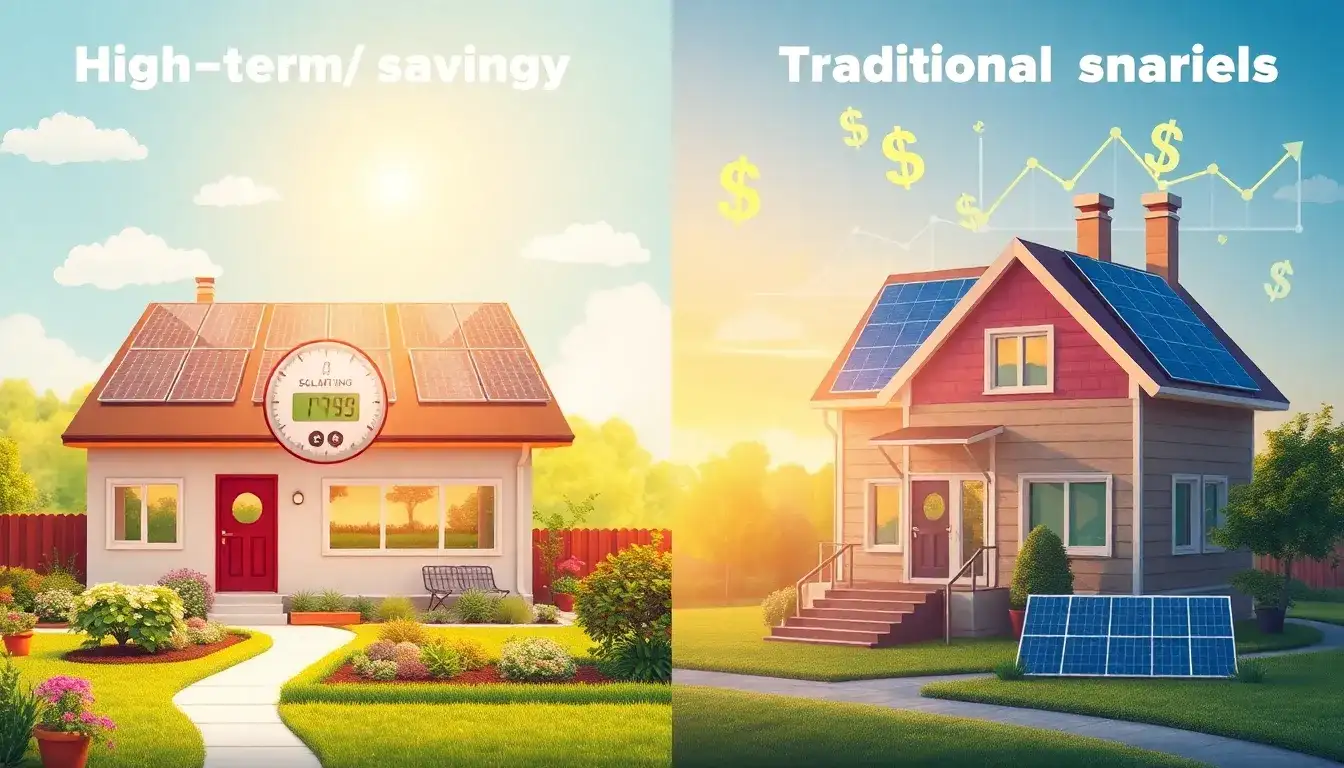
Long-Term Savings of High-Efficiency Solar Panels Compared to Traditional Ones
High-efficiency solar panels offer several advantages over traditional ones, particularly in terms of long-term savings. Here’s a comparison of their financial benefits:
Key Differences in Long-Term Savings
- Electricity Production and Savings:
- High-Efficiency Panels: These panels can produce more electricity from the same amount of sunlight compared to traditional panels. As a result, they offer greater potential savings on electric bills. For instance, a system with Maxeon’s 22.8% efficient panels can produce more electricity and provide higher savings compared to a system with 21% efficient panels.
- Traditional Panels: Although they are less expensive upfront, they produce less electricity from the same sunlight, resulting in lower savings over time.
- Cost vs. Savings:
- High-Efficiency Panels: While they are more costly initially, they can save you more money in the long run. This is because they produce more electricity, which leads to higher reductions in utility bills.
- Traditional Panels: The lower upfront cost might make them seem more attractive initially, but their lower efficiency means less savings over time.
- Break-Even Point and Lifetime Savings:
- High-Efficiency Panels: Despite higher initial costs, the increased efficiency can lead to a faster break-even point in some scenarios because they generate more electricity per unit area.
- Traditional Panels: Generally have a longer break-even period due to lower efficiency, but still provide significant lifetime savings.
- Examples of Lifetime Savings:
- High-Efficiency Panels: For example, a system using high-efficiency panels might save around $99,703 over 25 years compared to $91,772 for less efficient panels, assuming similar conditions.
- Traditional Panels: While exact figures vary by panel efficiency and local electricity costs, traditional panels will typically result in lower savings compared to high-efficiency models.
Strategies to Maximize Savings
To get the most out of either high-efficiency or traditional solar panels, consider the following strategies:
- Regular Maintenance: Ensure panels are clean and free of debris to maintain efficiency.
- Smart Home Automation: Optimize energy use by scheduling high-energy activities during peak solar production hours.
- Battery Storage: Use excess energy generated during the day by storing it in batteries for later use.
In summary, high-efficiency solar panels can provide greater long-term savings due to increased electricity production and reduced energy costs, but at a higher initial cost. Traditional panels, while less expensive upfront, result in lower savings over time due to their lower efficiency.
Original article by NenPower, If reposted, please credit the source: https://nenpower.com/blog/what-are-the-long-term-savings-of-high-efficiency-solar-panels-compared-to-traditional-ones/

