

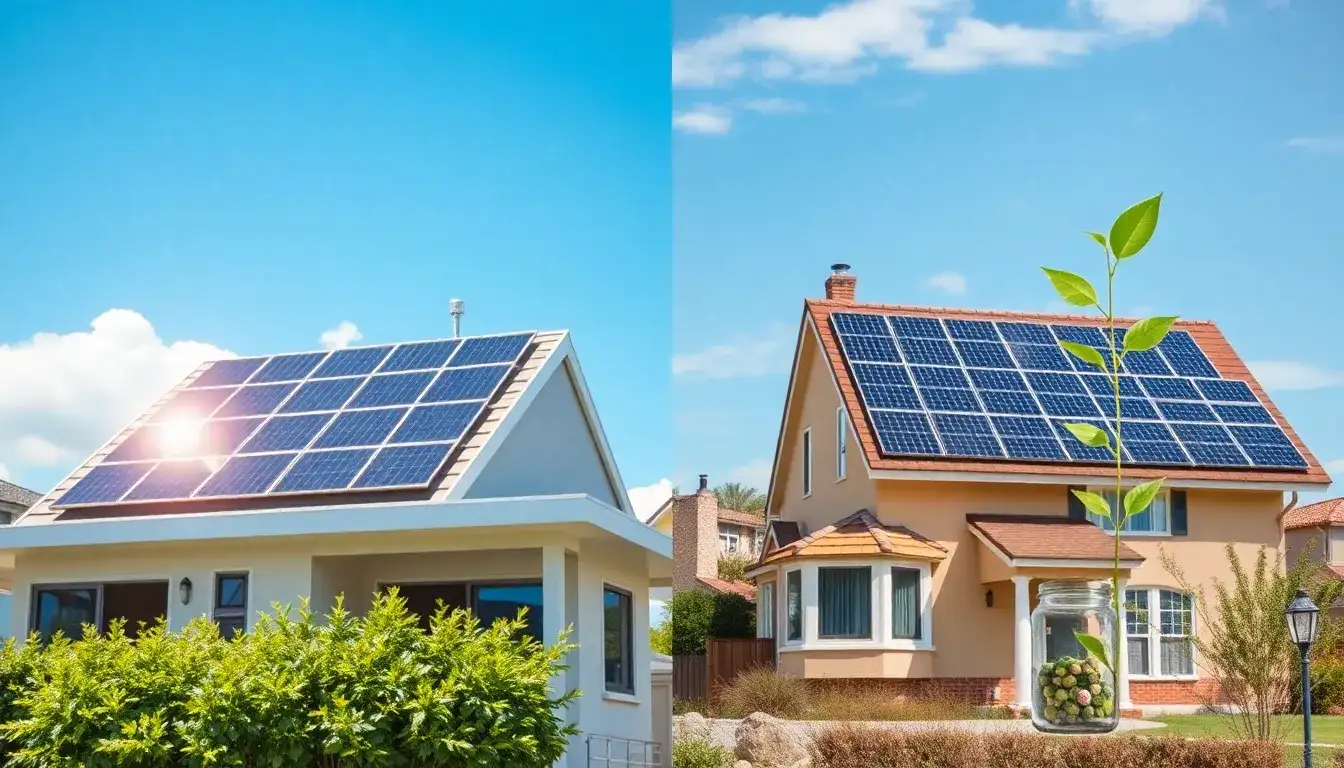
High-efficiency Solar Panels vs. Lower-efficiency Panels
High-efficiency solar panels yield greater long-term savings compared to lower-efficiency panels, primarily due to their ability to convert a higher percentage of sunlight into electricity, producing more energy over their lifespan. Here’s a detailed comparison and explanation based on current market data and financial considerations:
How Efficiency Affects Long-Term Savings
- Energy Production: Higher-efficiency panels convert more sunlight into electricity per square foot. For example, panels with around 22.8% efficiency (like Maxeon’s top models) produce more annual electricity than panels with about 21% efficiency, given the same physical size and installation conditions.
- Electric Bill Savings: Increased energy output directly translates to higher savings on electricity bills. In a comparative example in Massachusetts, a system using 22.8% efficient panels yielded approximately 9,680 kWh annually, fully offsetting the household’s electricity usage, while a 21% efficient panel system produced 8,910 kWh annually, covering only 92% of usage.
Financial Implications Over the System’s Lifetime
- Upfront Costs: High-efficiency panels generally have a higher upfront cost per watt. Using the example of the Maxeon system, the 22.8% efficient panels had a system cost after federal tax credits of about $18,788, compared to $14,515 for the 21% efficient system.
- Net Savings Over 25 Years: Despite the higher initial investment, the more efficient system saved significantly more in electricity bills over 25 years ($99,703 vs. $91,772). This resulted in greater net savings ($80,915 vs. $77,257), meaning the premium paid for higher efficiency was more than compensated by electricity bill reductions, yielding a net additional saving of about $3,658 over 25 years.
- Payback Period and Return on Investment: Homeowners typically see payback periods ranging from 6 to 10 years, after which solar energy essentially becomes free. Higher-efficiency panels may have slightly longer paybacks due to cost but can yield better financial returns long-term because of greater energy production and savings. These returns can outperform other low-risk investments, especially when factoring in rising electricity rates and incentives.
Additional Considerations
- Space Constraints: For homes with limited roof space, higher-efficiency panels maximize energy output per square foot, enabling a fuller energy offset than lower-efficiency panels in the same area, making them more valuable despite higher cost.
- Durability and Warranty: High-efficiency panels often come with stronger warranties and slower degradation rates (around 8% degradation over 25 years) ensuring reliable energy production and sustained savings over the system’s lifetime.
- Ongoing Management: To maximize savings, regular system monitoring, maintenance, and efficient energy use habits are recommended regardless of panel efficiency, as these practices help sustain panel performance and optimize electricity consumption.
Summary Table: High-Efficiency vs. Lower-Efficiency Solar Panels (Example Data)
| Feature | High-Efficiency (22.8%) | Lower-Efficiency (21%) |
|---|---|---|
| System Size (kW) | 8.8 | 8.1 |
| Annual Electricity Production | 9,680 kWh | 8,910 kWh |
| Usage Offset | 100% | 92% |
| System Cost after Tax Credit | $18,788 | $14,515 |
| 25-Year Electric Bill Savings | $99,703 | $91,772 |
| 25-Year Net Savings | $80,915 | $77,257 |
| Additional Net Savings Over 25 Years | +$3,658 | — |
Conclusion
While high-efficiency solar panels cost more upfront, their superior energy production creates greater electricity bill savings across their lifespan, resulting in higher total net savings—often by several thousand dollars over 25 years. They are particularly advantageous when roof space is limited or when maximizing long-term financial returns is a priority. The key is to balance upfront costs with expected lifetime savings, local energy prices, installation specifics, and available incentives to determine the best option for each homeowner.
Original article by NenPower, If reposted, please credit the source: https://nenpower.com/blog/what-are-the-long-term-savings-of-high-efficiency-solar-panels-compared-to-lower-efficiency-ones/

