

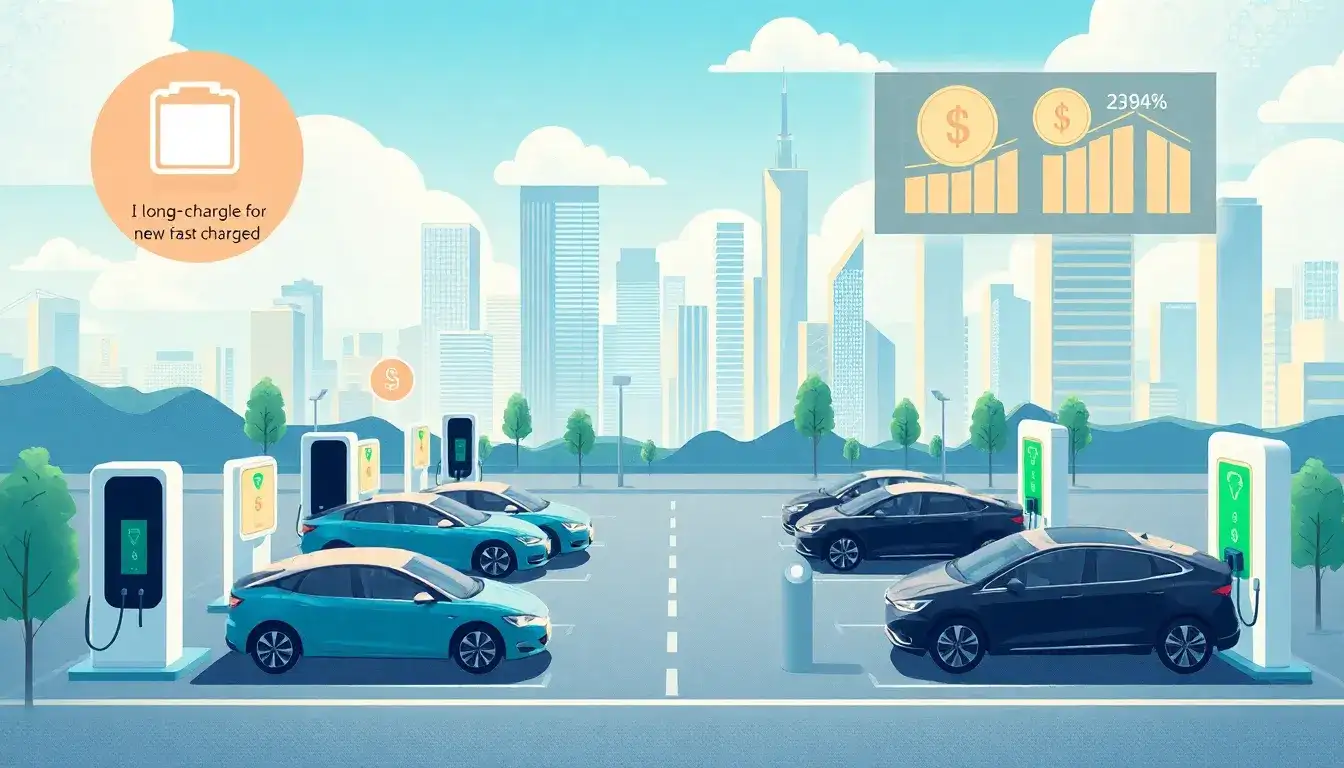
Frequent fast charging of electric vehicle (EV) batteries has notable long-term financial implications primarily related to accelerated battery degradation, which can increase overall ownership costs.
Impact of Frequent Fast Charging on Battery Health and Costs
- Accelerated Battery Degradation: Using DC fast chargers (DCFC) frequently—defined as three or more times per month—elevates battery wear compared to slower charging methods like Level 1 or Level 2 charging. This is because rapid charging involves high currents and elevated temperatures that stress battery cells, especially in hot climates, leading to faster capacity loss over time.
- Increased Battery Replacement or Reduced Resale Value: Accelerated degradation can shorten the effective lifespan of an EV battery, which is one of the most expensive components of the vehicle. This can lead to higher costs for battery replacement or refurbishment, and reduce the vehicle’s resale value, affecting total cost of ownership.
- Manufacturer Recommendations and Warranty Considerations: Many automakers advise limiting frequent use of fast charging to prolong battery life, indicating that ignoring these recommendations might lead to financial drawbacks such as out-of-warranty battery servicing costs.
Economic Trade-offs of Fast Charging
- Convenience vs. Cost: Fast charging offers significant time savings (about 20 times more range per hour than Level 1 chargers) and enhances usability for long-distance travel. This convenience can justify the higher charging cost despite the potential long-term battery wear.
- Higher Charging Costs: Fast charging is generally more expensive than home charging, with public fast chargers often costing at least $0.04 more per kWh than home Level 2 chargers. The upfront cost of installing fast charging equipment at home can also be high.
- Potential Operational Savings: Despite higher immediate charging costs and potential battery degradation, EVs still typically have lower operating costs than gasoline vehicles, which can offset some of the long-term expenses associated with battery wear.
Summary
| Factor | Financial Implication |
|---|---|
| Frequent DC fast charging | Accelerated battery degradation → higher battery replacement costs and lower resale value |
| Higher per kWh cost at public fast chargers | Increased charging expenses compared to home charging |
| Time-saving and usability gains | Can justify higher costs; improves vehicle practicality |
| Battery lifespan management | Manufacturer recommendations to limit fast charging to reduce long-term costs |
In conclusion, while frequent fast charging improves convenience and usability, it accelerates battery degradation and leads to higher long-term financial costs due to earlier battery replacement and possible depreciation. Balancing the frequency of fast charging with slower charging methods can optimize both battery health and total ownership costs.
Original article by NenPower, If reposted, please credit the source: https://nenpower.com/blog/what-are-the-long-term-financial-implications-of-frequent-fast-charging-on-ev-batteries/

