

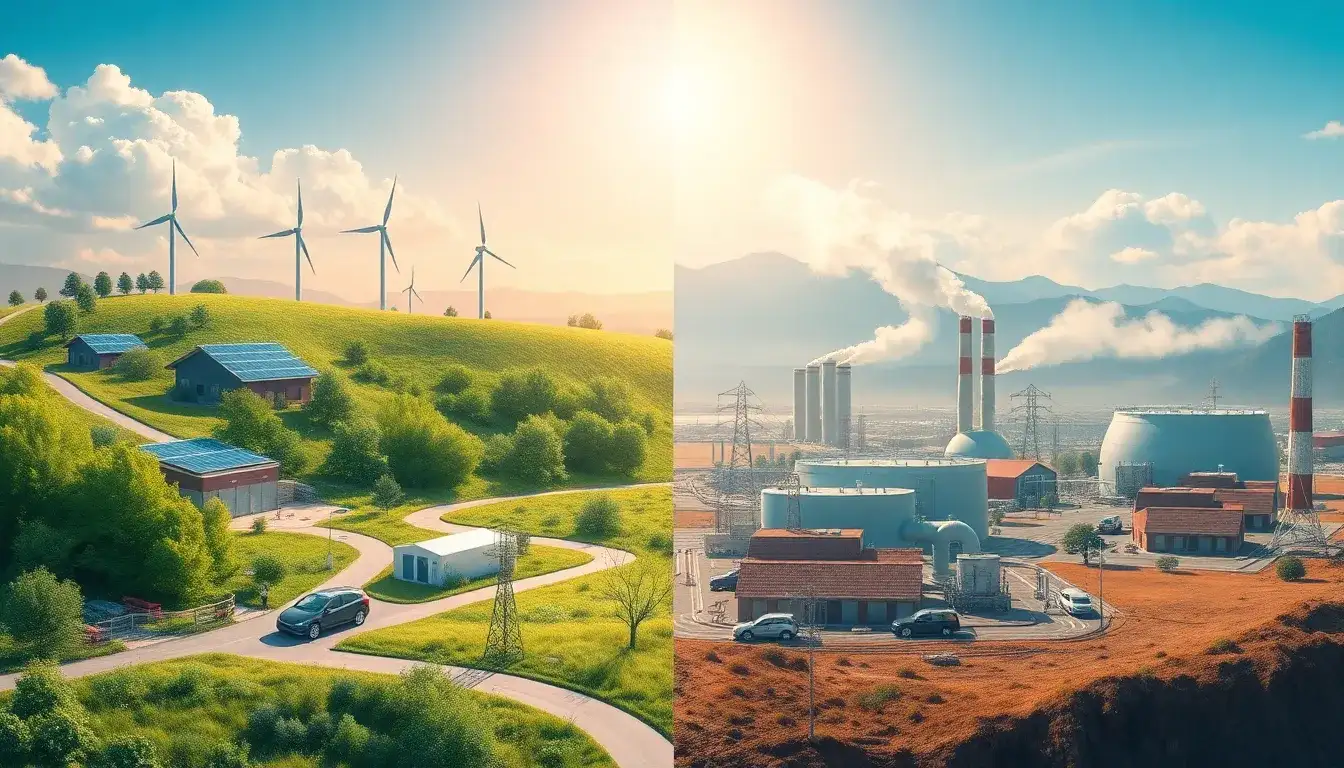
The long-term environmental benefits of using battery storage instead of natural gas primarily stem from battery storage’s ability to support renewable energy integration, reduce reliance on fossil fuels, and lower greenhouse gas emissions.
Key Environmental Benefits of Battery Storage Over Natural Gas
- Enables Greater Use of Renewable Energy: Battery storage systems store excess renewable energy from intermittent sources like solar and wind during peak generation times and release it when production is low. This smooths out supply variability and allows for a higher penetration of clean energy on the grid, reducing the need to rely on natural gas plants for balancing supply.
- Reduces Greenhouse Gas Emissions: By displacing natural gas generation, which emits significant amounts of CO2 and other pollutants, battery storage helps lower overall carbon emissions. Using stored renewable energy during peak demand reduces fossil fuel combustion and contributes to climate change mitigation.
- Improves Grid Stability and Energy Security: Battery storage enhances grid reliability by balancing supply and demand. Unlike natural gas plants, battery systems provide rapid response without combustion emissions or fuel supply vulnerabilities, reducing the environmental footprint associated with fuel extraction and transportation.
- Minimizes Resource Depletion and Air Pollution: Natural gas production involves extraction processes that can degrade ecosystems and generate methane leaks. Battery storage paired with renewables reduces the need for fossil fuel extraction and combustion, thereby lessening air pollution and resource depletion.
- Supports Energy Independence and Resilience: Battery storage combined with local renewable generation reduces dependence on imported fuels. It also offers resilience against natural disasters or supply disruptions, which can be exacerbated by fossil fuel infrastructure failures.
Summary Table
| Aspect | Battery Storage | Natural Gas |
|---|---|---|
| Carbon Emissions | Low/Zero when paired with renewables | High due to combustion |
| Renewable Integration | Enables high renewable penetration | Limits integration due to baseload reliance |
| Air Pollution | Minimal (no combustion) | Significant |
| Resource Extraction Impact | Low (batteries use minerals, but advances reduce impact) | High (gas extraction and transport) |
| Grid Reliability | Improves with fast-response storage | Relies on fuel availability |
| Climate Change Impact | Mitigates via emission reduction | Contributes to global warming |
In conclusion, battery storage delivers long-term environmental benefits by enabling a shift away from natural gas and other fossil fuels, reducing emissions and pollution, and supporting a cleaner, more resilient energy system.
Original article by NenPower, If reposted, please credit the source: https://nenpower.com/blog/what-are-the-long-term-environmental-benefits-of-using-battery-storage-over-natural-gas/

