

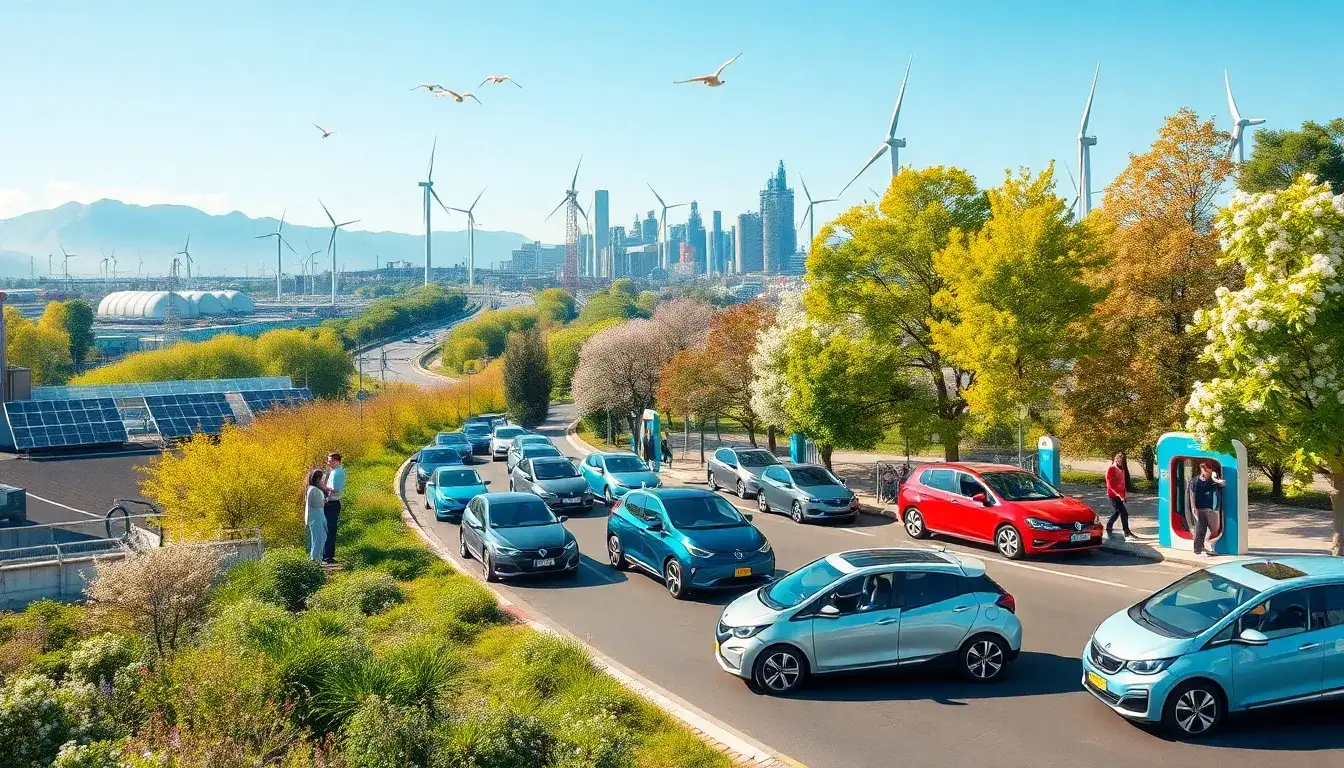
The long-term environmental benefits of transitioning to electric vehicles (EVs) are substantial and multifaceted, primarily centering on significant reductions in greenhouse gas emissions, improved air quality, and enhanced energy efficiency.
Key Environmental Benefits of Electric Vehicles
1. Substantial Reduction in Greenhouse Gas Emissions
EVs produce up to 70% fewer emissions over their lifecycle compared to internal combustion engine vehicles, greatly lowering CO2 and other greenhouse gases contributing to climate change. A shift to EVs can save around 1.5 million grams of CO2 per vehicle over its lifetime, roughly equivalent to avoiding four return flights from London to Barcelona. The true emissions benefit depends on the electricity source used for charging; the cleaner the electricity grid (e.g., renewables), the greater the emissions reductions.
2. Improved Air Quality and Public Health
Since EVs produce zero tailpipe emissions, they reduce the release of air pollutants such as particulate matter (PM2.5), nitrogen oxides (NOx), and other toxic gases traditionally emitted by gasoline and diesel vehicles. This leads to fewer respiratory and cardiovascular health issues in communities. Studies predict tens to hundreds of thousands of lives could be saved in the U.S. alone due to reduced pollution from EV adoption.
3. Reduced Noise Pollution
EVs generate significantly less noise compared to conventional vehicles because they do not have noisy engines or exhaust systems. This leads to quieter urban environments, benefiting human well-being and local wildlife.
4. Increased Energy Efficiency and Reduced Energy Waste
Electric motors in EVs convert a higher percentage of stored energy into usable motion. While traditional petrol cars lose about 75–84% of their energy to heat, friction, and engine inefficiency, EVs waste only about 31–35%, reducing overall energy demand and making transportation more sustainable.
Considerations
- The environmental benefits are maximized when electricity used to charge the EVs comes from low-carbon or renewable sources. Regions relying on fossil-fuel-heavy grids may see less pronounced benefits or even some negative trade-offs.
- EV production, particularly lithium-ion battery manufacturing, currently involves higher initial emissions than conventional vehicles, but these are offset over the vehicle’s lifetime through lower operational emissions.
- Transitioning to EVs, coupled with decarbonizing the power sector, is critical for achieving the greatest climate and health benefits.
Summary
In the long term, widespread adoption of electric vehicles can lead to:
- Dramatic decreases in carbon dioxide and other greenhouse gas emissions contributing to climate change
- Substantial improvements in air quality, reducing pollution-related health problems and mortality
- Quieter, less noise-polluted living environments
- More efficient use of energy in transportation, lowering overall energy consumption
These benefits are amplified when the electric grid is powered increasingly by clean and renewable energy sources, making EVs a cornerstone of a sustainable and healthier transportation future.
Original article by NenPower, If reposted, please credit the source: https://nenpower.com/blog/what-are-the-long-term-environmental-benefits-of-transitioning-to-electric-vehicles/

