

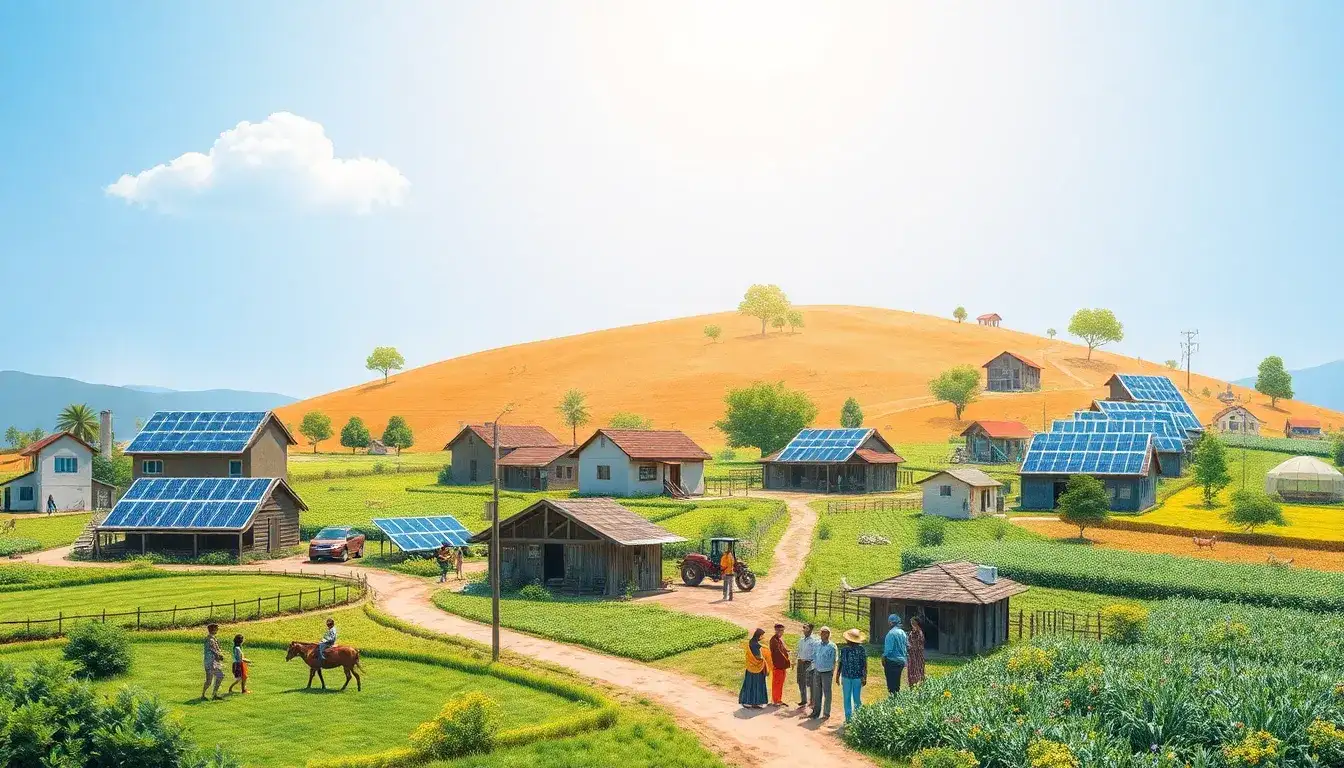
The long-term economic impacts of solar energy on rural communities are broadly positive and multifaceted, including job creation, increased tax revenue, diversification of income streams, environmental benefits, and opportunities for local business growth.
Job Creation and Employment Stability
Solar energy projects generate well-paying, long-lasting jobs in rural areas, from construction to ongoing maintenance of solar farms. These jobs often provide local employment opportunities in regions that might otherwise struggle economically, helping to revitalize economically hard-hit agricultural or rural areas.
Increased Tax Revenue and Land-Lease Payments
Solar farms contribute significant tax revenue to rural communities, which can be used to improve local infrastructure and services such as schools, health systems, and emergency services. In some cases, this amounts to millions of dollars over the lifetime of projects. Additionally, landowners receive drought-proof land-lease payments, providing a stable, supplementary income source that diversifies rural economies and reduces dependence on traditional agriculture.
Boost to Local Businesses and Economic Activity
The presence of solar projects stimulates the local economy beyond the direct jobs created. Local construction firms, service providers, and suppliers benefit from the infrastructure work and ongoing maintenance demands. The influx of workers also increases local spending, which supports small businesses and can lead to further employment.
Environmental Benefits with Economic Spillovers
By reducing carbon footprints and pollution, solar farms improve local environmental quality. This can enhance the attractiveness of rural areas to environmentally conscious residents and businesses, potentially encouraging population retention and new investments. Furthermore, solar farms can promote ecotourism by offering educational tours, which provides an additional economic opportunity for rural communities lacking tourism industries.
Challenges and Opportunities
While the economic impacts are generally positive, rural communities may face challenges such as limited funding, infrastructure constraints, and the risk of using productive agricultural land for solar installations. Addressing these requires strategic partnerships, government incentives, and careful planning to maximize benefits and minimize adverse effects.
In summary, solar energy fosters sustainable economic growth in rural communities by creating jobs, generating consistent tax and land-lease revenues, supporting local businesses, and enhancing environmental quality—all of which contribute to long-term economic resilience and diversification beyond traditional agriculture.
Original article by NenPower, If reposted, please credit the source: https://nenpower.com/blog/what-are-the-long-term-economic-impacts-of-solar-energy-on-rural-communities/

