

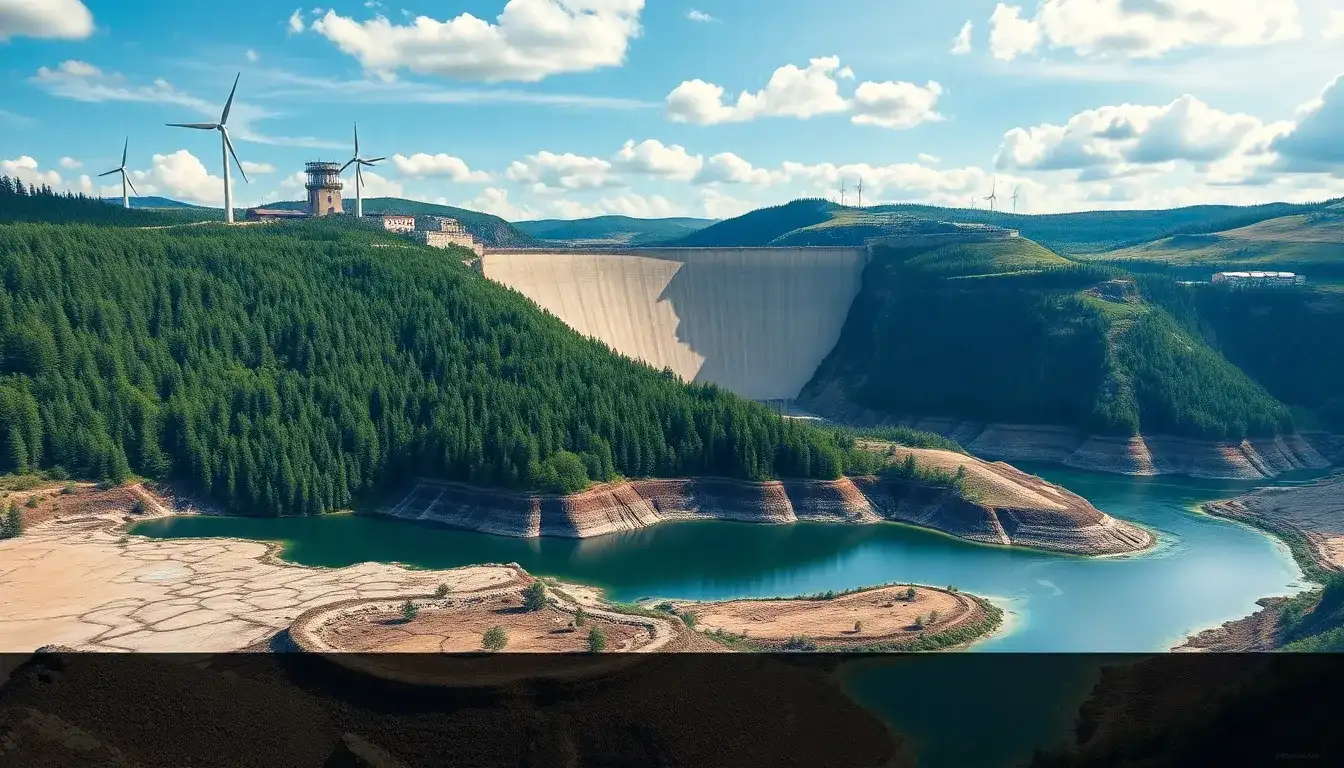
The long-term ecological impacts of constructing large dams for pumped hydro storage are significant and multifaceted, particularly on riverine and surrounding ecosystems:
Sediment Trapping and Habitat Alteration
Large dams trap sediments such as gravel, logs, and organic material behind the dam structure. This trapping disrupts the natural transport of sediments downstream, leading to several ecological consequences:
- Downstream habitats become sediment-starved, which negatively affects aquatic species that depend on sediment for spawning and feeding. For example, fish spawning grounds on gravel riverbeds can be buried or degraded.
- The alteration of sediment flow reduces the development and maintenance of complex river habitats such as riffles and pools, which are critical for biodiversity.
- Sediment accumulation upstream causes reservoir sedimentation, which reduces reservoir capacity over time and can limit hydropower operations and water storage efficacy.
Water Quality and Ecosystem Health
Large dams tend to degrade downstream water quality in several ways:
- They reduce dissolved oxygen levels and increase water temperature downstream, stressing aquatic life and altering ecosystem functionality.
- The decomposition of trapped organic matter in reservoirs increases microbial activity, which produces methane, a potent greenhouse gas contributing to global warming.
Fragmentation and Ecosystem Disruption
Dams fragment river ecosystems, interrupting the natural flow of water, nutrients, and organisms:
- Species migration routes are blocked, affecting fish and other aquatic species’ lifecycles, potentially leading to local extinctions and reduced biodiversity.
- The destruction of surrounding forests and riparian zones for dam construction removes valuable carbon sinks and further degrades ecosystem health.
Other Ecological Impacts
- Soil erosion and changes in hydrology caused by dams can lead to soil degradation and waterlogging downstream.
- Large reservoirs lose substantial volumes of water to evaporation, which can decrease water availability and alter regional water cycles.
In summary, while pumped hydro storage dams provide renewable energy benefits, their long-term ecological impacts include altered sediment transport, degraded water quality, fragmented habitats, greenhouse gas emissions, and the loss of biodiversity. These impacts often persist for decades and require careful management or mitigation strategies to balance energy needs with ecological sustainability.
Original article by NenPower, If reposted, please credit the source: https://nenpower.com/blog/what-are-the-long-term-ecological-impacts-of-constructing-large-dams-for-pumped-hydro-storage/

