

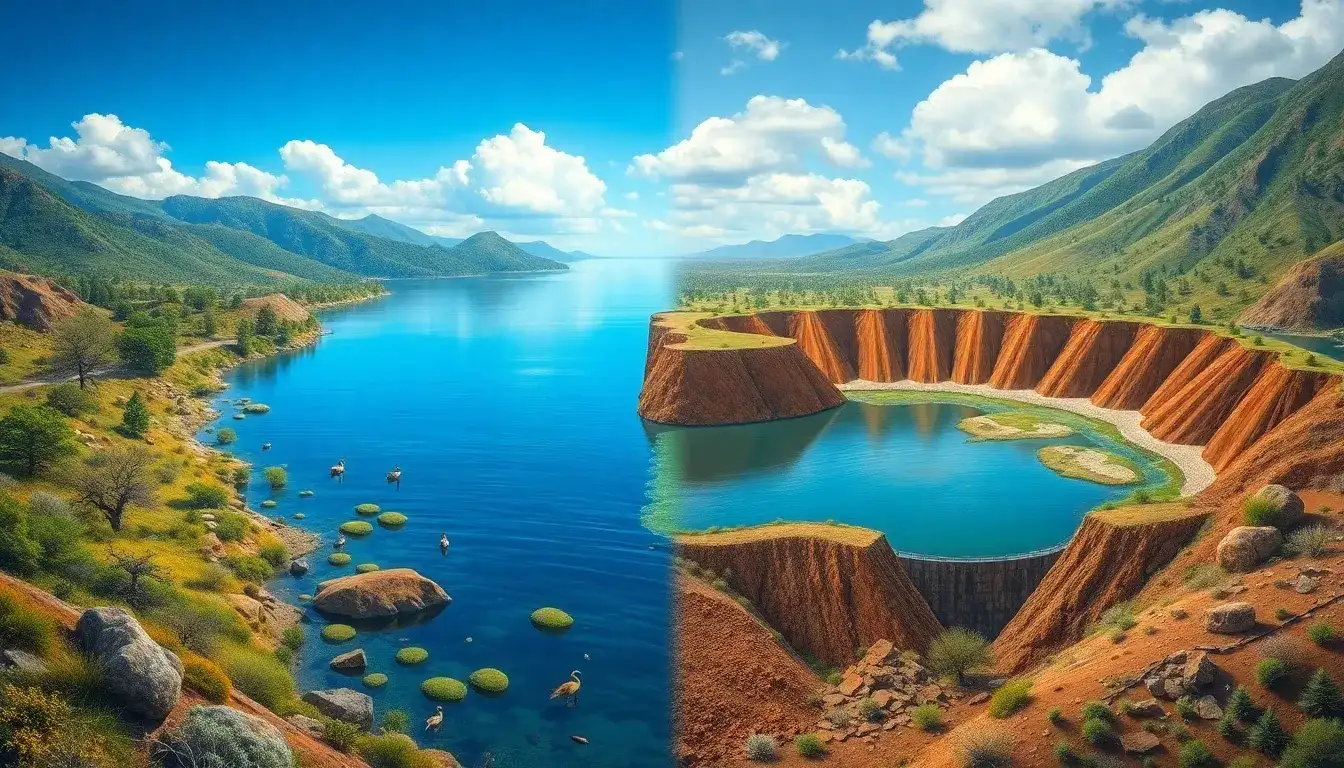
Creating large reservoirs for pumped hydro storage has significant long-term ecological effects. These effects range from impacts on local ecosystems to broader environmental changes.
Ecological Impacts
- Alteration of Natural Water Flows: Reservoirs disrupt natural river flow, affecting downstream ecosystems by changing water temperatures, chemistry, and silt loads. This can negatively impact native plants and animals.
- Nutrient Sequestration: Reservoirs can trap significant amounts of nutrients like nitrogen, phosphorus, and silicon, leading to downstream nutrient imbalances. This affects phytoplankton and the overall aquatic food web.
- Biodiversity Reduction: Large reservoirs often lead to the destruction of natural habitats, reducing biodiversity by displacing wildlife and altering ecosystems.
- Fish Populations: Dams can disrupt fish migration patterns, impact spawning, and affect the overall health of fish populations.
Environmental Changes
- Greenhouse Gas Emissions: Reservoirs can become significant sources of methane and carbon dioxide, especially in lowland rainforest areas, contributing to climate change.
- Water Quality and Pollution: Reservoirs can accumulate pollutants over time. When a dam fails or is removed, these pollutants can be released, affecting downstream water quality.
- Human Impact: The construction of large reservoirs often requires the relocation of communities and can preserve or destroy cultural and historical sites.
Mitigation Strategies
- Advanced Planning: Mitigating environmental impacts requires long-term planning and strategies to minimize habitat destruction.
- Ecosystem Restoration: Restoring affected ecosystems can be beneficial, but it requires sustained stewardship and understanding of ecosystem processes.
- Reservoir Management: Modern reservoir management involves designing reservoirs to work in harmony with watersheds, supporting fish passage, and managing water releases to sustain ecosystems.
In summary, while large reservoirs provide essential hydroelectric power and water management, they come with significant ecological and environmental costs. Balancing these benefits and impacts requires careful management and planning.
Original article by NenPower, If reposted, please credit the source: https://nenpower.com/blog/what-are-the-long-term-ecological-effects-of-creating-large-reservoirs-for-pumped-hydro-storage/

