

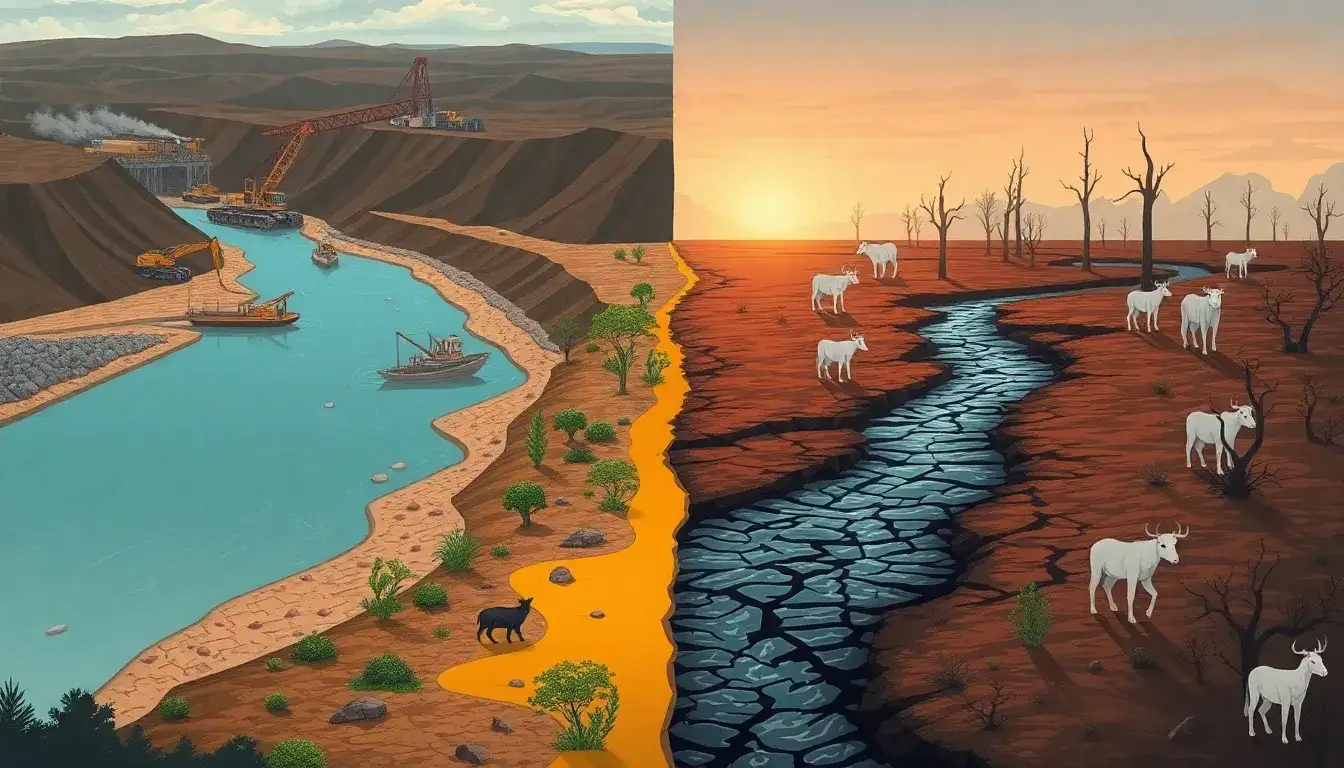
The long-term ecological consequences of lithium mining are significant and multifaceted, impacting water resources, biodiversity, soil and ecosystems, and contributing to climate change effects. Key long-term consequences include:
Water Resource Depletion and Pollution
- Lithium extraction, particularly through the brine method used in salt flats, consumes massive amounts of fresh water. For example, projects like Thacker Pass in Nevada are projected to use billions of gallons annually, straining local water availability in already arid regions.
- Over-pumping groundwater can lower water tables, damage aquifers, and even cause geological fissures. This depletion harms ecosystems and agricultural practices reliant on stable water sources.
- Chemicals such as sulfuric acid and sodium hydroxide used in lithium extraction can contaminate soil and surface water, resulting in toxic pollution that further degrades aquatic and terrestrial habitats.
Habitat Destruction and Biodiversity Loss
- Lithium mining disrupts and destroys natural habitats, notably in ecologically sensitive areas like South American salt flats. This leads to loss of biodiversity and threatens species directly dependent on these habitats, such as flamingos in Chile.
- Deforestation and soil degradation caused by mining operations further reduce ecosystem resilience and hinder recovery, potentially causing long-lasting ecological damage spanning generations.
Carbon Emissions and Climate Impact
- Despite electric vehicles reducing carbon emissions in use, lithium mining itself generates substantial CO2 emissions, with roughly 15 tons of CO2 emitted per ton of lithium mined. This makes the mining phase a significant contributor to the carbon footprint of lithium-ion battery production.
- The energy-intensive nature of lithium extraction and processing adds to these emissions, which can be worse for the climate than the lifetime emissions of some fossil-fuel vehicles.
Social and Indigenous Impacts with Ecological Links
- Many lithium deposits overlap with Indigenous lands, leading to social conflicts that exacerbate ecological damage, through lack of proper environmental safeguards and enforcement.
In summary, the long-term ecological consequences of lithium mining include chronic depletion and contamination of water resources, irreversible habitat loss and biodiversity threats, significant greenhouse gas emissions, and socio-environmental disruptions. These impacts highlight the need for more sustainable extraction methods and stronger environmental protections to mitigate the ecological cost of the green energy transition reliant on lithium.
Original article by NenPower, If reposted, please credit the source: https://nenpower.com/blog/what-are-the-long-term-ecological-consequences-of-lithium-mining/

