

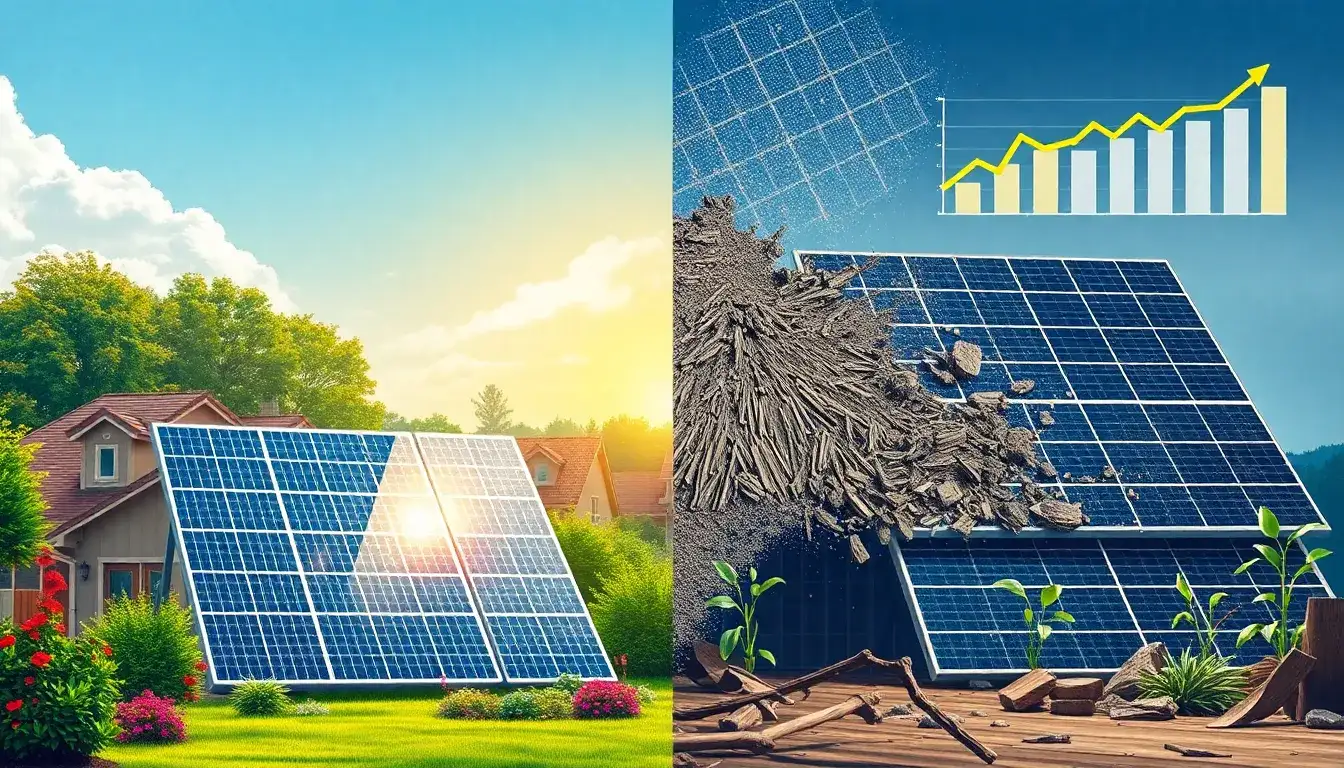
The long-term costs of not cleaning solar panels regularly can be substantial, affecting both the efficiency of the panels and the financial returns on your solar investment. Here are the key impacts:
Efficiency Loss and Energy Production Decline
- Solar panels lose efficiency as dirt, dust, pollen, bird droppings, and other debris accumulate on their surface, blocking sunlight from reaching the photovoltaic cells. This can reduce energy output by as much as 20% in some cases, depending on location and environmental conditions.
- Studies suggest that panels can lose about 0.05% efficiency daily if not cleaned, leading to a significant cumulative loss over time.
- Soiling (dirt accumulation) can account for up to 7% of annual energy loss in the U.S., and in extremely dusty regions like certain Middle Eastern areas, losses may be as high as 50%.
- Clean panels typically produce about 3.5% more energy than dirty panels on average, which translates into noticeable savings and increased green energy production.
Financial Losses Over Time
- Reduced energy production means you generate less electricity, increasing reliance on grid power and leading to higher electricity bills and lower savings.
- For large-scale solar projects, even a 1% drop in power output can mean hundreds of thousands of dollars in lost revenue annually.
- The soiling losses accumulate daily, with an example of nearly 1% production loss per day in certain areas, which can compound to a 7% loss in just one week.
- Over the 20+ year lifespan of solar panels, the cumulative revenue loss from diminished energy production can be very significant, amounting to tens of thousands of dollars or more depending on system size and location.
Higher Maintenance and Repair Costs
- Dirt and grime raise the operating temperature of solar panels, potentially causing damage to the panels and sensitive components like tracking equipment, which can shorten their lifespan and require costly repairs or earlier replacements.
- Regular manual cleaning itself can be expensive, ranging from $5,000 to $75,000 annually for large installations, and frequent cleaning may be required to keep soiling under control.
- Improper cleaning methods can even damage panels, so professional or automated cleaning systems are often necessary to protect the investment.
Reduced Return on Investment (ROI)
- Reduced efficiency and increased maintenance costs combine to stretch out the payback period of solar panel investments and shrink overall returns.
- Regular cleaning maximizes energy output and thus the financial return, while neglecting it can leave significant money “on the table” every year for decades.
Summary Table of Long-Term Costs of Not Cleaning Solar Panels
| Aspect | Impact of Not Cleaning |
|---|---|
| Power Output | Up to 20% reduction; 0.05% daily efficiency loss; 7%+ annual loss |
| Financial Losses | Higher energy bills; lost revenue potentially $200k+ per 1% loss annually in large projects |
| Maintenance Costs | Higher repair/replacement needs; manual cleaning costs $5,000-$75,000/year in big systems |
| Panel Lifespan | Shortened due to overheating and grime-related damage |
| Return on Investment | Lower ROI; payback period extended due to lower production and higher costs |
In essence, not cleaning solar panels regularly leads to gradual but significant efficiency losses, higher operating costs, accelerated wear and tear, and major financial penalties over the lifespan of the system. Maintaining clean panels is critical to preserving performance and maximizing the long-term value of your solar investment.
Original article by NenPower, If reposted, please credit the source: https://nenpower.com/blog/what-are-the-long-term-costs-of-not-cleaning-solar-panels-regularly/

