

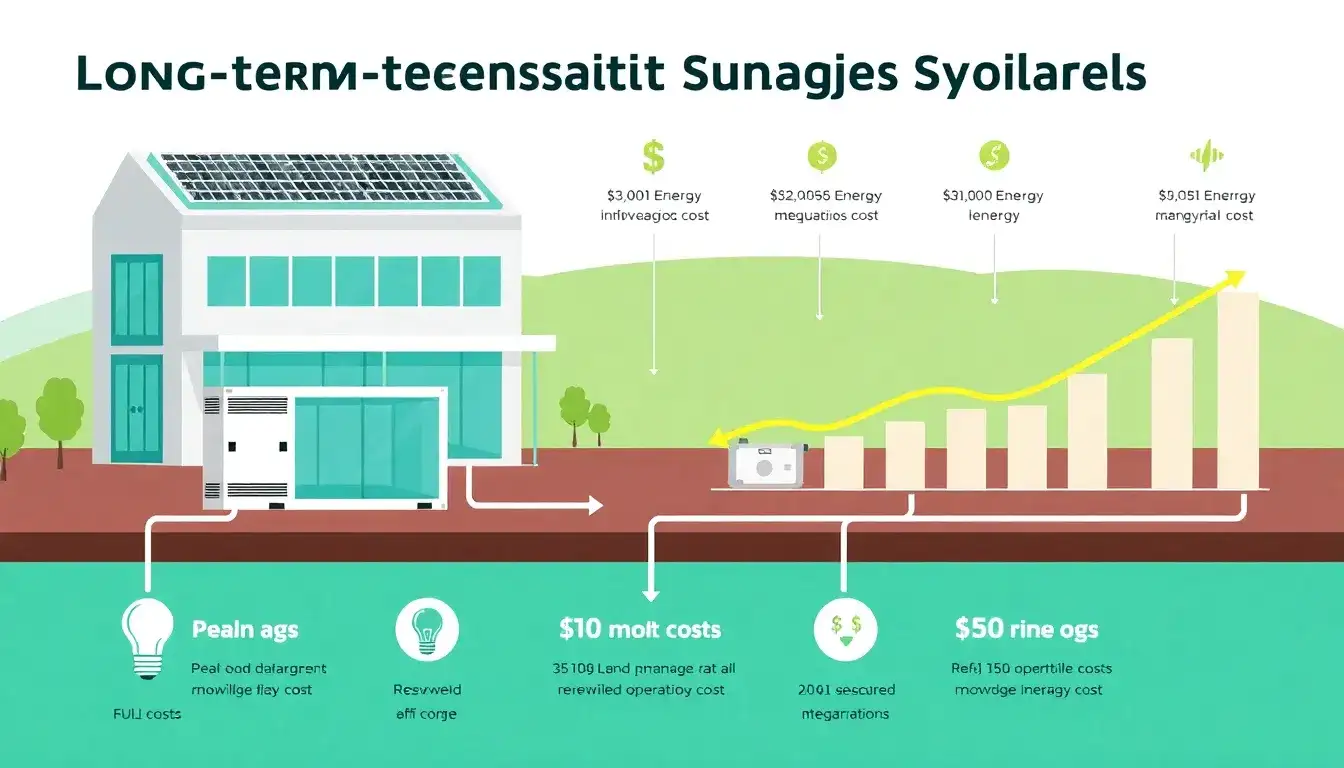
The long-term cost savings of using battery energy storage systems (BESS) in commercial settings stem primarily from several key operational and financial benefits:
1. Reduction in Electricity Costs and Demand Charges
- Battery storage systems store energy during off-peak hours when electricity rates are low and discharge during peak demand periods when electricity prices are highest. This “peak shaving” significantly reduces the demand charges on a commercial electricity bill, which can be a large portion of total costs.
- By managing when and how electricity is drawn from the grid, businesses lower their overall energy expenses.
2. Demand Charge Management
- Many commercial customers face demand charges based on their peak power usage. BESS allows businesses to draw power from their battery during these peak times, reducing peak grid consumption and lowering demand charge fees.
3. Enhanced Energy Resilience and Reliability
- Batteries provide backup power during outages, minimizing costly business interruptions and operational losses. This reliability is particularly crucial for industries such as healthcare, manufacturing, and refrigerated storage.
4. Integration with Renewable Energy
- BESS enables the storage of excess solar or wind energy generated on-site for use when renewable generation is low or absent, reducing dependence on grid electricity and associated costs.
- This capability supports sustainability goals and can improve energy cost predictability.
5. Participation in Grid Services and Demand Response Programs
- Commercial operators can use battery systems to participate in demand response or grid balancing programs, earning additional revenue by providing capacity to the grid during peak periods or system contingencies.
6. Cost Trends and Payback Period
- Battery costs—especially for lithium-ion systems—have been declining steadily and are projected to continue falling due to technological innovation, economies of scale, and improved chemistries. This trend improves the long-term economics of BESS installation.
- Payback periods for commercial battery installations are typically in the range of 5 to 10 years, depending on system size, energy rates, and local market conditions.
7. Additional Financial Benefits
- Battery systems can shift energy consumption away from expensive periods and facilitate better energy management, reducing overall operational costs.
- New revenue streams can be accessed via energy trading and participation in regional or national demand-side response schemes, offsetting costs and improving ROI.
Summary Table of Long-Term Cost Savings from Commercial BESS
| Cost Savings Factor | Description |
|---|---|
| Peak Demand Charge Reduction | Avoid costly demand charges by discharging stored energy during peak hours. |
| Energy Cost Arbitrage | Use low-cost energy during off-peak hours; avoid high tariffs. |
| Backup Power & Business Continuity | Minimize losses from outages with reliable backup power. |
| Renewable Energy Integration | Store on-site renewables for later use, reducing grid reliance. |
| Revenue from Grid Services | Earn from demand response and grid balancing programs. |
| Declining Technology Costs | Falling battery prices improve economics over time. |
| Operational Efficiency & Carbon Savings | Lower energy waste, reduce carbon footprint, and support sustainability goals. |
Overall, commercial battery energy storage systems offer substantial long-term cost savings by reducing peak demand charges, optimizing energy usage across time, providing backup power, and enabling new revenue opportunities. As technology costs continue to decline, the financial attractiveness and payback period of BESS improve, making them a compelling investment for commercial energy consumers.
Original article by NenPower, If reposted, please credit the source: https://nenpower.com/blog/what-are-the-long-term-cost-savings-of-using-battery-energy-storage-systems-in-commercial-settings/

