

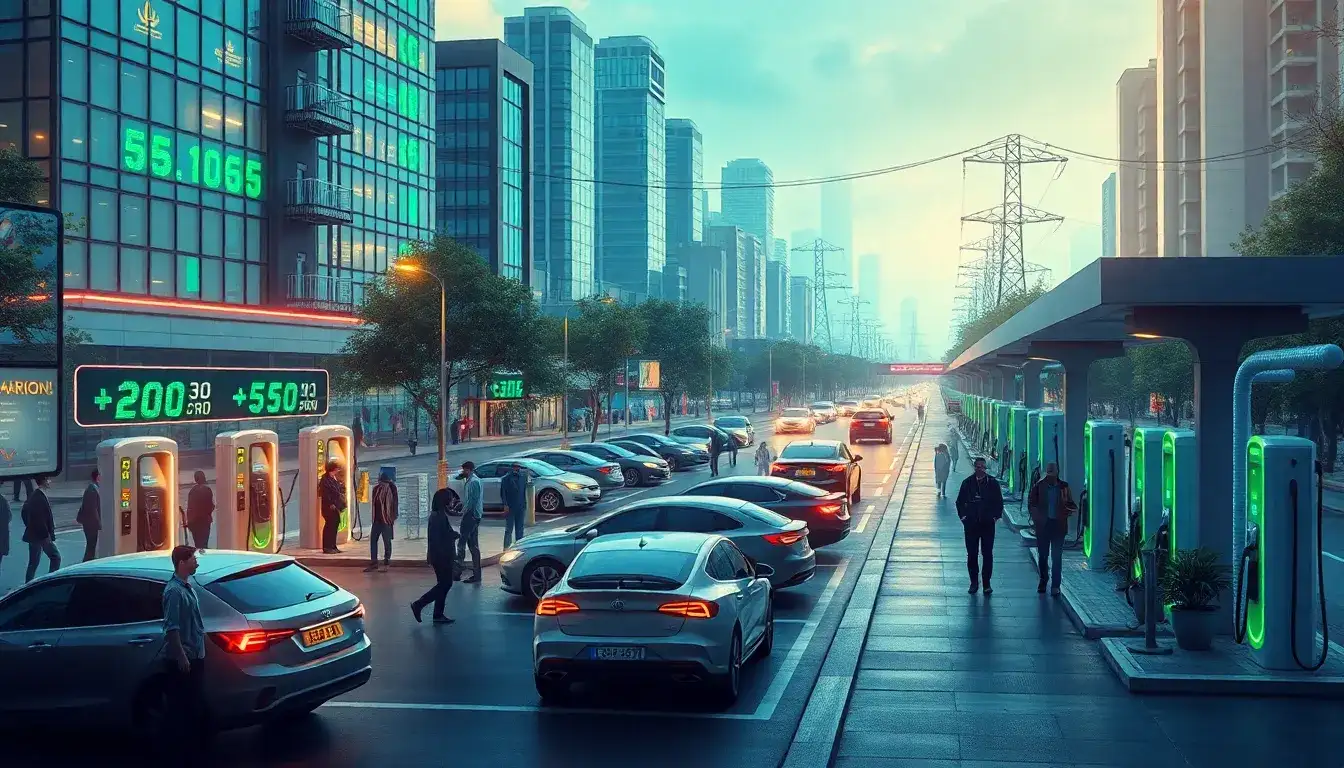
Relying solely on public charging for electric vehicles (EVs) can have significant long-term cost implications. Here are some key considerations:
Cost Comparison
- Public Level 2 Charging: The cost per kWh for Level 2 charging ranges from $0.20 to $0.25. This translates to approximately $0.06 to $0.08 per mile. For someone driving 13,489 miles annually, the yearly cost would be between $770 and $963.
- DC Fast Charging: This type of charging is more expensive, with costs ranging from $0.40 to $0.60 per kWh. The per-mile cost can reach $0.10 to $0.15, making the annual cost for 13,489 miles between $1,540 and $2,300.
Comparative Savings
- Home Charging: In contrast, home charging typically costs between $0.04 and $0.05 per mile, using an average residential electricity rate of $0.16 per kWh. This would reduce the annual cost for 13,489 miles to between $506 and $720.
Key Factors Influencing Public Charging Costs
- Variability in Pricing: Charges can vary based on location, charging network, and local energy prices.
- Charger Type: Level 2 and DC Fast Chargers have different pricing structures, impacting overall cost.
- Accessibility and Convenience: While public charging is convenient for travel, regular reliance on it can be expensive.
Overall, relying solely on public charging can be up to three times more expensive than charging at home, leading to higher long-term costs for EV owners.
Original article by NenPower, If reposted, please credit the source: https://nenpower.com/blog/what-are-the-long-term-cost-implications-of-relying-solely-on-public-charging/

