

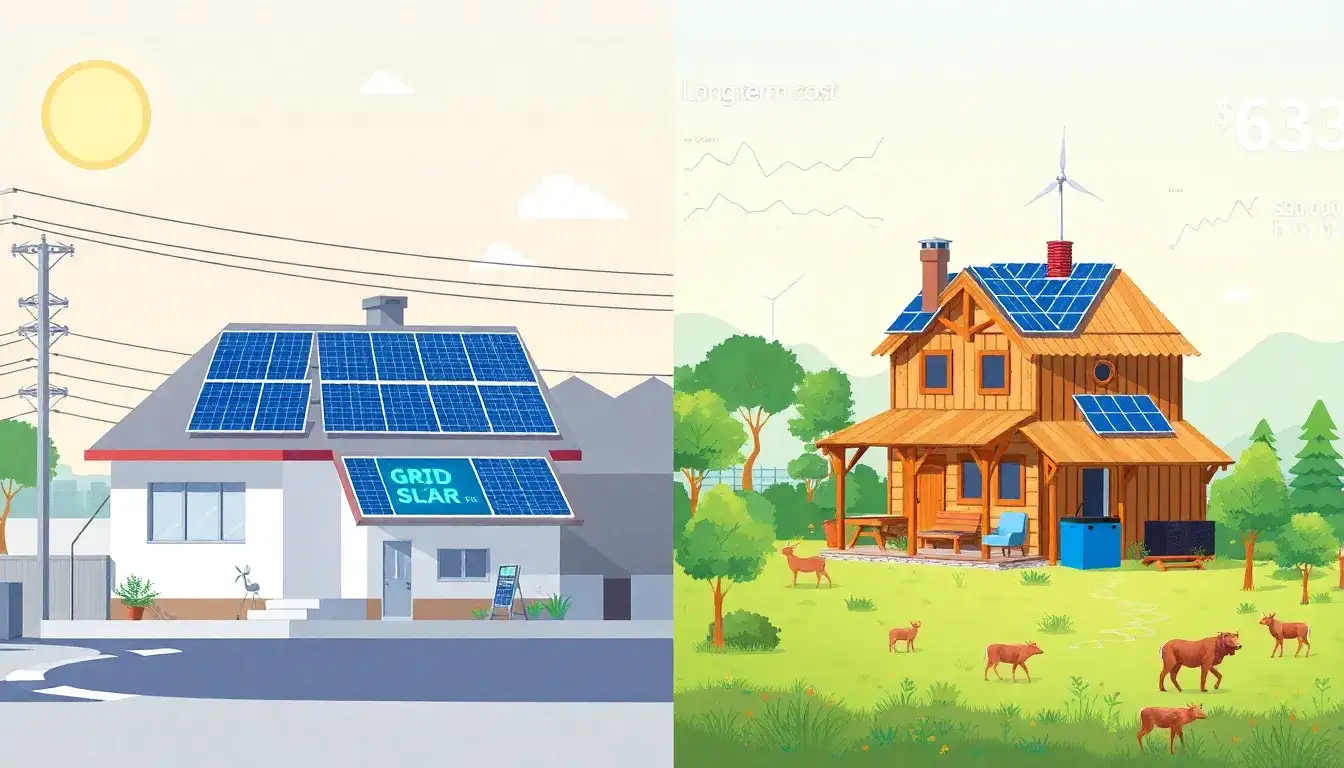
When considering long-term cost differences between grid-tied and off-grid solar systems, several factors come into play. Here’s a detailed comparison:
Grid-Tied Solar Systems
Pros:
- Cost-Effective: Generally less expensive upfront, with costs typically ranging from $25,000 to $55,000.
- Net Metering Benefits: Excess energy is sold back to the grid, reducing utility bills.
- Less Equipment Required: No need for batteries unless you want backup power.
Cons:
- No Backup Power: Shut off during grid outages unless equipped with a battery backup.
Off-Grid Solar Systems
Pros:
- Energy Independence: Ideal for remote locations without grid access.
- Self-Sufficiency: Not reliant on utility companies for electricity.
Cons:
- Higher Upfront Costs: Typically cost between $50,000 and $75,000 due to the need for batteries and sometimes generators.
- Lifestyle Adjustments: Requires careful energy management to maintain power supply.
- Maintenance Costs: Batteries have a shorter lifespan and require periodic replacement.
Long-Term Cost Considerations
- Operating Costs: Grid-tied systems generally have lower ongoing costs since they don’t require battery maintenance or replacement.
- Energy Efficiency: Off-grid systems often necessitate more energy-efficient appliances to conserve energy.
- Return on Investment (ROI): Grid-tied systems tend to offer better long-term financial benefits due to net metering credits and lower upfront costs.
Conclusion
Grid-tied solar systems are generally more cost-effective in the long run, especially for homes connected to the grid. Off-grid systems, while offering independence, come with higher upfront costs and require constant energy monitoring and appliance efficiency measures. However, for remote locations, off-grid systems may be the only viable option.
Original article by NenPower, If reposted, please credit the source: https://nenpower.com/blog/what-are-the-long-term-cost-differences-between-grid-tied-and-off-grid-solar-systems/

