

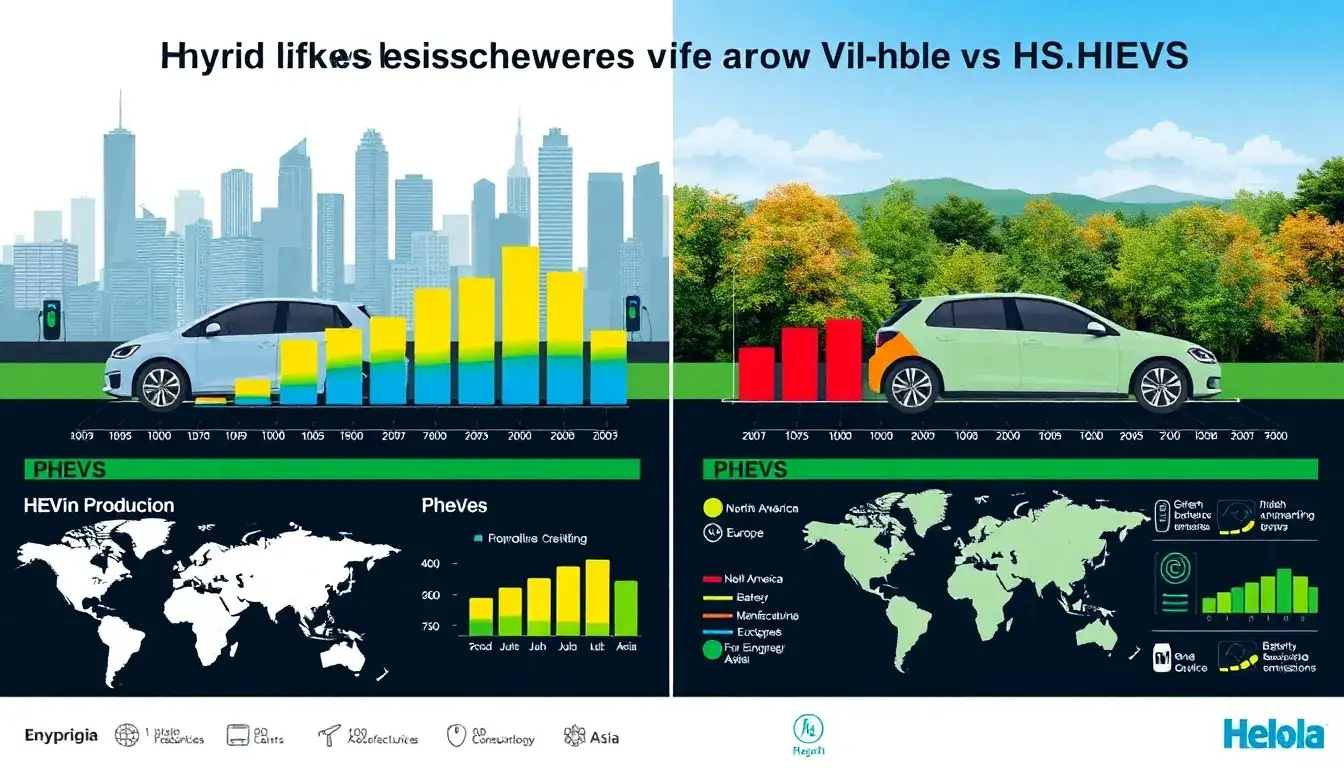
Lifecycle emissions of Hybrid Electric Vehicles (HEVs) and Plug-in Hybrid Electric Vehicles (PHEVs) vary based on several factors, including the region’s energy mix and vehicle usage patterns. Here’s an overview of the differences in different regions:
Lifecycle Emissions: HEVs vs. PHEVs
1. Fuel Cycle and Tailpipe Emissions
- HEVs use electricity generated from the combustion of gasoline to power an electric motor, resulting in lower tailpipe emissions than traditional internal combustion engine vehicles. However, they have no capability to use external electricity directly.
- PHEVs can run on both electricity from the grid and gasoline. When running on electricity, they produce no tailpipe emissions, offering a significant emissions reduction potential depending on the electricity source’s carbon footprint.
2. Regional Variations
- Regions with Low-Carbon Electricity: In areas with renewable energy sources, both all-electric vehicles and PHEVs typically have a significant lifecycle emissions advantage over conventional vehicles. This reduces the overall lifecycle emissions of PHEVs compared to HEVs, as PHEVs can utilize cleaner energy for a portion of their operation.
- Regions with High-Carbon Electricity: In regions relying heavily on fossil fuels for electricity, the emissions benefits of PHEVs are less pronounced. However, PHEVs still tend to outperform HEVs in terms of lifecycle GHG reductions due to their ability to use electricity when available.
3. Emissions Reduction Comparison
- PHEVs generally offer a greater emissions reduction potential than HEVs due to their ability to use grid electricity. Studies suggest PHEVs can reduce lifecycle emissions by around 32% to 46% compared to traditional gasoline vehicles, while HEVs typically offer less dramatic reductions.
4. Battery Production Impact
- The production phase of batteries contributes significantly to the lifecycle emissions of both types of vehicles. However, PHEVs require smaller batteries than all-electric vehicles, which reduces their production emissions. HEVs have smaller batteries than PHEVs or can rely on a simple electric assist system, further minimizing this impact.
In summary, the lifecycle emissions difference between HEVs and PHEVs varies by region, with PHEVs generally offering better emissions reductions in regions with cleaner electricity grids. The efficiency of regenerative braking and battery size also play roles in determining total lifecycle emissions.
Original article by NenPower, If reposted, please credit the source: https://nenpower.com/blog/what-are-the-lifecycle-emissions-differences-between-hevs-and-phevs-in-different-regions/

