

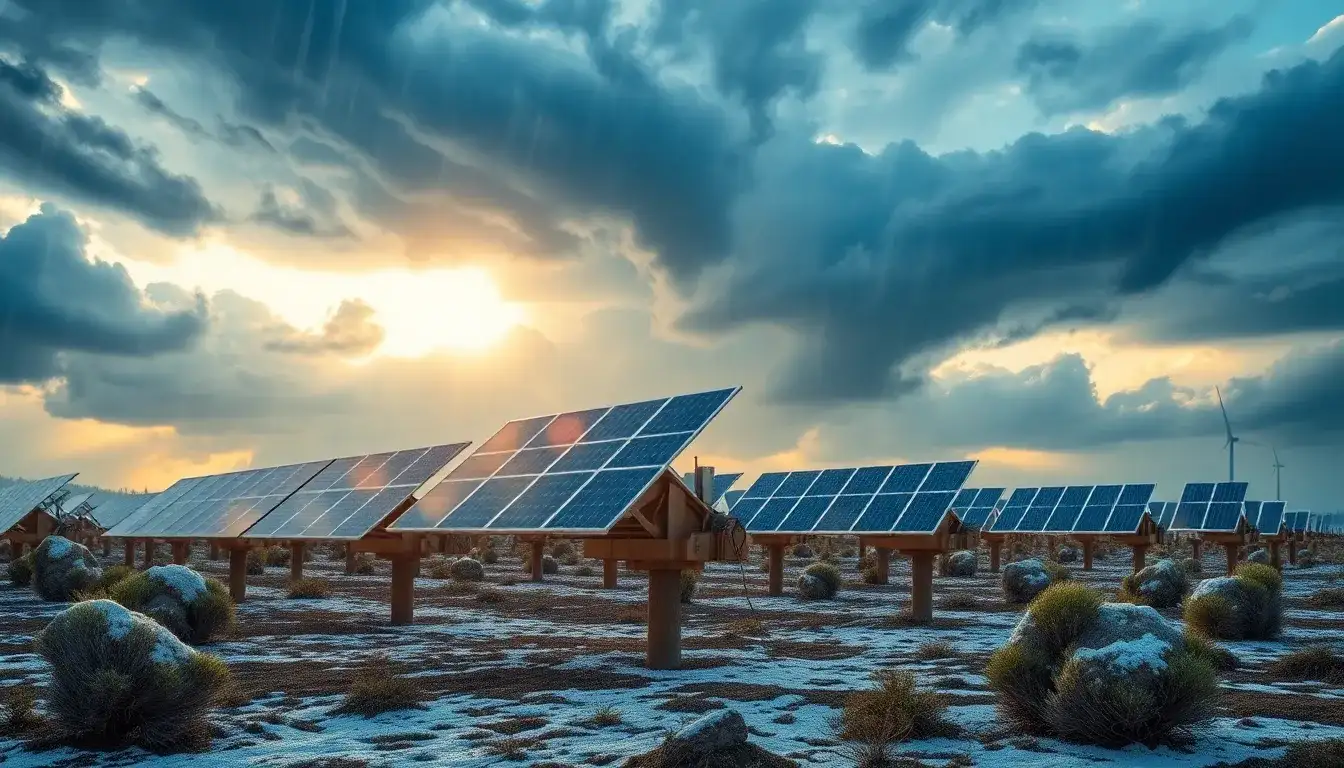
The latest technologies used in solar trackers to handle extreme weather focus on improving resilience, operational reliability, and cost efficiency in adverse conditions such as hail, snow, wind, flooding, and power grid disruptions. Key innovations include:
PV-Powered, Battery-Less Control Systems
- Solar trackers like Array Technologies’ SkyLink use photovoltaic (PV)-powered control systems that enable tracker movement even when the grid is down. This ensures trackers can automatically stow during extreme weather regardless of grid status, improving protection during storms and power outages.
- The battery-less design supports operation in extreme temperatures ranging from -40°F to 140°F, avoiding issues related to battery performance in cold or harsh environments.
Automated and Sensor-Driven Weather Response
- Integrated atmospheric sensors detect hail, snow accumulation, wind speeds, and flooding risks. For example, SkyLink incorporates SmarTrack Automated Snow Response and Hail Alert Response to trigger stowing and safe positioning without manual intervention.
- Safety algorithms process sensor inputs to prioritize responses, such as prioritizing wind stowing over hail protection because wind can cause more structural harm than hail.
Passive Mechanical Wind Stow Technology
- Combining automated controls with patented passive wind stow mechanisms allows trackers to go into a safe, stable position during high winds without relying solely on powered operation, enhancing protection from wind damage.
Wireless Communication and Simplified Installation
- Wireless communication networks reduce reliance on costly trenching and hardwired electrical connections, helping maintain reliable control signals even during storms and making installation faster and less expensive.
- The wireless system supports flexible site layouts, with the ability to control multiple tracker rows per motor (e.g., eight rows per motor in SkyLink), optimizing both resilience and cost savings.
Advanced Safety Algorithms and Real-Time Monitoring
- Dual-axis trackers use sophisticated operating systems that dynamically respond to changing weather conditions, automatically adjusting the tracker’s position to minimize damage and maximize safety for both the system and surroundings.
Flood Detection Integration
- Some systems include flood sensors to detect pooling water beneath arrays, which can threaten structural integrity, enabling proactive measures to mitigate damage risks.
Industry-Specific Solutions
- For hail-prone areas, solutions like Nextracker’s NX Horizon Hail Pro provide targeted hailstorm protection designed for utility-scale solar installations, adding another layer of defense against extreme weather.
Summary Table of Key Technologies
| Technology Feature | Description | Benefit |
|---|---|---|
| PV-Powered Battery-less Control | Tracker movement powered by solar cells, no batteries needed, operable in extreme temperatures | Reliable operation during power outages and cold weather |
| Automated Snow & Hail Sensors | Detect snow and hail accumulation to trigger stowing automatically | Prevents damage from accumulated snow and hail |
| Passive Wind Stow Mechanism | Mechanically safe positioning in high winds without power | Protects trackers from wind damage |
| Wireless Communication | Eliminates trenching and wired power supply, enables flexible site design | Cost savings, faster installation, reliable control |
| Safety Algorithms & Real-Time Response | Software rapidly adjusts tracker position based on wind speed, hail, and other changing conditions | Minimizes system and environmental damage |
| Flood Sensors | Detect water pooling beneath arrays | Protects foundations and structural integrity |
| Specialized Hail Protection Systems | Industry-first hail-specific tracker designs for utility-scale projects | Enhanced hail damage mitigation |
These technologies collectively ensure solar trackers maintain optimal positioning and safety during diverse extreme weather events, minimize downtime, and reduce repair costs while supporting widespread solar adoption in challenging climates.
Original article by NenPower, If reposted, please credit the source: https://nenpower.com/blog/what-are-the-latest-technologies-used-in-solar-trackers-to-handle-extreme-weather/

