

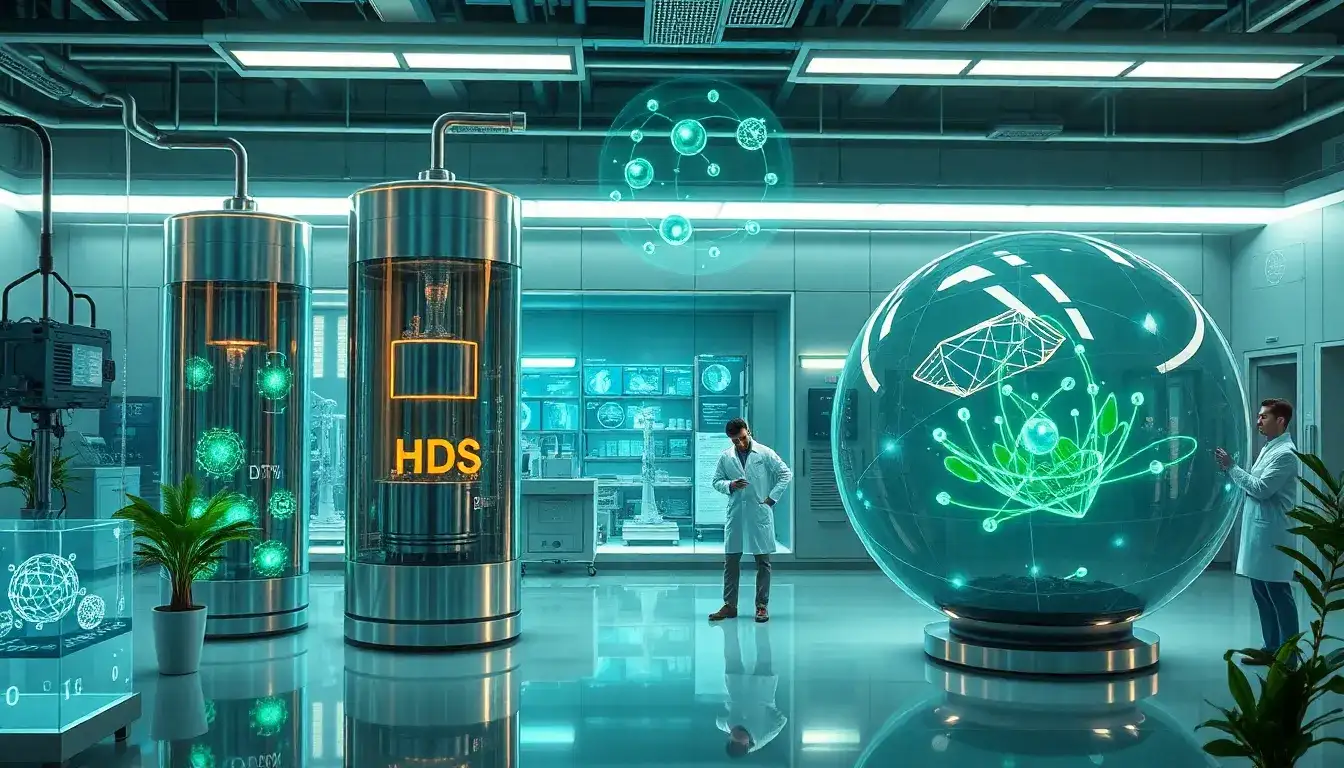
The latest innovations in hydrogen storage technology in 2025 focus primarily on solid-state storage, novel liquid hydrogen storage designs, and advanced compressor technologies that improve safety, efficiency, and scalability.
Key Innovations in Hydrogen Storage Technology
1. Solid-State Hydrogen Storage
Solid-state storage has gained significant traction by using metal hydrides and porous carbon materials to absorb and release hydrogen safely under normal temperature and pressure conditions. This technology avoids the risks associated with high-pressure or cryogenic hydrogen storage, offering a safer and potentially more compact solution for hydrogen storage and transport.
2. New Large-Scale Liquid Hydrogen Storage Designs
A recent project funded by the US Department of Energy has developed a novel non-vacuum tank design for large-scale liquid hydrogen storage, improving efficiency and possibly reducing costs compared to traditional vacuum-insulated tanks. This innovation aims to facilitate the storage of hydrogen in liquid form at scale, enhancing its suitability for industrial and mobility applications.
3. Advanced Hydrogen Compressors
Two notable startups are pushing the boundaries of hydrogen compression technologies:
– Beyond Scroll (Switzerland) has created oil-free scroll compressors that compress hydrogen efficiently from atmospheric pressure with minimal input power and without contaminating the hydrogen. These compressors are compact, cost-effective, and reduce maintenance needs, making hydrogen production and storage more economical.
– CYRUS (Greece) develops metal hydride hydrogen compressors that operate using thermal energy to absorb hydrogen at low pressure and then release it at higher pressure. These compressors are noiseless, have low environmental impact, require no critical raw materials, and can be powered by renewable or waste heat sources, allowing installation in residential and industrial areas.
4. Improved High-Pressure and Cryogenic Storage Systems
Advancements continue in high-pressure storage systems and cryogenic technologies, improving hydrogen’s transport and storage over long distances. These improvements are expected to support the growing hydrogen infrastructure and distribution networks vital for a global hydrogen economy.
These innovations collectively address major challenges in hydrogen storage such as safety, cost, energy efficiency, and integration with renewable energy systems. They enable safer, more efficient, and scalable hydrogen storage solutions that support the broader adoption of hydrogen as a clean energy vector in transportation, industry, and power generation.
In summary, 2025’s hydrogen storage innovations emphasize solid-state materials, novel large-scale liquid storage tank designs, and advanced, energy-efficient compression technologies, marking significant progress toward widespread hydrogen use.
Original article by NenPower, If reposted, please credit the source: https://nenpower.com/blog/what-are-the-latest-innovations-in-hydrogen-storage-technology/

