

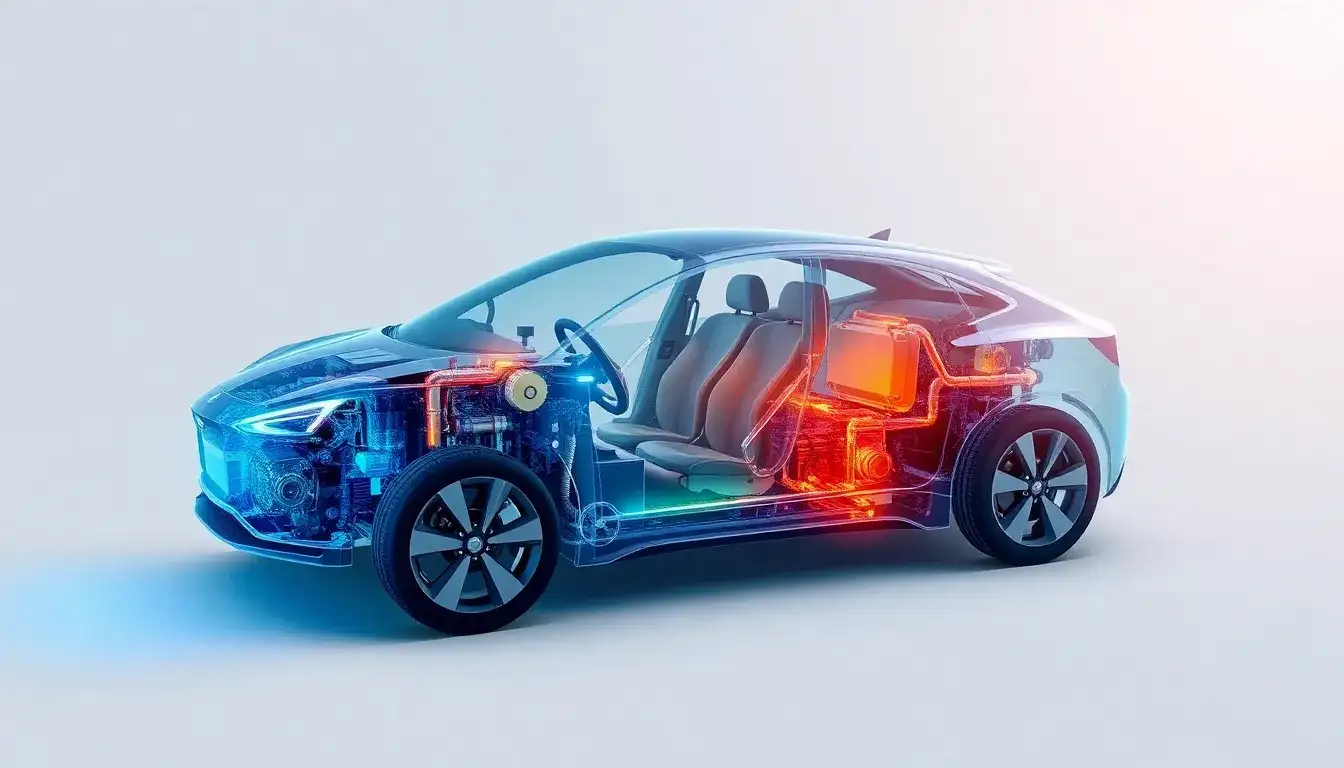
The latest innovations in electric vehicle (EV) thermal management systems in 2025 center around several advanced technologies and approaches aimed at improving efficiency, sustainability, and system integration:
- AI and Machine Learning for Predictive Thermal Management: Artificial intelligence is increasingly used to process large real-time data streams from EV components such as high-voltage batteries, motors, and inverters. This allows dynamic, real-time temperature monitoring and adaptive cooling strategies that optimize thermal conditions and predict hotspots before they become problematic. AI-driven thermal systems can automate the balancing of temperatures across different parts of the vehicle, enhancing reliability and performance.
- Advanced Sensor Technologies: New developments in sensor technology enhance the precision and responsiveness of thermal monitoring, enabling more granular control of cooling systems within the EV. These sensors feed data to AI systems, improving the predictive management of heat.
- Materials Innovations: Breakthroughs in materials such as graphene are being explored for their superior thermal conductivity and cooling capabilities. These materials can contribute to lighter, more efficient thermal management components, reducing overall system weight while improving heat dissipation.
- System-Level Integration and High-Efficiency Cooling Architectures: There is a strong focus on integrating battery thermal management with overall vehicle thermal systems to maximize efficiency and reduce costs. Innovations include modular and scalable cooling architectures tailored to the thermal load of specific EV designs, which improve system efficiency and vehicle range.
- Sustainability and Net-Zero Goals: Thermal management technologies are increasingly being developed with sustainability in mind, addressing energy usage and environmental impact in line with net-zero emissions targets. This involves optimizing thermal systems to reduce waste heat and improve energy conservation across the vehicle.
- Industry Focus on Cost-Competitiveness with Ultra-High Efficiency: Leading industry forums emphasize the importance of balancing cost and performance, pushing innovations that deliver ultra-efficient thermal management without significantly increasing vehicle costs. This includes improved designs for heat exchangers, coolant formulations, and integrated thermal modules.
These innovations collectively enable faster, more reliable, and longer-lasting EVs by effectively managing the heat generated by batteries and power electronics, thus advancing EV performance and user experience.
In summary, the latest EV thermal management systems leverage AI-driven predictive controls, advanced sensors, novel thermal materials like graphene, integrated cooling designs, and sustainability-focused engineering to achieve unprecedented efficiency and reliability in electric vehicles.
Original article by NenPower, If reposted, please credit the source: https://nenpower.com/blog/what-are-the-latest-innovations-in-ev-thermal-management-systems/

