

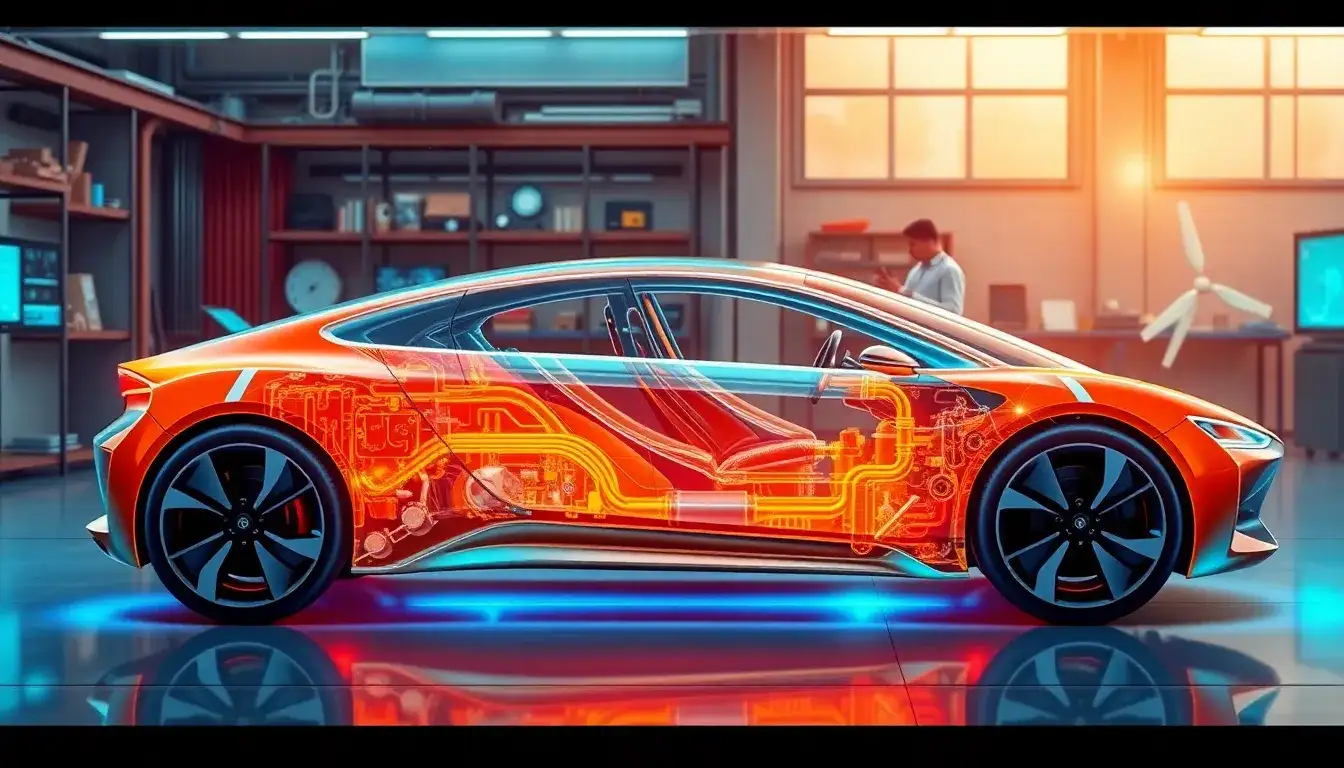
Advanced Thermal Management Technologies
Integrated Vehicle Thermal Management Systems (IVTMS)
IVTMS represent a holistic approach by managing the thermal behavior of batteries, motors, power electronics, and climate control as a unified system. This integration improves overall thermal efficiency and reduces energy consumption, critical for extending EV range and component lifespan.
Cell-to-Pack (CTP) Technology
CTP design eliminates traditional module packaging, enabling more direct and efficient thermal pathways for battery packs. This technology enhances heat dissipation by shortening the heat transfer distance, resulting in better uniformity of temperature across the battery cells and improved safety.
Liquid Cooling Systems
Liquid-cooled thermal management remains a dominant approach, with advancements focusing on optimizing coolant flow, thermal conductivity, and compact system design to maintain optimal battery and motor temperatures even under heavy load or fast-charging scenarios.
Innovations in Sensor Technologies
Smart Optical Sensors
Advanced optical sensors are being developed to provide precise, real-time monitoring of temperature within battery cells, motor modules, and air conditioning systems. These sensors improve the ability to detect early signs of thermal runaway and optimize thermal regulation, enhancing vehicle safety and battery health. Such sensors outperform traditional contact sensors by offering faster response times and improved durability in high-temperature environments.
Battery Health Monitoring
Thermal management systems increasingly employ a combination of sensor types—optical, electrochemical, and thermal—to gain a comprehensive understanding of battery temperature dynamics. This multi-sensor approach supports predictive maintenance and prolongs battery life by preventing thermal-related degradation.
Cutting-Edge Thermal Management Materials
Phase Change Materials (PCMs)
PCMs are gaining attention for their capacity to absorb, store, and release heat, providing passive thermal regulation inside battery packs. They help maintain temperature within safe limits during peak loads or rapid charging, reducing reliance on active cooling systems.
Carbon Nanotubes (CNTs)
CNTs possess exceptional thermal conductivity and mechanical strength, making them ideal for dispersing heat from critical EV components like batteries and motors. Their lightweight nature also contributes to overall vehicle efficiency by reducing weight while enhancing thermal transfer.
Graphite Sheets and Films
These materials provide excellent thermal conductivity with minimal weight addition, useful for spreading heat evenly across battery surfaces and preventing hotspots.
Ceramic Coatings
Ceramics are being employed as durable thermal barrier coatings to protect components from overheating and improve longevity under harsh thermal conditions.
Summary
The future of EV thermal management lies in the synergistic use of integrated thermal systems, smart sensor networks, and cutting-edge materials like PCMs and CNTs. These innovations collectively aim to enhance battery safety, operational efficiency, and vehicle range while reducing weight and energy consumption. Continuous research and development in these areas are critical as EV adoption grows and performance demands rise globally.
Original article by NenPower, If reposted, please credit the source: https://nenpower.com/blog/what-are-the-latest-advancements-in-thermal-management-for-evs/

