

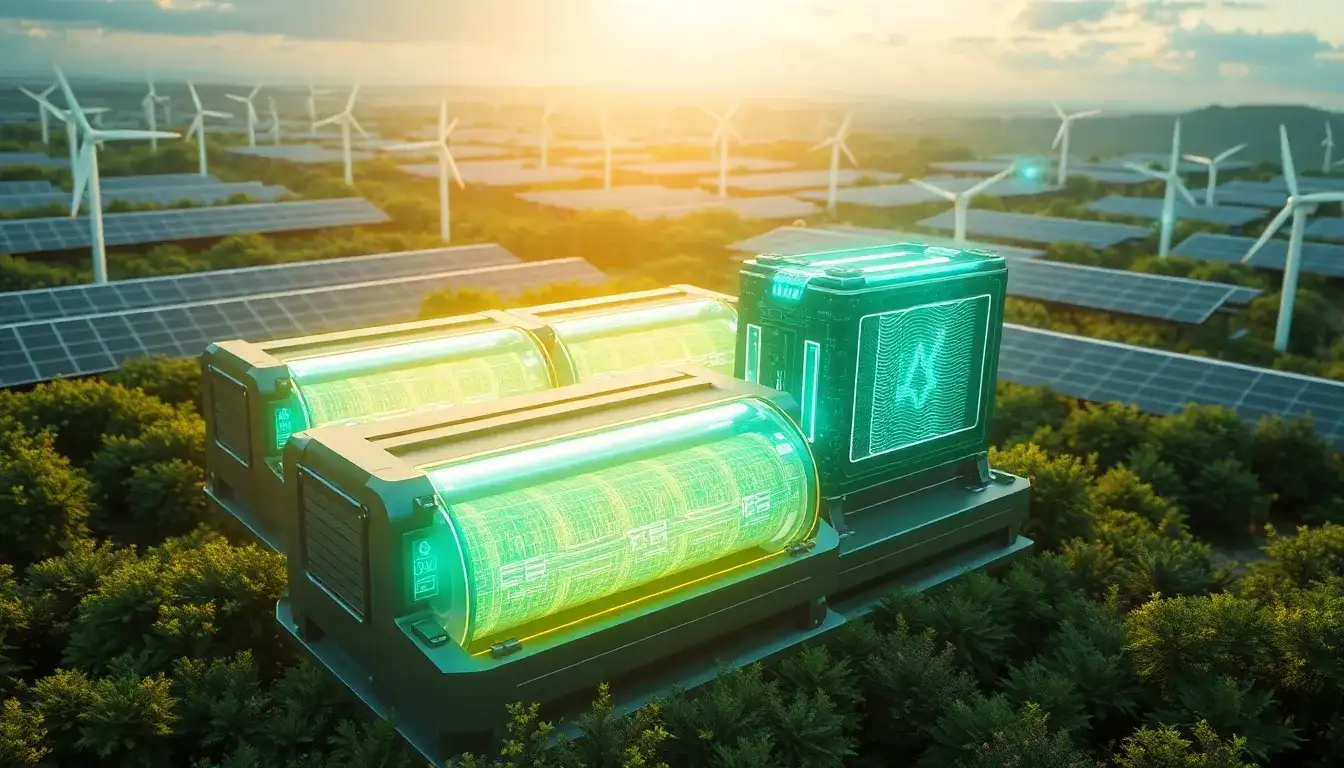
The latest advancements in battery technology for renewable energy are focused on enhancing efficiency, sustainability, and affordability. Here are some of the key developments:
1. Solid-State Batteries
Solid-state batteries replace liquid electrolytes with solid materials, offering higher energy density, improved thermal stability, and safer operation compared to traditional lithium-ion batteries. This technology is crucial for electric vehicles and renewable energy systems.
2. Lithium Alternatives
Due to concerns about lithium resource scarcity and environmental sustainability, researchers are exploring alternatives such as:
- Sodium-Sulfur Batteries: Known for their long lifespan and cost-effectiveness.
- Zinc-Air Batteries: High stability and eco-friendly characteristics make them promising.
- Potassium-Sodium-Sulfur (K-Na/S) Batteries: Utilize inexpensive elements for efficient energy storage.
3. Lithium-Sulfur Batteries
These batteries can store significantly more energy per weight than lithium-ion batteries, making them ideal for applications like urban air mobility. Recent innovations address the “shuttle effect” issue, improving their feasibility.
4. Quasi-Solid Batteries
Blending solid and liquid electrolytes enhances safety by reducing flammability while maintaining performance, which bridges the gap between current lithium-ion and future solid-state technologies.
5. Paper-Based Batteries
Startup Flint is developing paper-based batteries using biodegradable materials for low-cost, eco-friendly solutions suitable for small electronics like medical patches or micro-sensors.
6. Quantum Batteries
Research into quantum states could revolutionize charging speeds, though this technology is still in its infancy.
7. Battery Recycling Innovations
Debond on demand technology allows quicker separation of battery materials for recycling, supporting a circular economy. Companies like Mercedes-Benz are opening integrated recycling facilities.
8. Redox Flow Batteries and Hydrogen Storage
Redox flow batteries offer long-duration energy storage with eco-friendly materials, while hydrogen storage is gaining attention as a clean energy carrier, especially in solid-state forms.
These advancements are critical for integrating renewable energy sources efficiently into the grid and supporting sustainable energy storage solutions.
Original article by NenPower, If reposted, please credit the source: https://nenpower.com/blog/what-are-the-latest-advancements-in-battery-technology-for-renewable-energy/

