

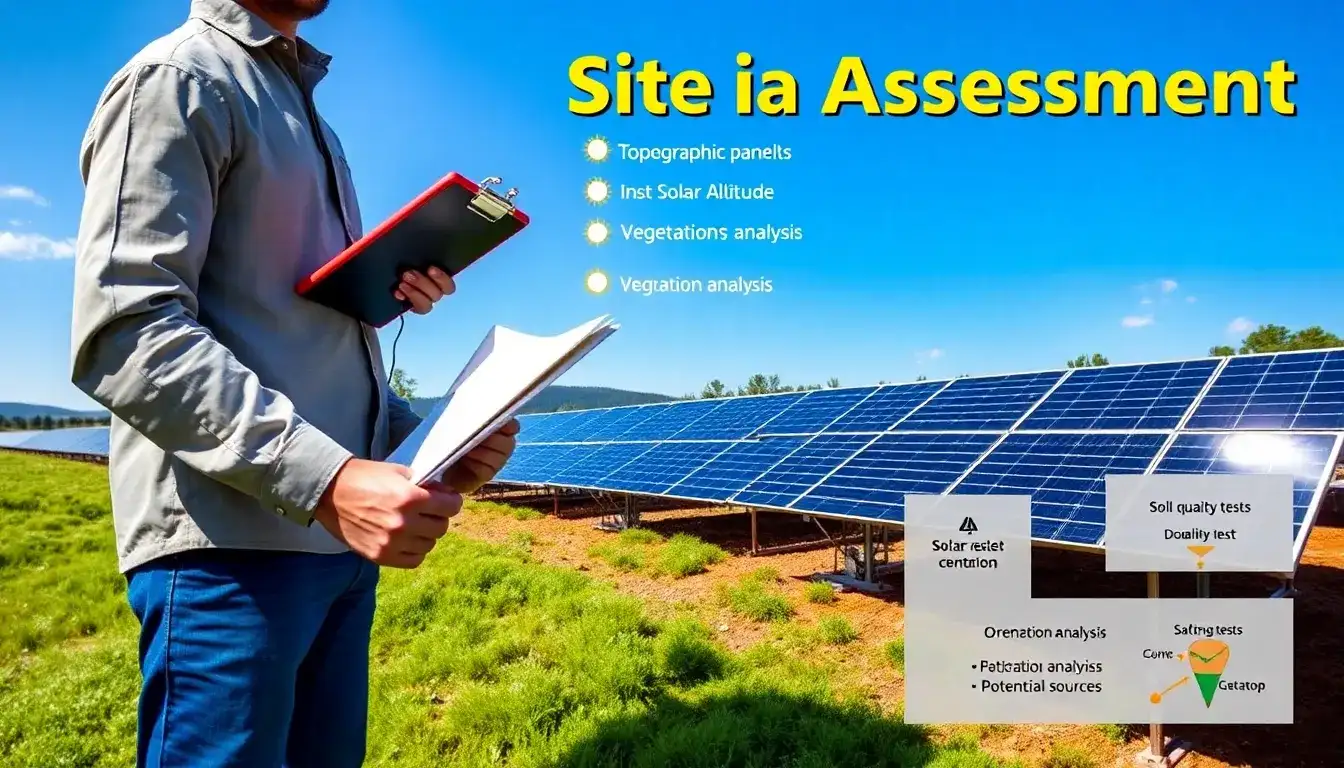
When conducting a site assessment for bifacial solar panels, the following factors are critical for maximizing energy generation:
1. Ground Reflectivity (Albedo)
The reflectivity of the ground surface significantly impacts rear-side energy capture. Light-colored materials like concrete, white gravel, or sand enhance albedo (0.25–0.5+), while dark surfaces like asphalt reduce it. Albedo directly correlates with bifacial gain, which can increase by 10–30% depending on surface type.
2. Shading and Obstructions
Evaluate shading from trees, buildings, or terrain that could block sunlight to both sides of the panels. Even partial shading on the rear side reduces energy output.
3. Mounting System Design
- Height: Elevate panels ≥1.2–1.3 meters to optimize rear-side light capture and uniformity.
- Tilt Angle: A 20–30° tilt balances front-side efficiency and rear-side reflection, though latitude-specific adjustments may apply.
- Orientation: South-facing (northern hemisphere) ensures maximum sun exposure.
4. Ground Coverage Ratio (GCR)
A GCR of 40–50% (ratio of panel area to total site area) balances energy yield and land use efficiency. Lower GCR increases spacing, reducing mutual shading but requiring more land.
5. Geographical and Environmental Factors
- Latitude: Affects optimal tilt angle and seasonal sun path.
- Wind Load: Higher mounting increases wind stress, requiring robust structural support.
- Soil Type: Stability for ground-mounted systems and corrosion risks near coastal or industrial areas.
6. System Modeling Tools
Use specialized software like pvDesign or SolarAnywhere to simulate bifacial performance, incorporating albedo, GCR, and height. These tools account for rear-side irradiance and electrical-thermal interactions.
Original article by NenPower, If reposted, please credit the source: https://nenpower.com/blog/what-are-the-key-factors-to-consider-during-a-site-assessment-for-bifacial-solar-panels/

