

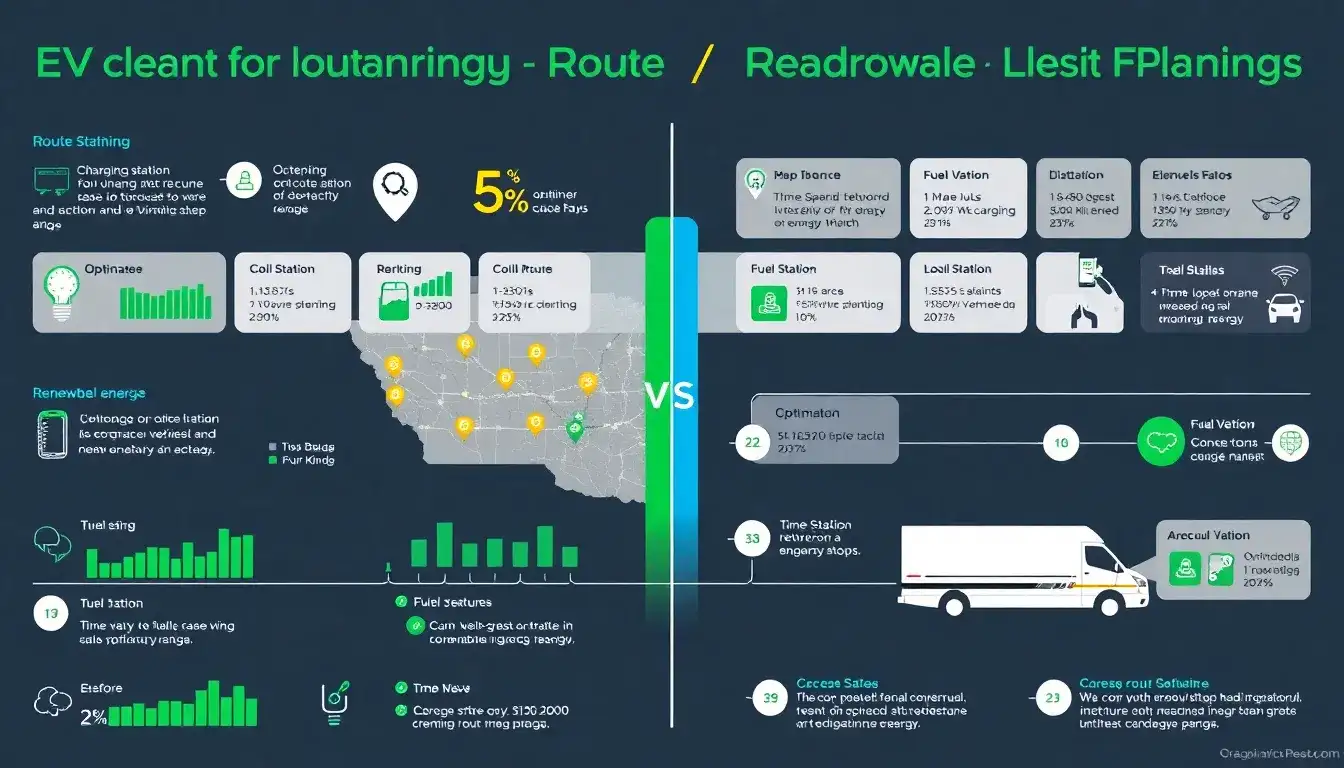
Route planning for electric vehicle (EV) fleets presents several distinct challenges compared to traditional internal combustion engine (ICE) vehicles. Here are the key differences:
Key Differences in Route Planning
1. Charging Infrastructure and Stops
- EV Fleets: EVs require regular charging stops, which must be integrated into the route planning process. This involves considering the availability, type, and speed of charging stations, which can significantly impact route efficiency and flexibility.
- ICE Vehicles: ICE vehicles can refuel quickly at numerous gas stations, minimizing the need for planned refueling stops during routing.
2. Range Considerations
- EV Fleets: Range limitations are crucial for EVs. Route planning must ensure that vehicles can reach their destinations without running out of charge, adjusting for factors like cargo weight and delivery sequencing.
- ICE Vehicles: Range anxiety is less of a concern for ICE vehicles, which can typically operate for extended periods without major worries about refueling.
3. Energy Efficiency Factors
- EV Fleets: EV route planning must consider energy efficiency factors such as regenerative braking, battery capacity, and environmental conditions like weather and terrain, which affect range and efficiency.
- ICE Vehicles: While ICE vehicles are affected by similar conditions, their impact on fuel efficiency is generally less constrained compared to EVs’ range limitations.
4. Technology Integration
- EV Fleets: Advanced technologies, including real-time traffic and weather updates, are crucial for optimizing EV routes. These tools help ensure vehicles complete their trips efficiently and without running out of charge.
- ICE Vehicles: While technology is beneficial for all vehicles, EVs particularly require sophisticated route planning software to manage charging infrastructure and range.
5. Operational Suitability
- EV Fleets: EVs are often best suited for predictable urban deliveries, where charging infrastructure is more readily available.
- ICE Vehicles: Remain more viable for long-haul routes due to the convenience of fueling infrastructure.
Original article by NenPower, If reposted, please credit the source: https://nenpower.com/blog/what-are-the-key-differences-in-route-planning-for-ev-fleets-compared-to-traditional-vehicles/

