

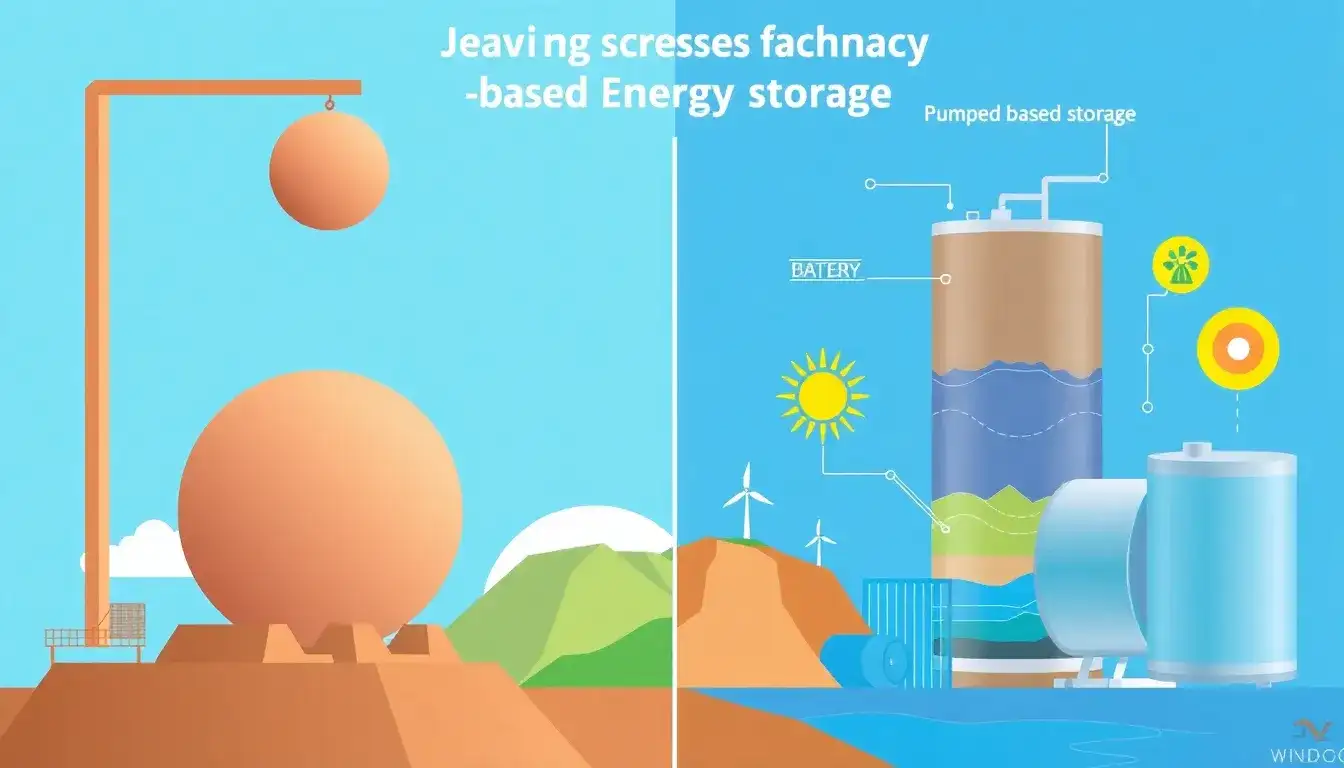
Key Differences
-
Storage Mechanism:
- Gravity Batteries: Store energy by lifting a heavy mass against gravity, typically using a mechanical system like a crane or winch, and release it to generate electricity when needed. This mechanism relies on gravitational potential energy.
- Other Forms: Such as lithium-ion batteries, which store energy through chemical reactions.
-
Energy Density:
- Gravity Batteries: Generally have lower energy density compared to other technologies like lithium-ion batteries. This means larger infrastructure is needed to store the same amount of energy.
- Other Forms: Often have higher energy density, allowing smaller, more portable applications, such as in electric vehicles and consumer electronics.
-
Cost and Maintenance:
- Gravity Batteries: Despite their higher upfront costs, gravity batteries offer lower maintenance expenses over time. They do not degrade with use like chemical batteries and can last for decades.
- Other Forms: Tend to have lower initial costs for small-scale applications but may require more frequent replacement and maintenance.
-
Scalability and Flexibility:
- Gravity Batteries: Suitable for large-scale applications and offer flexibility in site selection, which is advantageous over traditional pumped hydroelectric storage.
- Other Forms: Like lithium-ion batteries, can be scaled from small consumer products to grid-scale applications, but may face site-specific challenges.
-
Environmental Impact:
- Gravity Batteries: Minimize environmental impact by avoiding hazardous chemical reactions and materials found in some battery technologies.
- Other Forms: May involve materials with environmental concerns, such as lithium, cobalt, and other metals.
-
Technology Diversity:
- Gravity Batteries: Include various designs like pumped hydroelectricity, lifted weight storage, and rail-based systems, offering diverse applications.
- Other Forms: Include a wide range of technologies (e.g., flywheels, hydrogen storage), each suited to different energy needs and applications.
Conclusion
Gravity-based energy storage offers a unique combination of sustainability, long lifespan, and large-scale application potential, but its high upfront costs and lower energy density present challenges for widespread adoption. Overall, the choice of energy storage technology depends on specific application needs, environmental considerations, and cost dynamics.
Original article by NenPower, If reposted, please credit the source: https://nenpower.com/blog/what-are-the-key-differences-between-gravity-based-energy-storage-and-other-forms-of-energy-storage/

