

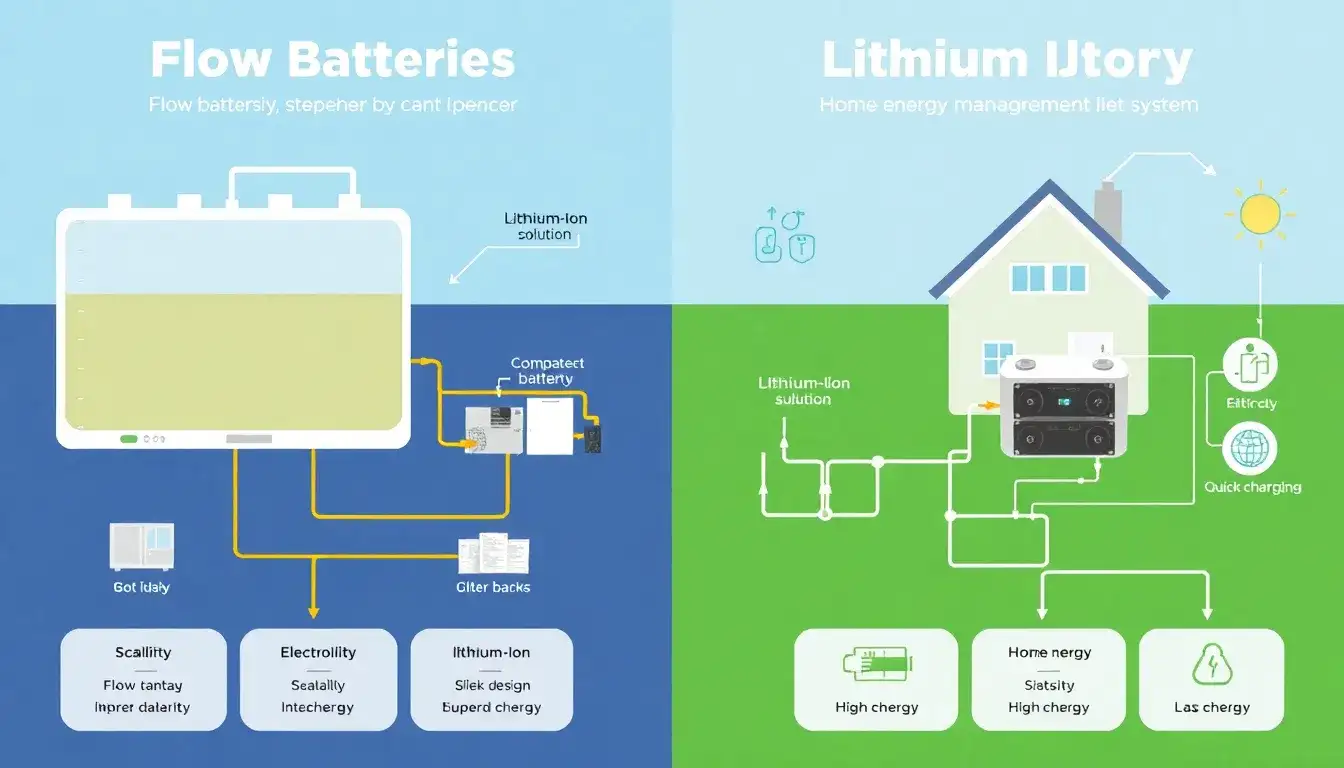
Key Differences
-
Cost:
- Flow Batteries: Generally more expensive due to their complexity, which includes pumps, tanks, and larger surface areas for electrochemical reactions.
- Lithium-ion Batteries: Less expensive, benefiting from economies of scale and established manufacturing processes.
-
Longevity:
- Flow Batteries: Known for their long lifespan, often exceeding 20 years with minimal degradation over thousands of cycles.
- Lithium-ion Batteries: Typically last around 8 to 10 years with regular daily cycling.
-
Power Density:
- Flow Batteries: Have a lower power density, making them suitable for long-duration energy storage (up to 10 hours).
- Lithium-ion Batteries: Higher power density allows for shorter but more intense energy discharges, typically up to 2 hours.
-
Safety:
- Flow Batteries: Considered safer due to the lack of flammable electrolytes, which reduces the risk of fires or thermal runaway.
- Lithium-ion Batteries: Can experience thermal runaway and are more prone to catching fire, though advances in technology are improving safety.
-
Space Efficiency:
- Flow Batteries: Require more space due to their large electrolyte tanks and mechanical components.
- Lithium-ion Batteries: More portable and space-efficient, making them ideal for residential settings where space is limited.
Conclusion
For residential use, flow batteries are advantageous for homes requiring long-duration storage with high safety standards and are willing to invest in a more environmentally friendly solution. Lithium-ion batteries, particularly LiFePO4 variants, offer a cost-effective, space-efficient alternative with good safety features, making them suitable for most residential solar setups. Ultimately, the choice depends on the specific needs and priorities of the homeowner.
Original article by NenPower, If reposted, please credit the source: https://nenpower.com/blog/what-are-the-key-differences-between-flow-batteries-and-lithium-ion-batteries-for-residential-use/

