

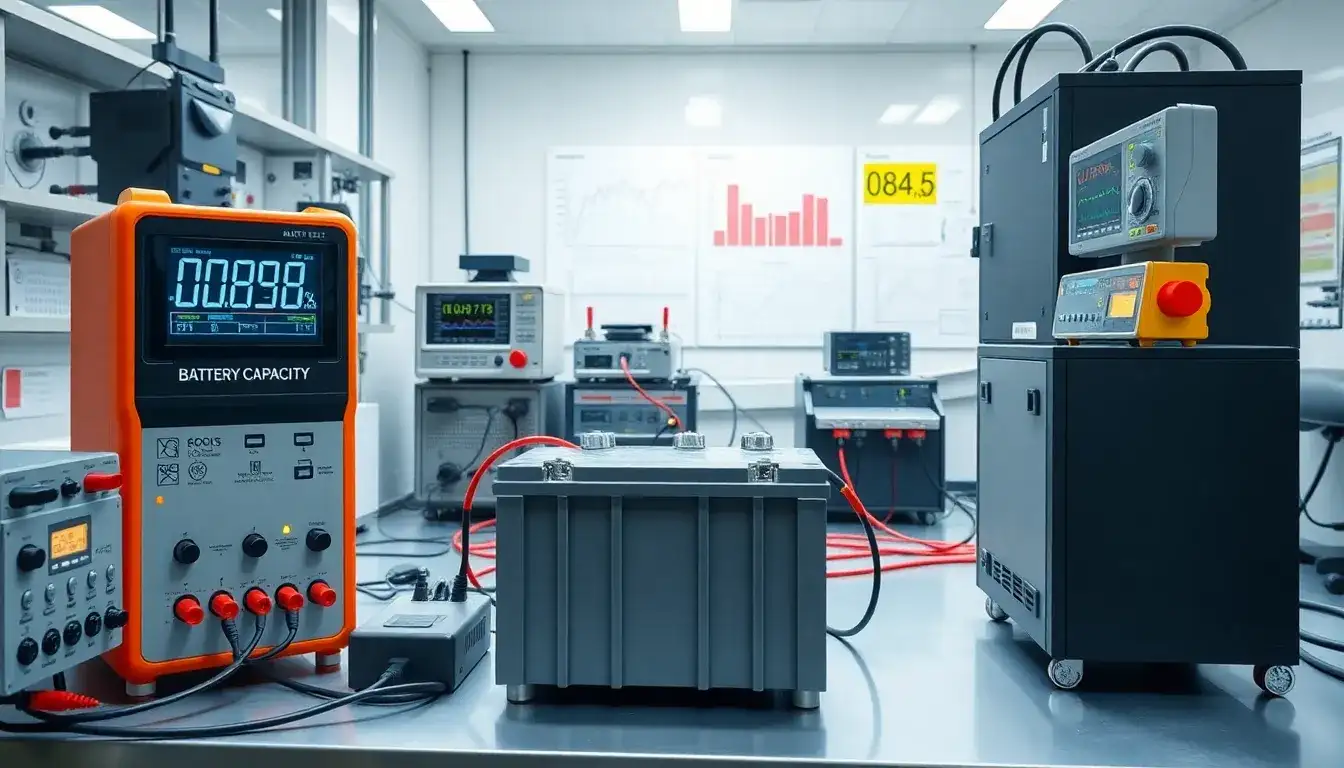
During a battery capacity test, several key components need to be verified to ensure accurate and reliable results. Here are the main aspects to focus on:
Key Components to Verify
-
Voltage and Current Measurements:
- Monitor the overall battery voltage and individual cell voltages throughout the test.
- Measure the discharge current and ensure it remains at a specified C-rate during the test.
-
Time and Capacity Calculation:
- Record the time it takes for the battery to discharge from its fully charged state to a specified cutoff voltage.
- Calculate the actual capacity in ampere-hours (Ah) or watt-hours (Wh) by multiplying the current by time.
-
Temperature Adjustments:
- Ensure that temperature conditions are maintained and corrected for during the test, as temperature affects battery capacity. A cold battery may show less capacity than a warm one.
-
Cutoff Voltage:
- Establish a specific end-of-discharge voltage to safely terminate the test and protect the battery from deep discharge.
-
Individual Cell Performance:
- Monitor and record individual cell voltages at intervals and especially at the end of the test to identify weak cells.
-
Verification of Rated Capacity:
- Compare the measured capacity to the manufacturer’s rated capacity to ensure the battery meets specifications.
-
Physical and Electrical Integrity:
- Conduct a visual inspection for any physical damage or defects and ensure all electrical connections are secure and within specifications.
These components are crucial for ensuring a comprehensive and accurate battery capacity test.
Original article by NenPower, If reposted, please credit the source: https://nenpower.com/blog/what-are-the-key-components-to-verify-during-a-battery-capacity-test/

