

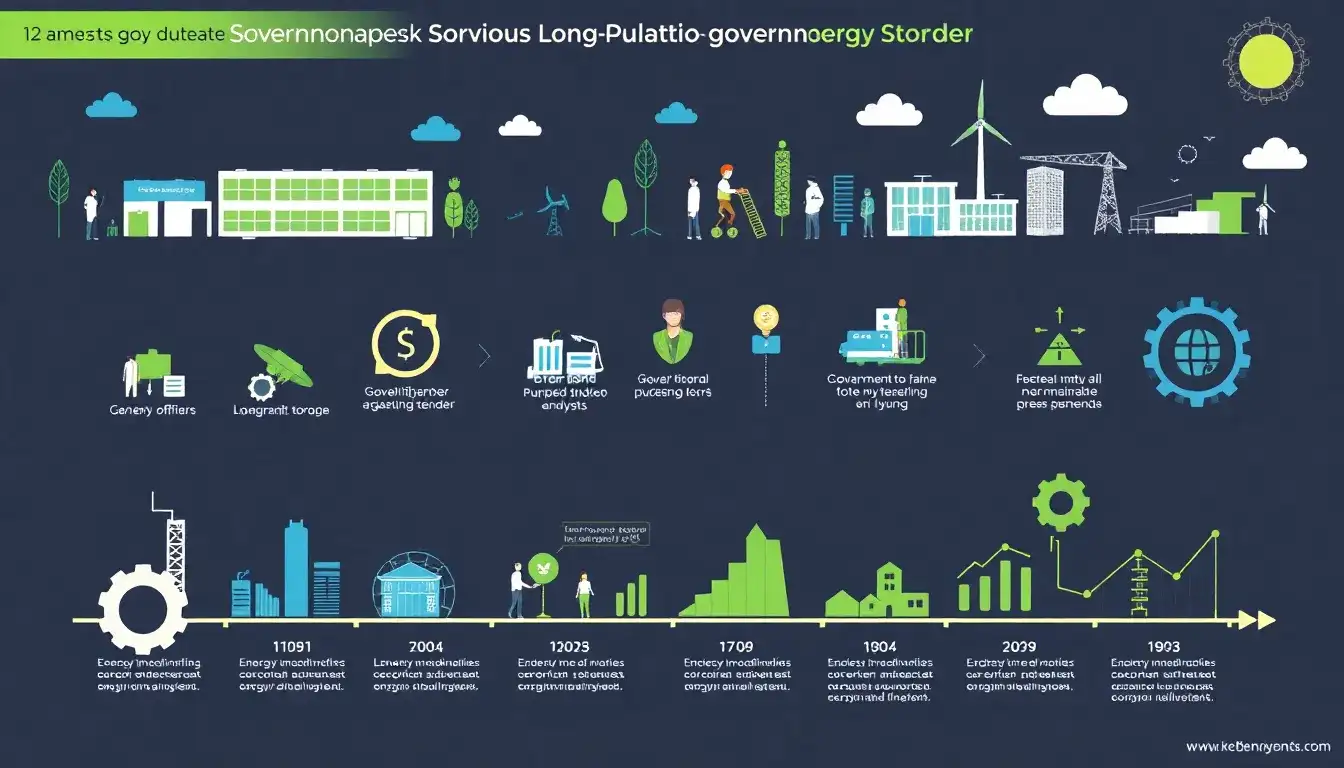
To construct a successful government tender for long-duration energy storage, several key components should be considered:
Key Components
- Clear Objectives:
- Definition of Long-Duration Storage: Specify that long-duration energy storage refers to systems capable of delivering electricity for 10 or more hours, as defined by the Department of Energy.
- Specific Capacity Targets: Clearly define the storage capacity sought, such as the NSW tender aiming for 1GW with at least 8 hours of storage.
- Technology Focus:
- Innovative Technologies: Encourage a diverse range of technologies, such as batteries, compressed air storage, and pumped hydro, to ensure a competitive field and adaptability to regional specifics.
- Economic Viability:
- Cost Effectiveness: Assess and incentivize projects based on cost-effectiveness, considering both the upfront costs and long-term operational expenses.
- Financial Incentives: Offer targeted financial support to accelerate commercial deployment and overcome barriers to entry.
- Contractual Structures:
- Long-Term Contracts: Issue long-term contracts to provide stability and predictability for investors and developers, as seen in NYSERDA’s annual RFP for Tier 1 RECs.
- Performance Metrics: Include clear performance metrics and penalties to ensure reliability and compliance with tender conditions.
- Sustainability and Environmental Impact:
- Renewable Integration: Emphasize compatibility with renewable energy sources to enhance grid resilience and reduce carbon emissions.
- Environmental Assessment: Mandate thorough environmental impact assessments to minimize ecological footprints.
- Project Evaluation Criteria:
- Technical Viability: Assess technical feasibility, including energy storage duration and capacity.
- Social and Economic Benefits: Consider local job creation, community acceptance, and broader societal impacts.
- Consultation and Adaptability:
- Stakeholder Engagement: Conduct public consultations to refine tender requirements based on stakeholder feedback and emerging needs.
- Flexibility in Tender Design: Be prepared to adjust the tender specifications in response to technological advancements or changes in market conditions.
By incorporating these components, a government tender can effectively attract viable proposals for long-duration energy storage projects that meet both economic and environmental objectives.
Original article by NenPower, If reposted, please credit the source: https://nenpower.com/blog/what-are-the-key-components-of-a-successful-government-tender-for-long-duration-energy-storage/

