

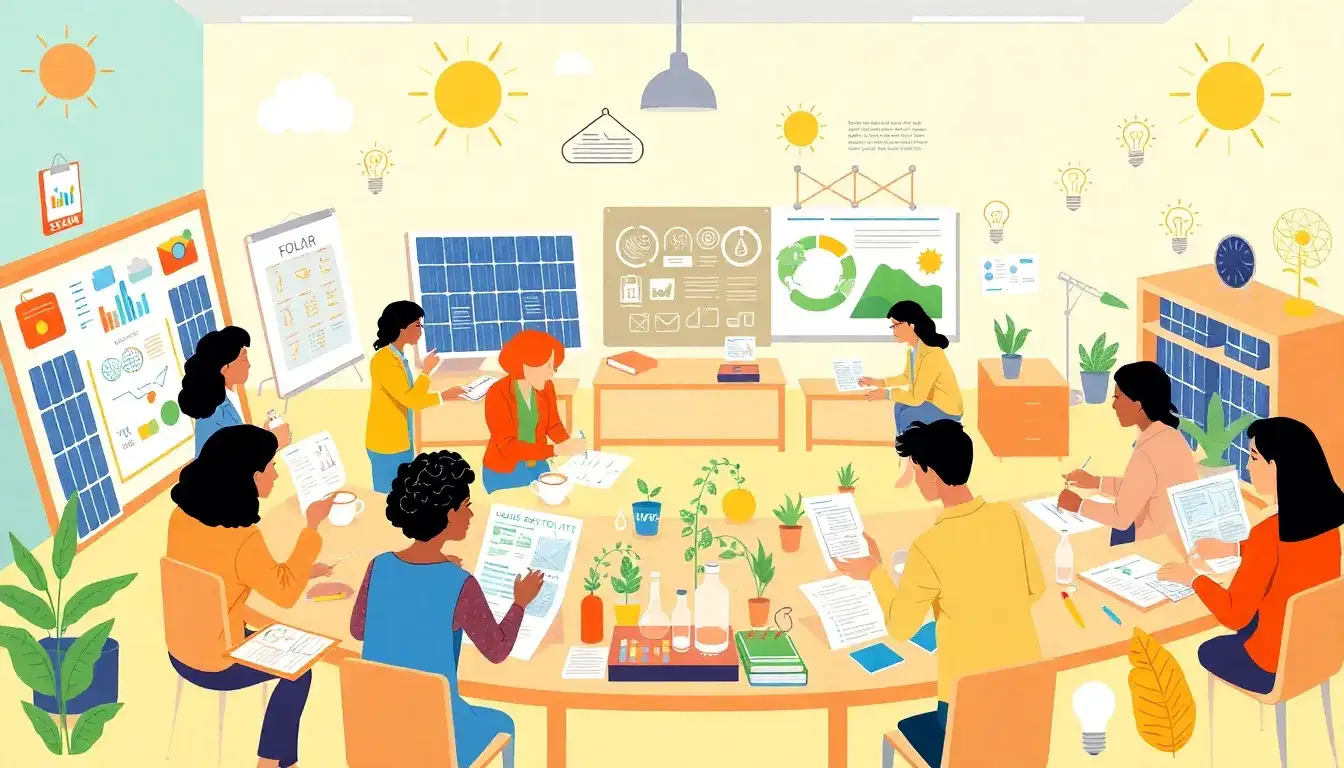
Key Components of a Comprehensive Solar Energy Training Program
1. Solar Energy Fundamentals
- Understanding solar radiation and how it is converted into electricity.
- Overview of solar cell technologies, including photovoltaic (PV) and concentrated solar power (CSP).
- Knowledge of the solar spectrum and factors affecting energy conversion efficiency.
2. Solar System Design
- Site assessment techniques, including shading analysis.
- Sizing solar PV systems according to specific energy requirements.
- Selection of appropriate solar panels, inverters, charge controllers, and other balance of system components.
3. Electrical Fundamentals
- Basics of electrical circuits relevant to solar systems.
- Electrical safety protocols and standards.
- Understanding solar panel electrical characteristics and interconnections.
- Differentiating between grid-tied and off-grid solar systems.
4. Installation Techniques
- Methods for installing roof-mounted and ground-mounted solar arrays.
- Proper wiring and electrical connections for safety and efficiency.
- Use of racking and mounting solutions.
- Integration of solar systems with existing electrical infrastructures.
5. Operation & Maintenance (O&M)
- Procedures for commissioning solar systems.
- Routine inspections and performance verification.
- Performing maintenance tasks to ensure long-term system reliability.
6. Practical Hands-On Training
- Real-world practice installing and troubleshooting solar PV systems.
- Use of simulation tools or lab equipment to reinforce concepts.
This kind of program equips educators with both theoretical knowledge and practical skills to effectively teach solar energy concepts and applications, enabling them to train students or professionals in the renewable energy field. Such programs often last around 40 hours and may be offered online or in-person to provide flexibility.
Original article by NenPower, If reposted, please credit the source: https://nenpower.com/blog/what-are-the-key-components-of-a-comprehensive-solar-energy-training-program-for-educators/

