

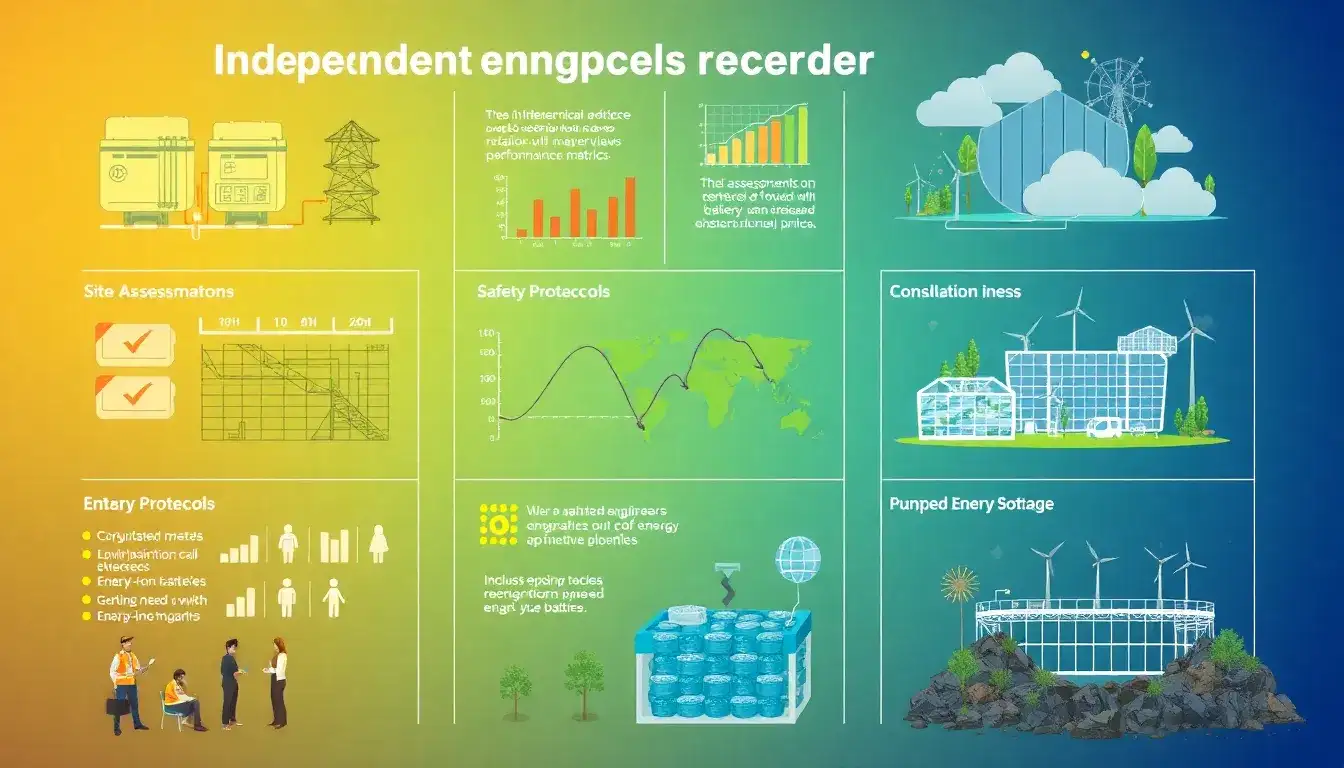
Key Components of an Independent Engineer Report for Energy Storage Projects
- Technical Design Evaluation
- Review of the project’s technical aspects, including system design, hardware, and software components.
- Assessment of the energy storage technology’s performance, reliability, and safety.
- Verification that the system meets relevant industry standards and best practices.
- Financial Analysis
- Financial modeling and economic feasibility assessments.
- Review of capital expenditure (CAPEX) and operating expenditure (OPEX) assumptions.
- Evaluation of financial returns and project viability.
- Contractual Compliance
- Review of contractual documents to ensure compliance with contractual obligations.
- Assessment of power purchase agreements (PPAs), interconnection agreements, and other relevant contracts.
- Risk Assessment and Mitigation
- Identification of potential technical and operational risks.
- Recommendations for risk mitigation strategies to ensure project success and bankability.
- Construction and Commissioning Review
- Monitoring of construction progress to verify alignment with plans.
- Oversight of commissioning processes to ensure that the system performs as designed.
- Environmental and Permitting Review
- Examination of environmental impact assessments and compliance with regulatory requirements.
- Operational and Maintenance (O&M) Strategies
- Analysis of O&M agreements and asset management plans.
- Evaluation of scheduled maintenance practices to ensure sustained system performance.
These components provide stakeholders, including investors and lenders, with a comprehensive view of the project’s feasibility, risks, and potential returns, which is crucial for securing financing or investment in energy storage projects.
Original article by NenPower, If reposted, please credit the source: https://nenpower.com/blog/what-are-the-key-components-included-in-an-independent-engineer-report-for-energy-storage-projects/

