

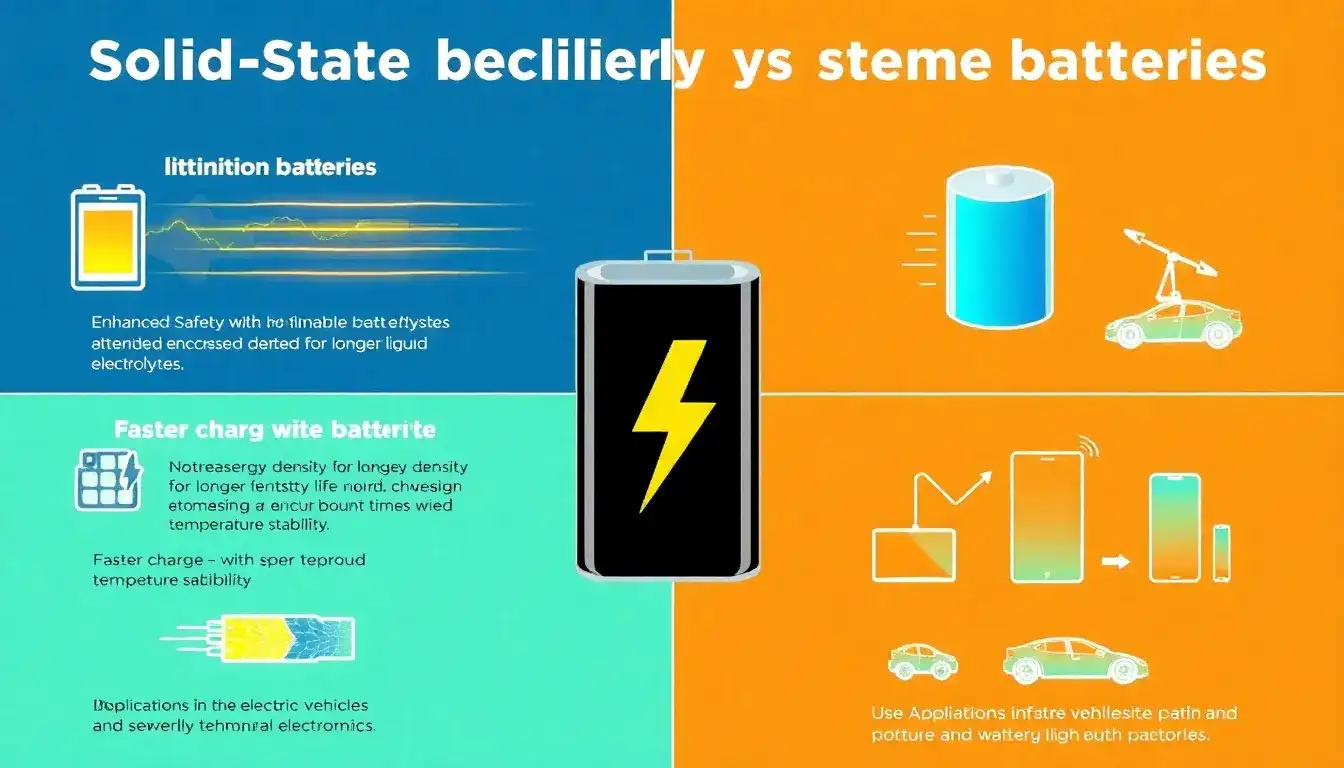
1. Higher Energy Density
Solid-state batteries can achieve significantly higher energy densities, with figures ranging from about 250 to 800 Wh/kg, compared to lithium-ion batteries which typically range from 160 to 250 Wh/kg. This means solid-state batteries can store more energy in the same volume or weight, enabling longer device runtimes or increased electric vehicle (EV) range. For example, some new solid-state battery types have reached 450 Wh/kg, making them notably smaller and lighter than lithium-ion counterparts.
2. Improved Safety
A major advantage of solid-state batteries lies in their use of solid electrolytes instead of the flammable liquid electrolytes found in lithium-ion batteries. This design significantly reduces the risk of overheating, thermal runaway, and fires, making solid-state batteries inherently safer for applications like EVs and consumer electronics.
3. Faster Charging Potential
Solid-state batteries can potentially charge much faster than lithium-ion batteries. While typical lithium-ion EV batteries take 20 minutes to 12 hours to recharge, solid-state batteries could reach 80% charge in as little as 10 to 15 minutes. This rapid charging capability stems from improved ion transport in solid electrolytes.
4. Longer Lifecycle and Durability
Although currently solid-state batteries face some challenges like crack formation affecting longevity, they have the potential for longer lifespans and more charge-discharge cycles. Some reports suggest solid-state batteries can be charged up to five times more than lithium-ion batteries over their lifecycle, enhancing durability and reducing replacement frequency.
5. Lower Environmental Impact
Manufacturing solid-state batteries requires fewer raw materials, which may reduce their overall carbon footprint by approximately 39% compared to lithium-ion batteries. This is beneficial for sustainability and reducing the environmental impact of battery production.
Summary Table of Key Benefits
| Feature | Lithium-Ion Batteries | Solid-State Batteries |
|---|---|---|
| Energy Density | 160-250 Wh/kg | 250-800 Wh/kg |
| Safety | Risk of overheating, flammable | Non-flammable solid electrolyte, safer |
| Charging Speed | Moderate to fast (20 min – 12 hrs) | Potential ultra-fast charging (10-15 min) |
| Lifespan | Good, but degrades over time | Potentially longer, but currently facing challenges |
| Environmental Impact | Higher due to more materials used | Lower carbon footprint (approx. 39% less) |
In summary, solid-state batteries offer higher energy density, enhanced safety, faster charging, potentially longer life, and a reduced environmental footprint compared to lithium-ion batteries. However, they are still in development, with higher production costs and technical challenges to scale manufacturing. Commercialization for EVs is expected near 2026-2027.
Original article by NenPower, If reposted, please credit the source: https://nenpower.com/blog/what-are-the-key-benefits-of-solid-state-batteries-over-lithium-ion-batteries/

