

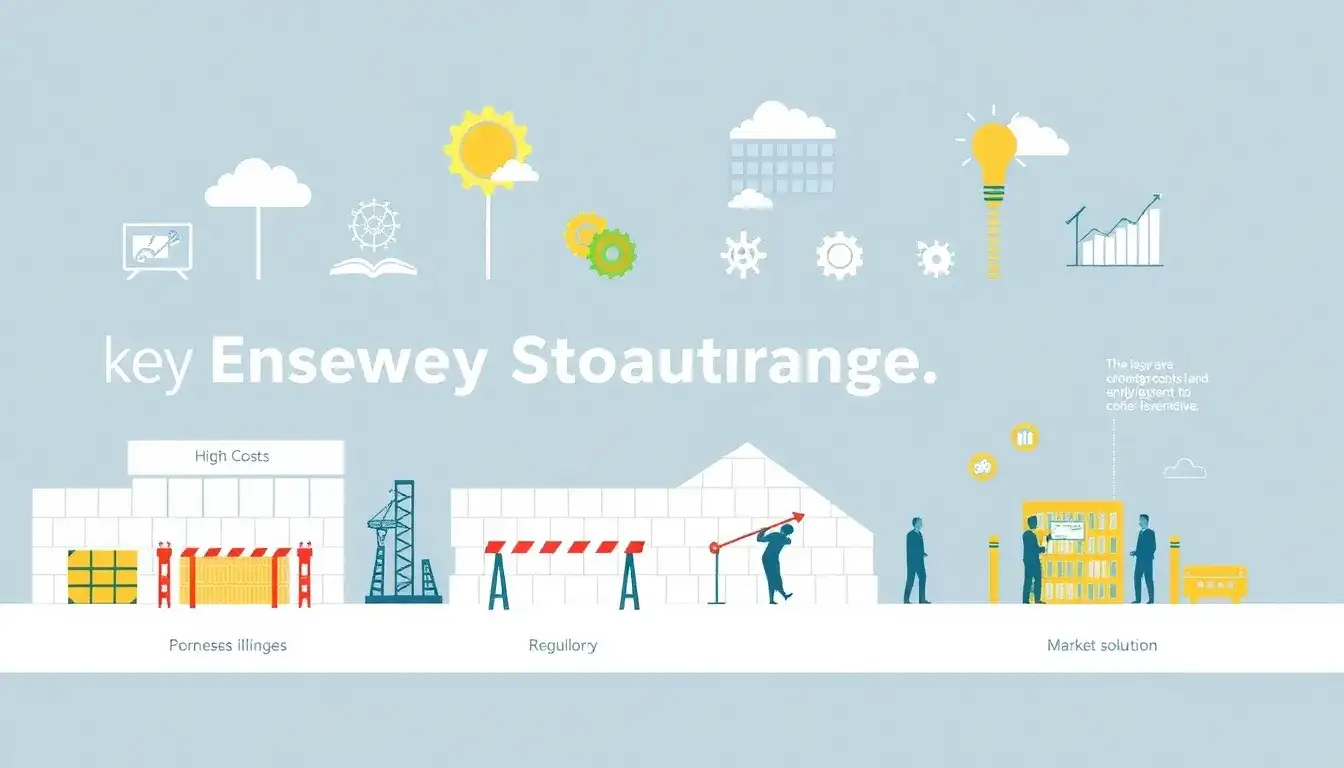
The key barriers to energy storage adoption encompass financial, technical, regulatory, supply chain, and social challenges, which policies can strategically address to accelerate deployment.
Key Barriers to Energy Storage Adoption
- High Upfront Costs: Energy storage technologies, particularly battery systems, involve substantial initial investments, making large-scale projects financially challenging. The unclear and sometimes lengthy return on investment deters many potential investors.
- Technical Limitations: Issues such as limited energy density, battery lifespan degradation, and safety concerns (e.g., overheating and fire risks) hinder broad adoption. Additionally, existing electric grids are often not designed for integrating distributed energy storage, complicating deployment.
- Regulatory and Market Barriers: Many regulatory frameworks and electricity market structures do not adequately recognize or compensate energy storage services, causing uncertainty and discouraging investment. Lengthy approval processes and long interconnection queues further delay projects, with some queues extending beyond a decade in certain regions.
- Supply Chain Constraints: Demand surges for critical materials like lithium, metals, and semiconductors have caused shortages, price volatility, and potential bottlenecks, especially as electric vehicle growth increases pressure on supply chains.
- Lack of Standardization: The absence of universally accepted standards for energy storage systems complicates interoperability and grid integration, creating technical and administrative hurdles.
- Public Awareness and Acceptance: Limited understanding of energy storage benefits and concerns over environmental impact and safety slow public support for deployment.
Policy Measures to Address Barriers
- Financial Incentives and Support: Policies can provide subsidies, tax credits, or low-interest financing to reduce upfront costs and improve the economics of energy storage projects.
- Regulatory Reform: Updating and harmonizing regulatory frameworks to explicitly recognize energy storage as a distinct resource with appropriate market participation rights and compensation mechanisms can stimulate investment. Streamlining permitting and interconnection processes reduces deployment delays.
- Supply Chain Strategies: Government support for domestic production of critical materials and technologies, alongside diversification of supply sources, can mitigate supply chain risks.
- Standardization and Technical Guidelines: Developing and enforcing common standards and safety protocols will enhance interoperability and simplify grid integration.
- Public Education and Outreach: Informing stakeholders and the public about the benefits and safety of energy storage can build acceptance and demand.
- Grid Modernization Policies: Investment in grid infrastructure upgrades to accommodate distributed energy resources, including storage, will facilitate integration.
In summary, comprehensive policy approaches that combine financial incentives, regulatory modernization, supply chain resilience, standards development, and public engagement are essential to overcoming the diverse barriers slowing energy storage adoption.
Original article by NenPower, If reposted, please credit the source: https://nenpower.com/blog/what-are-the-key-barriers-to-energy-storage-adoption-and-how-can-policies-address-them/

