

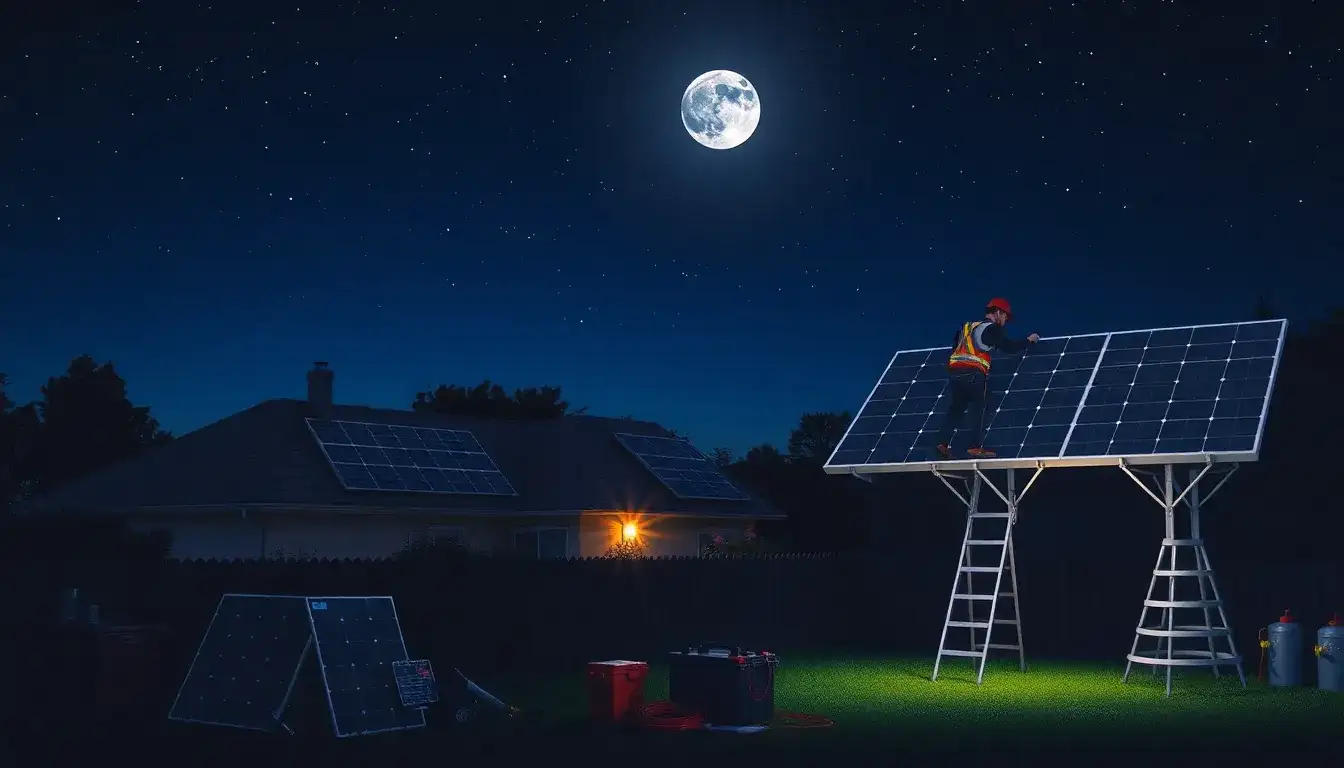
Night solar panels, in the sense of traditional photovoltaic solar panels, do not generate electricity at night because they require sunlight to produce power through the photovoltaic effect—the process that converts sunlight (photons) into electricity. Without sunlight, the solar cells cannot create the electric current needed to generate electricity.
However, if your goal is to have solar energy available at night, the installation requirements go beyond just the solar panels themselves and include additional components and considerations:
Key Installation Requirements for Using Solar Energy at Night
- Proper Solar Panel Installation
– Panels must be installed in locations with maximum sunlight exposure during the day, avoiding shading from trees, buildings, or other obstructions.
– Optimal tilt and orientation should be set based on geographic location to maximize daytime solar energy production. - Battery Storage System
– Install a solar battery or battery bank capable of storing excess electricity generated during the day. This stored energy can then be used to power your home at night.
– The size and capacity of the battery should be chosen based on your typical nighttime energy consumption to ensure sufficient power supply after sunset.
– Battery systems qualify for tax credits, such as the federal solar tax credit, making them financially attractive. - Grid Connection and Net Metering
– For grid-tied solar systems, connecting to the electric grid is essential to ensure power availability at night when solar panels are inactive.
– Net metering allows you to export excess energy generated during the day to the grid in exchange for credits. At night, you can draw electricity from the grid using those credits, effectively “storing” your solar energy without on-site batteries.
– Understanding local net metering policies is essential since credit rates and regulations vary by region. - Inverter and System Components
– A quality inverter is required to convert the DC electricity generated by solar panels into AC electricity for home use and grid compatibility.
– Some systems include smart energy management to optimize battery use and grid electricity draw, ensuring efficiency especially at night. - Maintenance and Monitoring
– Regular cleaning and maintenance of panels to maximize daytime electricity generation, which supports better battery charging and grid credits.
– Installation of monitoring systems to track generation, storage, and consumption helps optimize performance and detect issues early.
Summary
While solar panels themselves cannot produce electricity at night due to the lack of sunlight, a solar energy system designed for nighttime use must incorporate:
- Properly installed solar panels for maximum daytime generation
- A sufficiently sized battery storage system to hold excess energy
- A grid connection with net metering to balance energy supply and demand
- Reliable inverters and system components
- Ongoing maintenance and monitoring
This holistic approach allows a home or business to effectively use solar power 24/7 by storing or crediting daytime solar energy for nighttime use.
Original article by NenPower, If reposted, please credit the source: https://nenpower.com/blog/what-are-the-installation-requirements-for-night-solar-panels/

