Installation Requirements for Flexible Solar Panels
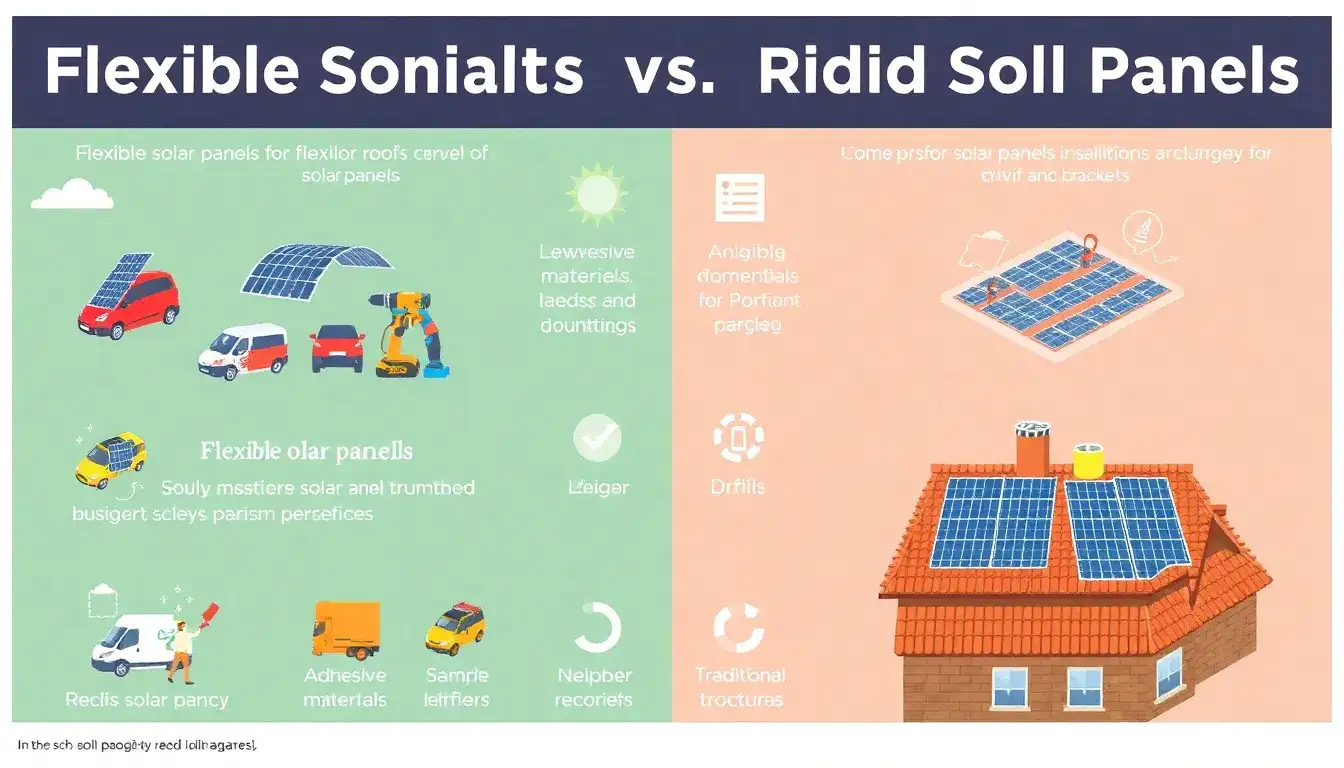
Installation requirements for flexible solar panels differ significantly from those for rigid solar panels due to their unique characteristics, such as lightweight design and adaptability to curved surfaces. Here’s a comparison of the installation requirements for both types:
Flexible Solar Panels
Key Installation Requirements:
- Surface Preparation: The installation surface should be thoroughly cleaned and degreased to ensure optimal adhesion.
- Adhesion Methods:
- Adhesives: Specialized adhesives like silicone, Sikaflex, or 3M VHB tape are commonly used for bonding the panels directly to the surface. The adhesive should be applied evenly to avoid bubbles and ensure a strong bond.
- Vented Gap Kits: These kits provide thermal expansion space and airflow, enhancing panel efficiency.
- Velcro or Magnetic Strips: Suitable for temporary installations where easy removal is desired.
- Layout and Orientation: Panels should be laid out to maximize sun exposure and allow space for wiring.
- Sealing Edges: Apply UV-resistant and waterproof sealants around panel edges to prevent water infiltration.
Unique Considerations:
- Weight: Flexible panels are lighter, so they often do not require additional structural support.
- Flexibility: They can be installed on curved surfaces like RVs or boats.
Rigid Solar Panels
Key Installation Requirements:
- Mounting Structures: Rigid panels typically require a sturdy mounting system to secure them firmly to the roof, often involving rails and clamps.
- Surface Preparation: The surface should be even and sturdy enough to support the weight of the panels and mounting hardware.
- Installation Tools: Mounting brackets, screws, and sometimes leveling feet are used to ensure proper alignment and stability.
- Electrical Connections: Wiring and electrical connections must be securely made to prevent electrical hazards.
Unique Considerations:
- Weight and Stability: Rigid panels are heavier and require more substantial support to prevent structural issues.
- Weather Resistance: Though durable, rigid panels may be more susceptible to physical damage from extreme weather conditions due to their rigidity.
In summary, flexible solar panels are easier to handle and install due to their lightweight nature and adaptability, whereas rigid panels require more robust mounting systems to handle their weight and ensure stability.
Original article by NenPower, If reposted, please credit the source: https://nenpower.com/blog/what-are-the-installation-requirements-for-flexible-solar-panels-versus-rigid-solar-panels/