

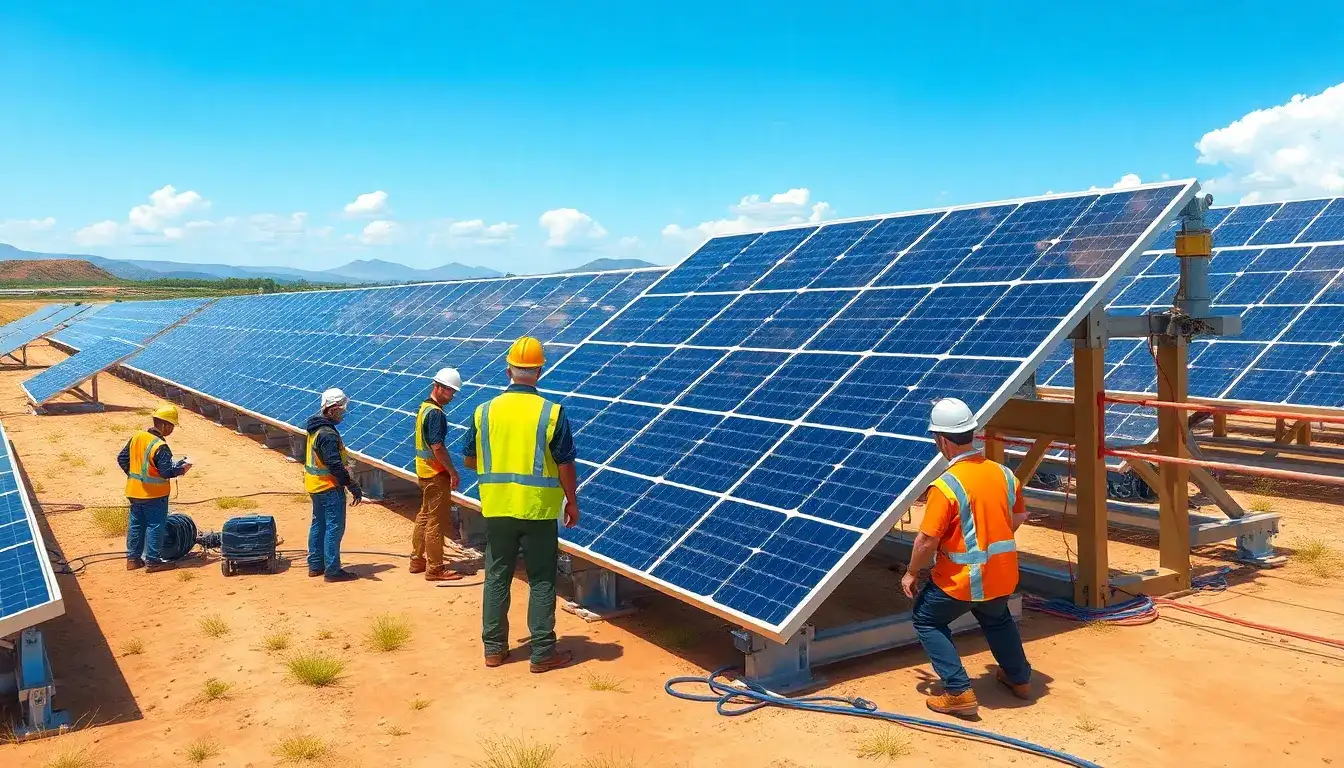
Bifacial solar panels present unique installation challenges that require careful planning and execution:
1. Height and Tilt Optimization
Installers must maintain specific heights (e.g., 42.5 inches minimum for snow-prone areas) and precise tilt angles to maximize rear-side light capture. This often demands specialized mounting systems compared to monofacial panels.
2. Ground Reflection Requirements
Performance heavily relies on reflective surfaces (albedo). Installations require light-colored ground cover or snow, with suboptimal surfaces (dark soils, vegetation) reducing energy gains.
3. Shading Sensitivity
Both front and rear sides are vulnerable to shading from nearby objects, mounting structures, or debris. Even minor shading can disproportionately reduce output compared to standard panels.
4. Component Sizing
Due to potential 25%+ rear-side production, wiring, fuses, and inverters must be oversized to handle higher total output, increasing system costs.
5. Site-Specific Complexity
Installations require expert assessment of local conditions (snowfall, dust, nearby structures) and specialized labor, often leading to longer setup times and higher costs.
6. Maintenance Demands
Dual-sided dirt accumulation necessitates more frequent cleaning than monofacial panels to maintain efficiency.
Original article by NenPower, If reposted, please credit the source: https://nenpower.com/blog/what-are-the-installation-challenges-of-bifacial-solar-panels/

