

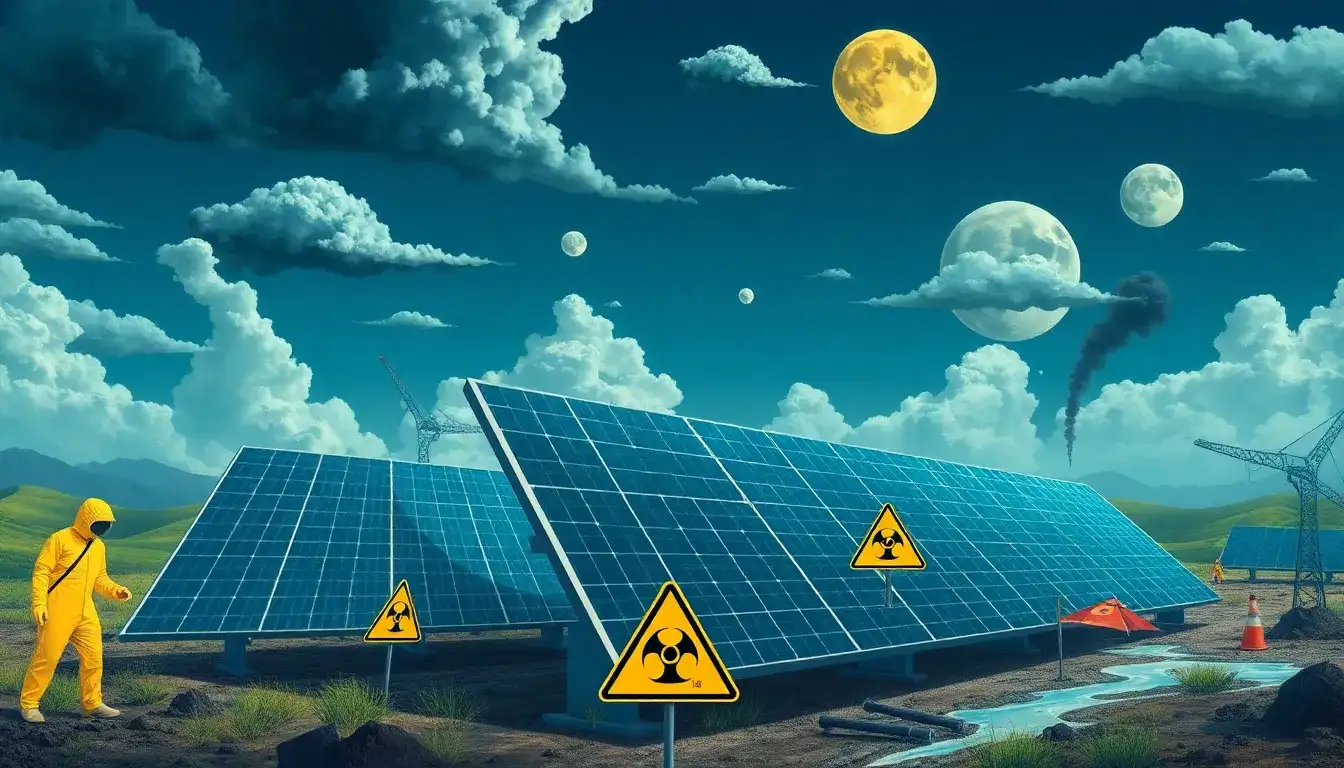
The health risks associated with toxic materials in solar panels mainly stem from certain metals such as lead and cadmium found in some types of panels, but the actual risk to human health is generally low under normal use.
Toxic Materials in Solar Panels
- Lead: Used primarily in the solder that connects individual solar cells within crystalline silicon panels. The amount of lead per panel is relatively small (about 12-15 grams), roughly equivalent to half the lead in a 12-gauge shotgun shell or 1/750th of that in a car battery. Lead exposure at high levels is harmful to human health, affecting the nervous system and causing other health problems.
- Cadmium: Found mainly in thin-film cadmium telluride (CdTe) panels. Cadmium telluride (CdTe) is toxic, but the quantity used is small (~7 grams per panel), and CdTe is less toxic than pure cadmium metal. Cadmium exposure in harmful forms can lead to kidney damage and respiratory issues, but the form used in panels is safer and present at very low levels, reducing health concerns under normal conditions.
Health Risks and Exposure Scenarios
- During Normal Use: Solar panels are generally safe. The toxic materials are sealed within the panels’ protective glass and frames, which consist mostly (85-95%) of glass, plastic, and aluminum, preventing exposure to these metals under normal operational conditions.
- During Production and Disposal: Potential health risks arise during manufacturing and improper disposal:
- Production exposes workers to toxic chemicals and fumes.
- At disposal or when panels break down, these materials could leach into the environment if not properly managed, potentially contaminating soil or water, posing risks of burns, lung disease, or other toxic effects if handled without precautions.
Environmental and Regulatory Considerations
- Some solar panels, depending on their metal content, are classified as hazardous waste under regulations due to lead and cadmium levels and require proper recycling and disposal protocols to avoid environmental contamination.
- Homeowners and installers are advised to follow local and state recycling guidelines to manage solar panel waste safely and minimize exposure risks.
Summary
| Material | Presence in Solar Panels | Health Risk | Exposure Route | Risk Level in Use |
|---|---|---|---|---|
| Lead | Solder in crystalline silicon panels | Nervous system damage, toxicity at high levels | Exposure from broken panels or waste | Low during normal use, higher in disposal/production |
| Cadmium (CdTe) | Thin-film panels (~7 grams per panel) | Kidney damage, respiratory issues (less toxic form used) | Exposure mainly if panel broken or improper disposal | Very low during normal use |
| Other chemicals | Possible in thin-film panel production | Burns, lung disease (mainly factory workers) | Inhalation or contact during production | Not relevant for users of installed panels |
Solar panels in widespread residential and commercial use today predominantly use silicon cells which contain no toxic materials, further reducing health risks for the general population.
Conclusion
While certain toxic materials in solar panels pose health risks primarily during manufacturing and improper disposal, the panels themselves are safe for consumers when intact and properly maintained. Managing end-of-life panels through proper recycling is key to minimizing any toxic exposure to humans and the environment.
Original article by NenPower, If reposted, please credit the source: https://nenpower.com/blog/what-are-the-health-risks-associated-with-the-toxic-materials-in-solar-panels/

