

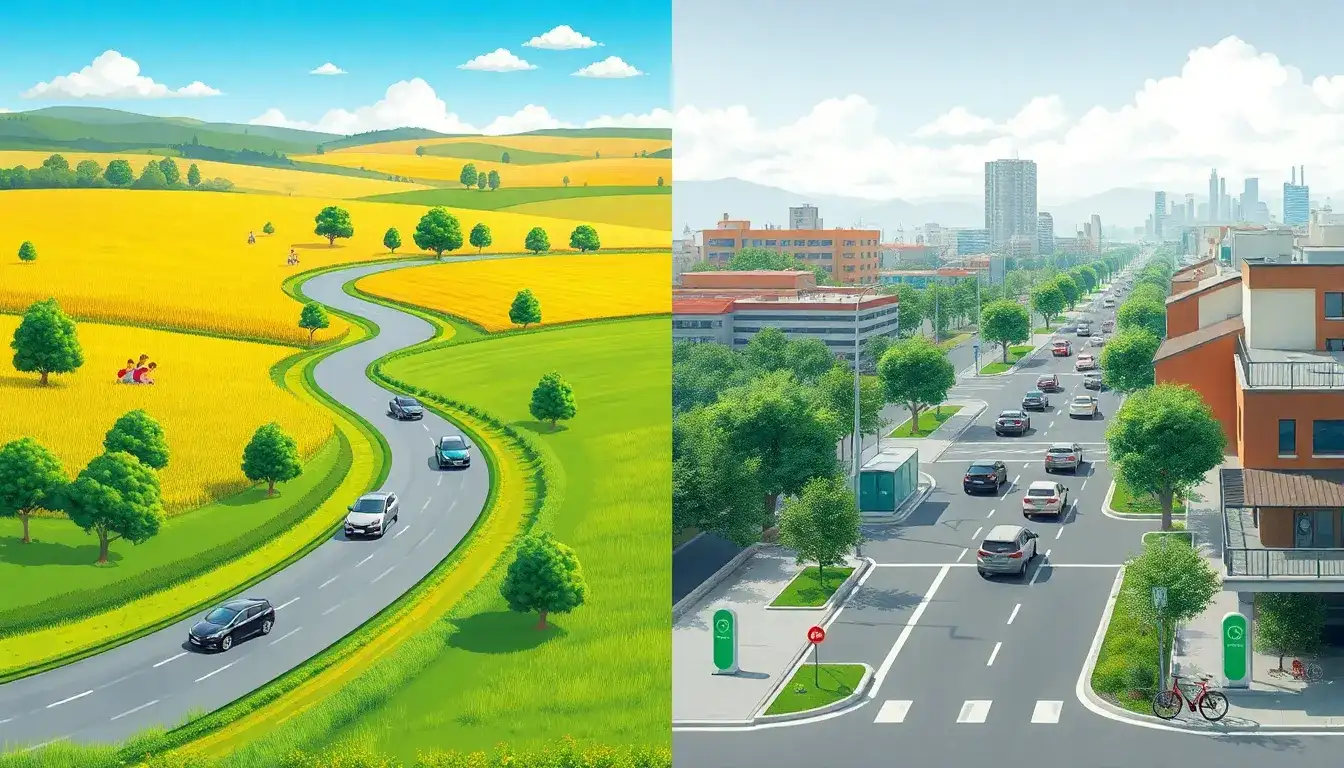
Electric vehicles (EVs) offer significant health benefits in both rural and urban areas, but the nature and impact of these benefits can differ due to distinct characteristics of these environments.
Health Benefits of EVs in Rural Areas vs. Urban Areas
Rural Areas:
- Reduced Air Pollution Near Homes and Businesses: Battery electric vehicles (BEVs) produce zero tailpipe emissions, which helps reduce harmful pollutants around rural residences and workplaces. This decrease in local air pollution can improve respiratory health and reduce health risks for rural populations who might otherwise be exposed to emissions from conventional vehicles.
- Lower Brake Dust Pollution: Because EVs use regenerative braking, they generate less brake dust than conventional vehicles, contributing to better air quality in rural communities.
- Health Benefits from Micromobility: The adoption of electric bikes (e-bikes) in rural areas, such as the Fire Mountain Trails System, supports active transportation that improves individual and community health, including cardiovascular and mental health benefits.
- Environmental Justice Impacts: Rural communities, which often include low-income and communities of color, can experience disproportionate health burdens from pollution. EV adoption can reduce these burdens and promote health equity.
- Climate Change Mitigation Benefits: Rural areas are increasingly vulnerable to climate change effects such as wildfires, storms, and droughts. By reducing greenhouse gas emissions, EVs contribute to mitigating these climate impacts, indirectly supporting rural health.
Urban Areas:
- Urban areas have higher population densities and typically greater vehicle traffic, leading to higher concentrations of vehicle emissions which contribute to respiratory and cardiovascular diseases.
- EV adoption in urban areas reduces ozone and particle pollution, which improves air quality where it is most needed to benefit large populations.
- Urban dwellers may see immediate and pronounced improvements in air quality and related health outcomes due to higher baseline pollution levels.
Comparative Summary
| Aspect | Rural Areas | Urban Areas |
|---|---|---|
| Air pollution baseline | Generally lower but can be locally significant | High pollution exposure due to dense traffic |
| Health impact of reduced emissions | Improved respiratory health near homes/businesses | Reduced respiratory and cardiovascular diseases on a larger scale |
| Micromobility benefits | Access to e-bikes promotes active transport, improving community health | Similar micromobility benefits, often more infrastructure |
| Environmental justice | Particularly important for overburdened rural communities | Also critical for urban low-income and communities of color |
| Climate change vulnerability | Higher exposure to wildfires, storms, heat | Urban heat islands and pollution-related risks |
| EV adoption rate | Currently ~40% lower than urban areas, limiting benefits | Higher adoption, greater immediate impact on air quality |
In summary, EVs improve health in rural areas mainly through reduced localized air pollution near homes and businesses, mitigation of climate impacts, and promoting active transportation in communities with fewer pollution sources than cities. Urban areas benefit from EVs by reducing higher baseline levels of harmful air pollutants affecting larger populations. Expanding EV adoption and infrastructure in rural areas will help close the health benefits gap relative to urban settings.
Original article by NenPower, If reposted, please credit the source: https://nenpower.com/blog/what-are-the-health-benefits-of-evs-in-rural-areas-compared-to-urban-areas/

