

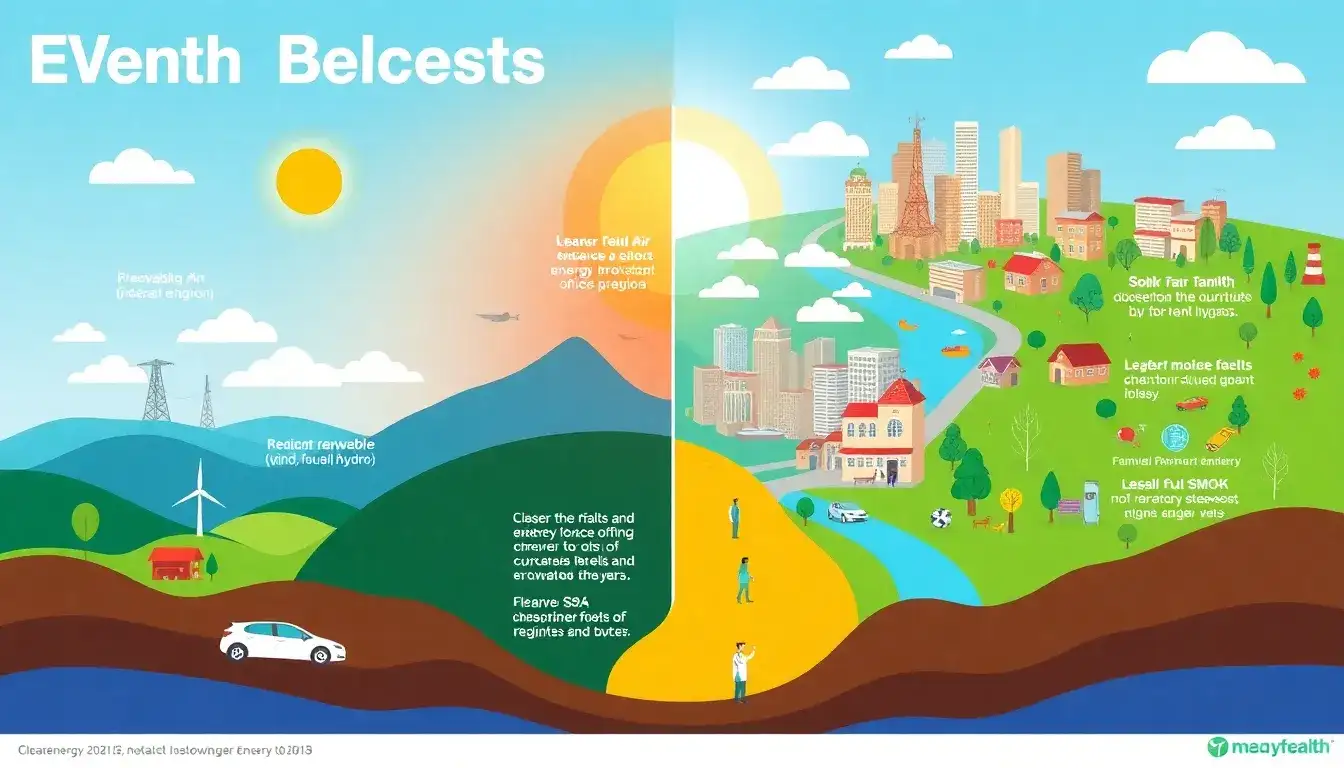
The health benefits of electric vehicles (EVs) vary by region depending on the local energy mix powering the electric grid, but overall, EV adoption offers significant improvements in air quality and public health worldwide.
Health Benefits of EVs Across Different Energy Mixes
- Reduction in Tailpipe Emissions Improves Air Quality and Health
EVs produce no direct tailpipe emissions, unlike internal combustion engine (ICE) vehicles, which emit nitrogen oxides (NOx), particulate matter (PM2.5), sulfur oxides, and other harmful air pollutants. These pollutants contribute to cardiovascular diseases, respiratory illnesses like asthma, cancer, and premature deaths. By replacing ICE vehicles with EVs, regions experience lower ambient air pollution, resulting in healthier populations and fewer pollution-driven diseases. - Greater Health Benefits in Regions with Cleaner Electricity Grids
The health benefits from EVs amplify significantly when coupled with electricity generated from renewable or low-emission sources. Regions that power EVs primarily with renewables or zero-carbon electricity see much larger drops in air pollution-related illnesses and deaths compared to those reliant on fossil fuel electricity. For example, studies estimate that a full transition to EVs powered by clean electricity in the US could avoid upwards of 150,000 to 170,000 premature deaths by 2050, alongside trillions of dollars in health-related cost savings. - Health Improvements Even with Fossil-Fuel Dominated Grids
Even in regions where the grid still relies heavily on fossil fuels, EV adoption reduces health impacts by avoiding tailpipe emissions directly within urban areas where people live and breathe. For instance, modeling shows that swapping just 25% of vehicles to EVs under a grid with 61% fossil fuel generation can still avoid nearly $17 billion in health damages from air pollution. However, the health benefits grow as the grid becomes greener. - Disproportionate Benefits to Vulnerable Populations
EV adoption tends to reduce air pollution exposure most markedly in low-income, racialized, or marginalized communities, which historically bear a disproportionate burden of pollution-related health issues. Thus, EVs contribute to health equity by lowering the uneven impacts of air pollution.
Summary
| Energy Mix Type | Health Benefit Highlights |
|---|---|
| Renewable/Clean Grid | Largest reductions in air pollution, avoided hundreds of thousands of premature deaths, and trillions in health cost savings. |
| Mixed Grid (Fossil + Renewables) | Moderate but significant reduction in pollution-related illnesses and deaths, with benefits increasing alongside renewable share. |
| Fossil-Fuel Dominated Grid | Health benefits mainly from elimination of tailpipe emissions, still substantial but less than clean grid scenarios. |
In all cases, the adoption of EVs leads to fewer air pollutants harmful to human health, including NOx and fine particulate matter, which are linked to heart and lung diseases. The scale of the benefits depends strongly on how clean the electricity generation is, with the best outcomes achieved when EVs are powered by renewable energy. This dual strategy of electrifying transport and greening the grid provides the greatest improvements in public health across regions with varied energy mixes.
Additional Impacts
- Avoided childhood asthma attacks and reduced cancer risks due to cleaner air.
- Benefits extend beyond health to improved crop and vegetation growth due to lower pollution.
- Significant savings in healthcare costs associated with pollution-related diseases.
Thus, transitioning to EVs combined with decarbonizing electricity generation is a powerful pathway to enhance public health globally, regardless of current energy infrastructure, with amplified effects as grids become greener.
Original article by NenPower, If reposted, please credit the source: https://nenpower.com/blog/what-are-the-health-benefits-of-evs-in-regions-with-different-energy-mixes/

