

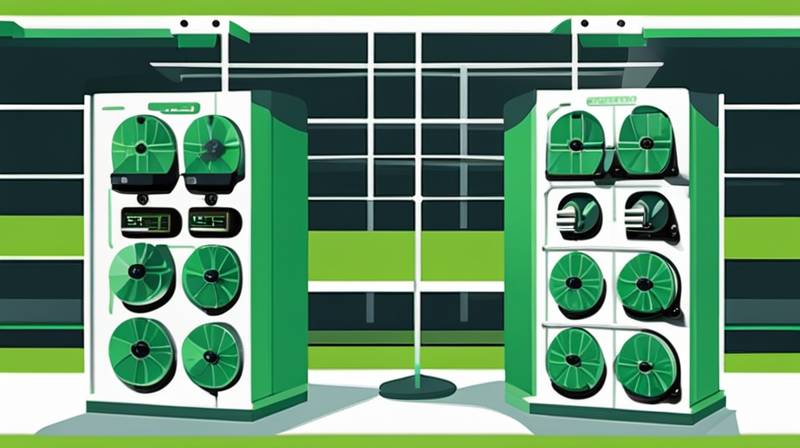
Green energy storage equipment encompasses various technologies designed to store energy generated from renewable sources. 1. These technologies include batteries, flywheels, pumped hydroelectric storage, and compressed air energy storage, which facilitate the effective use of renewable energy by capturing excess production and providing energy when needed. 2. The growing importance and implementation of these systems relate to their role in enhancing grid reliability, integrating renewable resources, and optimizing energy consumption. 3. The advancements in technology have made green energy storage more efficient and accessible, directly contributing to global efforts towards sustainability. 4. Diverse applications, from residential setups to large-scale energy management systems, exemplify the versatility and significance of these equipment in modern energy solutions.
1. THE RISE OF RENEWABLE ENERGY
In recent decades, the global shift towards renewable energy sources has gained monumental momentum, catalyzed by environmental concerns and energy security issues. This transformation is integral in reducing dependency on fossil fuels and curtailing greenhouse gas emissions. One key aspect of this revolution is the development and deployment of green energy storage solutions, which play a crucial role in balancing supply and demand. The intermittency of solar and wind energy poses challenges, as there are fluctuations in power generation based on environmental conditions. Thus, storing excess energy allows for a more stable and reliable energy supply.
These storage systems enhance the viability of renewable energy integration into the grid, as well as facilitate smoother transitions between energy generation and consumption. Earlier, energy was predominantly generated on demand; however, innovative technologies have paved the way for storing energy generated during peak production periods for future use. This capability significantly lessens energy waste, fosters efficiency, and supports the transition to cleaner energy sources.
2. TYPES OF GREEN ENERGY STORAGE EQUIPMENT
Numerous technologies embody the term “green energy storage.” These systems vary significantly in function, capacity, and application. Understanding the distinctions among them is essential in assessing their potential impact on energy sustainability. The following subsections delve into various categories of green energy storage systems.
2.1. BATTERIES
Batteries dominate the landscape of energy storage solutions. These devices store energy chemically and release it as electricity when needed. Lithium-ion batteries have emerged as the most prevalent choice in various applications, ranging from electric vehicles to home energy management systems. Notably, their efficiency and scalability have made them crucial in renewable energy applications, such as storing solar energy generated during the day for later use.
However, innovations extend beyond lithium-ion technology. Flow batteries, solid-state batteries, and even sodium-ion systems are garnering attention for their unique attributes. Flow batteries, for instance, offer longer discharge durations, making them fit for grid-scale applications where extended energy output is necessary. As research progresses, the performance and affordability of these battery technologies are anticipated to improve, leading to more extensive adoption in energy systems worldwide.
2.2. PUMPED HYDROELECTRIC STORAGE
Pumped hydroelectric storage has been a longstanding solution for energy storage, leveraging gravitational potential energy. This method involves pumping water uphill to a reservoir during periods of low electricity demand and releasing it to generate power during peak demand times. With a capacity to provide large-scale energy storage, pumped hydro remains the most widespread technique employed today.
Yet, despite its effectiveness, geographical constraints limit the establishment of new plants. The creation of such infrastructure can be capital-intensive and time-consuming. Additionally, environmental impacts must be carefully assessed to mitigate disruption to ecosystems and local communities. Innovations in design and technology have sought to address these challenges, promoting more sustainable practices in the construction and operation of pumped hydro systems.
3. INNOVATIONS IN ENERGY STORAGE TECHNOLOGIES
The drive towards greener technologies continues to spur innovations, transforming the energy landscape. Significant advancements in energy storage systems can directly correlate with an increased reliance on renewable sources. This section explores various groundbreaking technologies that have emerged, highlighting their roles in shaping the future of energy.
3.1. THERMAL ENERGY STORAGE
Thermal energy storage encompasses methods designed to store excess energy in the form of heat. Utilizing materials like molten salts or phase change materials, these systems capture thermal energy produced during peak generation periods and release it when necessary. This technique enables power plants to operate more efficiently, particularly solar thermal facilities, which convert sunlight into heat to produce electricity.
By extending the duration of energy availability, thermal energy storage systems improve grid reliability and provide flexibility for energy consumers. Such innovations can lead to reduced operational costs and enhanced sustainability in energy production. As researchers delve deeper into improving materials and methodologies, the role of thermal storage in the energy mix is poised for growth.
3.2. COMPRESSED AIR ENERGY STORAGE
Compressed air energy storage (CAES) is an intriguing technology that compresses air during low-demand periods to store energy. When electricity is needed, the compressed air is heated and expanded through turbines to generate power. This solution is particularly attractive due to its potential for large-scale implementation and long discharge durations, which can rival pumped hydro systems.
However, like other storage technologies, CAES systems also face challenges. Compressing air releases heat, necessitating either the use of natural gas to maintain efficiency or advanced solutions that integrate the recovery of heat generated during compression. Research efforts are ongoing to refine and optimize CAES systems, making them viable options for renewable energy integration and grid stabilization.
4. APPLICATIONS OF GREEN ENERGY STORAGE
The applications of green energy storage extend widely across various sectors, from residential uses to large-scale industrial systems. Understanding the significance and versatility of these systems showcases their potential in facilitating a greener future.
4.1. RESIDENTIAL USES
In a household context, battery storage solutions have gained traction as homeowners seek autonomy in their energy usage. With solar panels becoming increasingly popular, many individuals are investing in battery systems that enable them to harness and store solar energy. Home batteries not only lower monthly electricity bills but also provide backup power during outages, enhancing energy security.
Additionally, the integration of smart technologies and home energy management systems allows consumers to optimize their energy usage dynamically. By analyzing real-time data and implementing effective load management strategies, homeowners can maximize the benefits of their renewable resources and energy storage systems.
4.2. UTILITIES AND GRID OPERATIONS
On a larger scale, energy storage solutions are vital for utility companies aiming to meet growing energy demands while adhering to emission reduction targets. These solutions allow utilities to manage peak loads efficiently and defer costly infrastructure investments. The deployment of large-scale battery storage can mitigate grid congestion and support the integration of renewable energy sources into the existing grid.
Moreover, utilities can use energy storage to provide grid services, such as frequency regulation and load shifting. By employing advanced analytics and monitoring, companies can seamlessly incorporate these systems into their operations, thereby optimizing the use of renewable energies and bolstering the stability of the overall electrical grid.
5. REGULATORY AND ECONOMICAL CONSIDERATIONS
The transition to green energy storage is not purely a technical challenge—regulatory and economic aspects must be addressed to enable widespread adoption. The landscape of policies, incentives, and funding mechanisms has a profound influence on the growth of the energy storage market.
5.1. GOVERNMENT INCENTIVES
Government incentives play a pivotal role in enhancing the uptake of energy storage technologies. Financial support mechanisms can ease the initial burden of investment for consumers and businesses alike, bolstering the feasibility of integrating storage solutions. Many countries have introduced tax credits, rebates, or direct funding opportunities aimed at fostering the adoption of renewable energy technologies, including storage systems.
Such initiatives can not only reduce costs but also spark innovation and competition within the market, ultimately leading to more efficient and cost-effective solutions. Additionally, clear and supportive regulations are critical in establishing a favorable environment for research and development in energy storage technologies.
5.2. MARKET TRENDS AND FUTURE OPPORTUNITIES
As society leans toward sustainable energy practices, the market for green energy storage continues to grow. In turn, developers and manufacturers are capitalizing on this trend, leading to an increased variety of options available. The convergence of technological advancements and appealing market dynamics promises a bright future for energy storage systems.
Emerging technologies may redefine the energy storage landscape, as advancements in artificial intelligence and data analytics enable more efficient energy management. As the market matures, consumers and businesses will likely enjoy increasingly affordable, reliable, and efficient options, marking significant strides toward achieving a carbon-neutral future.
6. ENVIRONMENTAL AND SOCIAL IMPACTS
Adopting green energy storage systems brings along its set of environmental and social implications. While these technologies are designed to promote sustainability, understanding their broader impacts is crucial to ensuring a comprehensive approach to energy management.
6.1. ENVIRONMENTAL CONSIDERATIONS
The operation of green energy storage systems significantly influences overall emissions, resource consumption, and possible land use changes. While energy storage contributes to a greener grid, several environmental factors warrant careful evaluation. For instance, lithium mining associated with battery technologies poses challenges related to water consumption and habitat destruction.
Moreover, the disposal of end-of-life batteries requires effective regulatory frameworks to manage hazardous materials, further emphasizing the need for sustainable practices throughout their lifecycle. Innovators are responding to these challenges by focusing on recycling and developing sustainable materials, which could lessen the environmental footprint of energy storage systems.
6.2. SOCIOECONOMIC IMPACTS
Energy storage has the potential to fundamentally reshape local economies and societal dynamics. By allowing rural communities or individuals to harness renewable energy, green storage solutions create opportunities for energy independence. Empowering local communities to participate in energy generation promotes social equity and economic growth.
However, disparities in access to clean energy storage technology can deepen existing socioeconomic gaps. Ensuring that all communities, regardless of their economic status, can partake in the transition to renewable energy requires consistent partnership initiatives and outreach efforts. Achieving equitable distribution of benefits and resources will ultimately lead to a more inclusive energy landscape.
COMMONLY ASKED QUESTIONS
WHAT IS GREEN ENERGY STORAGE?
Green energy storage embodies a suite of technologies designed to store energy generated from renewable sources. These systems, including batteries, pumped hydroelectric storage, and compressed air energy storage, aim to balance the sporadic production of renewable energy and ensure its availability when required. By capturing excess energy produced during optimal conditions, green energy storage enhances grid reliability, contributes to sustainability efforts, and enables effective utilization of renewable resources.
HOW DOES PUMPED HYDROELECTRIC STORAGE WORK?
Pumped hydroelectric storage operates on the principle of gravitational energy. During low energy demand periods, surplus electricity is used to pump water from a lower reservoir to an upper one, effectively storing energy in the form of potential energy. When demand escalates, the stored water is released back down through turbines, generating electricity. This method represents one of the most established and efficient forms of large-scale energy storage, although it depends on geographical conditions to establish suitable sites for reservoirs.
WHAT ARE THE ADVANTAGES OF USING BATTERIES FOR ENERGY STORAGE?
Utilizing batteries for energy storage offers myriad advantages. One of the primary benefits lies in their versatility, as they can be implemented in various applications, ranging from residential systems to utility-scale projects. Additionally, batteries can provide quick responses to sudden fluctuations in energy demand, making them ideal for grid stabilization. As technology progresses and costs decline, the scalability of battery systems allows consumers and businesses alike to effectively harness and utilize renewable energy resources, contributing to a cleaner and more sustainable energy future.
HOW CAN ENERGY STORAGE IMPACT THE FUTURE OF RENEWABLE ENERGY?
Energy storage plays a catalytic role in the future of renewable energy by facilitating its integration into existing energy systems. As technologies develop, energy storage systems will increasingly become essential tools in managing fluctuating energy production from renewable sources. Enhancements in energy storage will contribute to grid reliability, enabling a transition away from traditional fossil fuels. By optimizing large-scale energy management and empowering individuals with reliable systems, energy storage could usher in a transformative era of sustainability, security, and energy independence.
In perspective, the advent of green energy storage equipment signifies a watershed moment in our pursuit of sustainable energy solutions. As reliance on renewable sources burgeons, the need for robust, efficient storage systems strengthens, shaping a future resilient to the demands and challenges of modern energy. From global initiatives promoting innovative technology to localized efforts empowering consumers, the pathways to sustainable energy storage are multifaceted. The continuing evolution of these technologies, alongside supportive regulatory frameworks and market dynamics, presents significant opportunities for advancement. As communities strive for energy independence and environmental conservation, green energy storage technologies establish a foothold in every sector, fostering economic growth and enhancing resilience. The implications are profound—both for energy consumption practices and for the planet’s future. Stabilizing the grid, empowering consumers, and mitigating climate change emerge as defining pursuits made feasible through unwavering commitment to green energy storage solutions. Emphasizing collaboration across sectors, transparent practices, and responsible resource management will further amplify the transformative potential of these technologies, ensuring their legacy as vital components of a sustainable energy ecosystem for generations to come.
Original article by NenPower, If reposted, please credit the source: https://nenpower.com/blog/what-are-the-green-energy-storage-equipment/

