

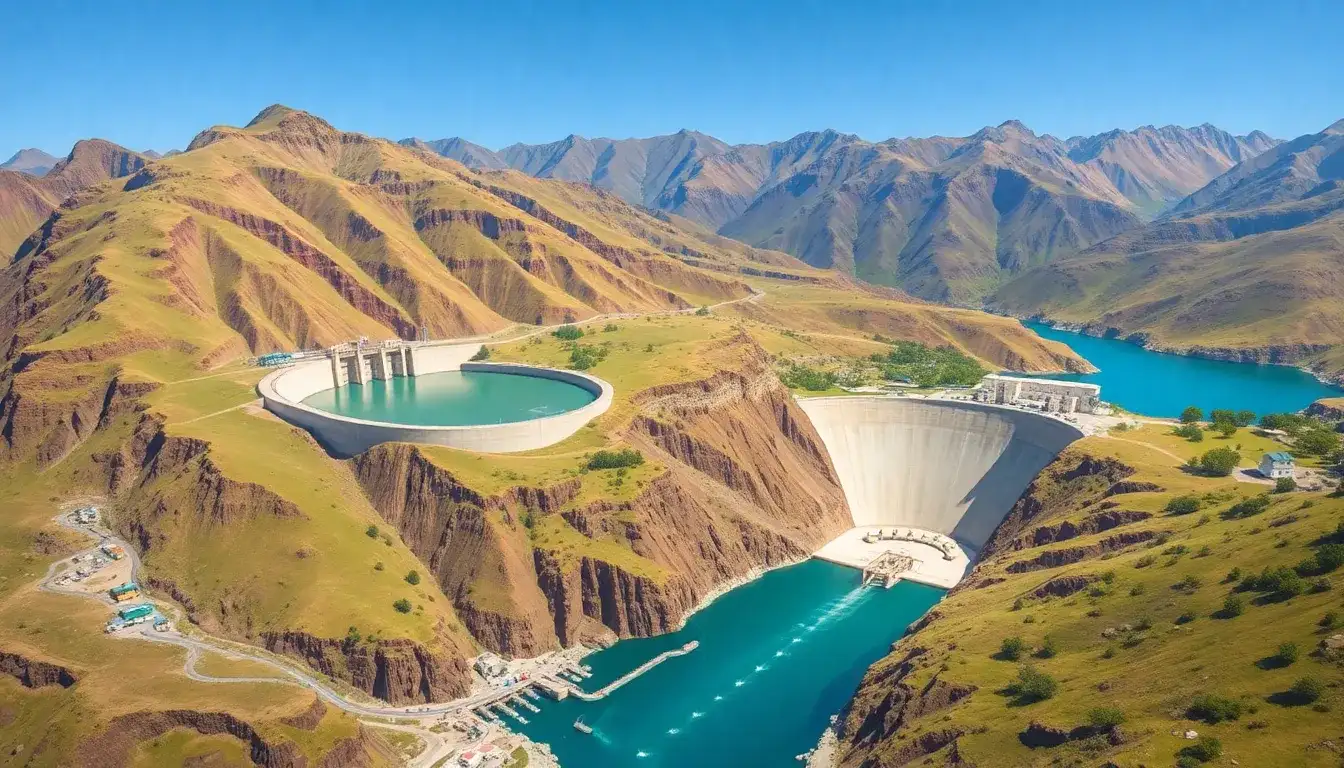
Pumped hydroelectric energy storage facilities require specific geographical conditions to operate efficiently:
- Hilly or Mountainous Terrain: These facilities need locations with significant vertical relief, which means a considerable difference in altitude between two bodies of water. Hilly or mountainous regions are ideal as they naturally provide the necessary height difference.
- Proximity and Height Difference: The two reservoirs must be in close proximity but at different elevations, allowing for efficient energy storage and release. This setup requires a minimum distance between the reservoirs to minimize energy loss during pumping and maximize energy generation during release.
- Existence of Natural or Artificial Reservoirs: While many pumped storage facilities are built in closed-loop systems away from rivers, some can utilize existing reservoirs or repurpose sites like disused mines. This flexibility allows for diverse geographical locations to be considered.
- Low Land and Water Requirements: Pumped hydro storage systems have low land and water requirements compared to other forms of renewable energy. They need about 10 hectares per gigawatt-hour of storage and approximately 1 gigaliter of initial fill water per gigawatt-hour.
- Low Carbon Emissions: Closed-loop or off-river systems have minimal environmental impact and carbon emissions, making them a sustainable choice for energy storage.
Original article by NenPower, If reposted, please credit the source: https://nenpower.com/blog/what-are-the-geographical-requirements-for-building-pumped-hydroelectric-energy-storage-facilities/

