

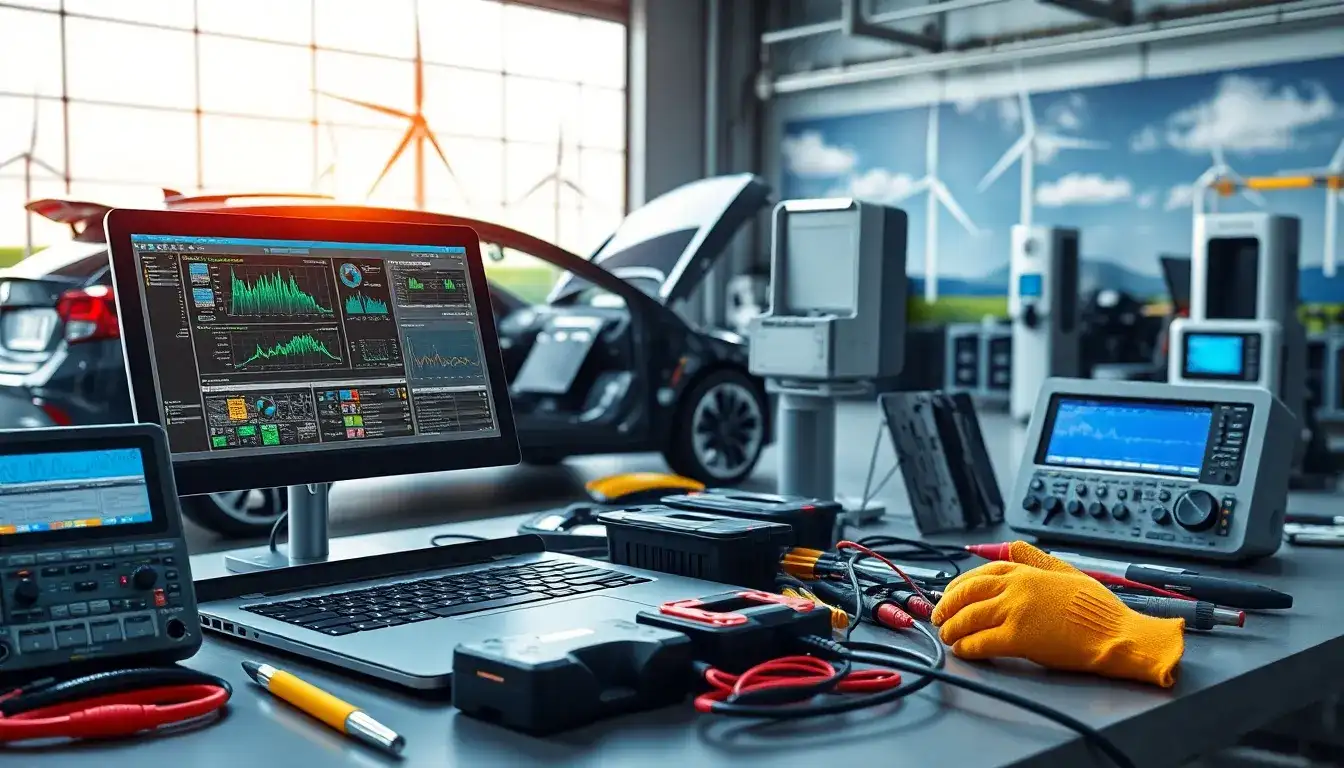
To work professionally with Plug-in Hybrid Electric Vehicles (PHEVs), several essential tools are necessary for efficient and safe maintenance and repair. These tools are designed to handle the unique requirements of high-voltage systems and specialized components in PHEVs. Here’s a list of key tools:
Essential Tools for PHEV Mechanics
-
Diagnostic Scan Tool
A diagnostic scan tool is crucial for reading and interpreting error codes in PHEV systems. It helps identify issues quickly and ensures accurate repairs by accessing control modules, battery management systems, and electric drive components. -
Digital Multimeter
A digital multimeter is indispensable for measuring voltage, current, and resistance in PHEV electrical systems. It ensures safe and precise diagnostic work. -
Thermal Imaging Camera
This tool helps detect heat-related issues such as hot spots in electrical systems, faulty connections, and coolant leaks by visualizing heat patterns. -
Insulated Tools
Sets of insulated tools, such as wrenches, screwdrivers, and pliers, are vital for working safely with high-voltage systems. These tools prevent electric shock and ensure safe handling of components. -
Safety Warning Signs and Equipment
Essential safety equipment includes warning signs to alert others that service or repair is in progress. Additionally, protective gear like gloves and safety goggles are necessary for personal safety. -
High-Voltage Battery Handling Equipment
Tools like the EV battery lift are designed for safely lifting and handling battery packs, which is crucial for maintenance tasks such as dismantling and fixing battery components. -
Oscilloscope (e.g., Pico PQ196)
This specialized tool is designed for safe and efficient diagnosis of high and low voltage systems in PHEVs, offering advanced features for analyzing complex electrical systems.
Original article by NenPower, If reposted, please credit the source: https://nenpower.com/blog/what-are-the-essential-tools-for-a-professional-working-with-phevs/

