

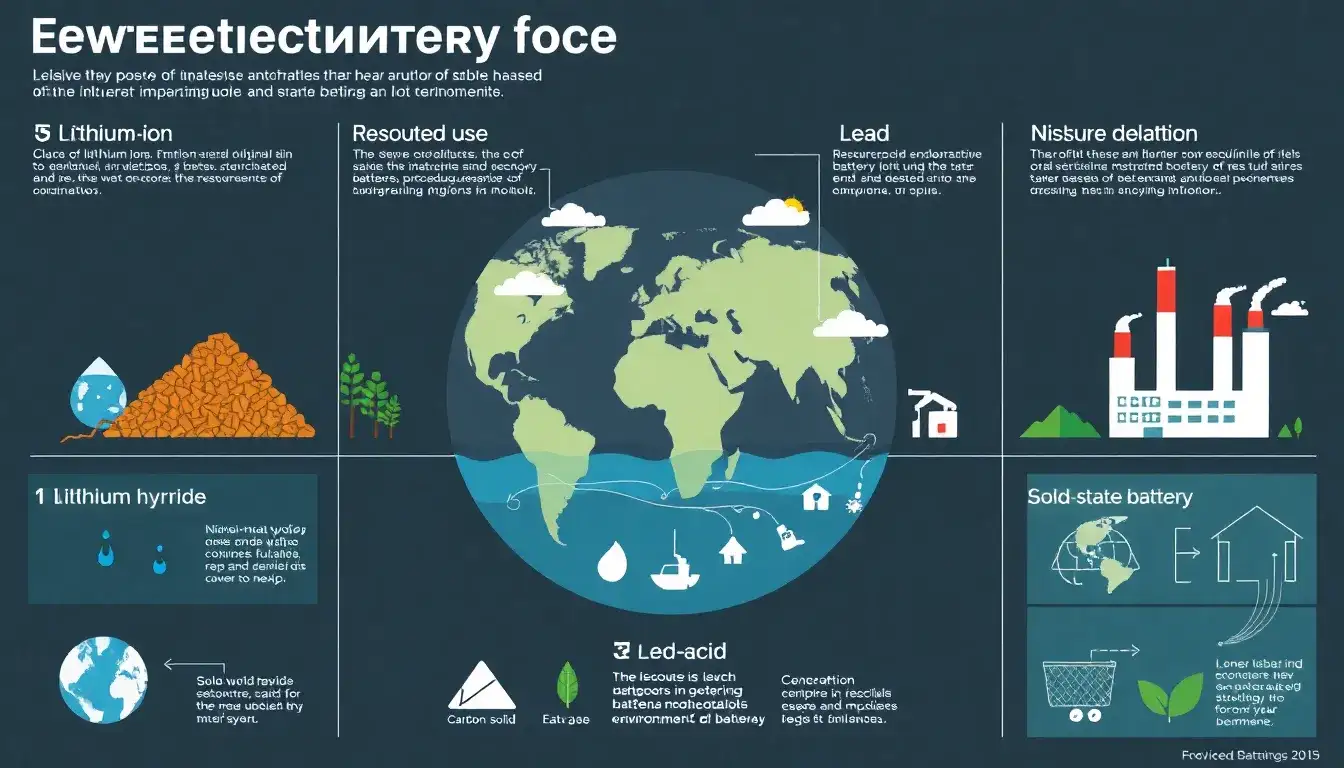
The environmental impacts of various battery technologies are complex and multifaceted, involving raw material extraction, manufacturing, usage, and disposal stages. Here is a detailed overview of key battery types and their environmental considerations:
Lithium-Ion Batteries (Li-ion)
Production and Raw Material Extraction:
- Lithium-ion batteries require mining of lithium, cobalt, nickel, and other metals, which is highly energy- and water-intensive. For example, producing 1 ton of lithium consumes about 2.2 million liters of water, and lithium extraction in South America’s Lithium Triangle uses up to 65% of regional water supplies, causing severe water scarcity.
- Mining activities cause land degradation, habitat destruction, and biodiversity loss. An example is the clearing of 350 hectares of native vegetation in Western Australia’s Greenbushes lithium mine, threatening species like black cockatoos.
- Cobalt mining, mainly in the Democratic Republic of Congo, raises environmental concerns due to toxic contamination and socio-economic issues.
- The manufacturing process is energy intensive, leading to significant CO2 emissions. Battery production emits roughly 150-200 kg of CO2 per kWh of battery capacity, with an average electric vehicle battery producing several tons of CO2 equivalent during manufacturing—higher than the production emissions of internal combustion engine vehicles.
Disposal and Recycling:
- Most lithium-ion batteries end up in landfills, where they pose risks of heavy metal leaching into soil and water and can cause landfill fires that release toxic gases.
- Recycling rates are low (about 5%), partly because recycling is costly, energy-intensive, and technologically challenging due to varied battery designs and hazardous materials.
- New global regulations are emerging to increase recycling rates, but effective recycling infrastructure is still lacking.
Usage Impacts:
- The environmental impact of operating electric vehicles largely depends on the electricity source. In regions reliant on coal-based power, the total carbon footprint of EVs can be significant.
Lead-Acid Batteries
- Lead-acid batteries have a high environmental impact due to lead toxicity, which poses serious health risks such as damage to the cardiovascular system and neurological development, especially in vulnerable populations.
- However, lead-acid batteries are highly recyclable, with about 99% recycling rates in some regions, recovering lead and other components for reuse.
- The environmental challenges mostly arise from improper handling and exposure to lead and associated chemicals during production, use, and disposal.
Emerging Battery Technologies and Alternatives
- Sodium-ion Batteries: These have lower energy density but are safer and more stable compared to lithium-ion batteries, with less risk of overheating and fire.
- Solid-State Batteries: Use solid electrolytes instead of liquid ones, offering higher energy density and improved safety by eliminating leaks and flammability risks. These are still in developmental stages.
- Lithium-Sulfur Batteries: Use sulfur in place of cobalt and nickel, which are more abundant and less environmentally damaging. They offer higher energy density and lighter weights, making them suitable for specific applications.
Summary Table of Environmental Impacts by Battery Type
| Battery Type | Raw Material Concerns | Production Footprint | Recycling Rate | Disposal Risks | Other Notes |
|---|---|---|---|---|---|
| Lithium-Ion | High water use, toxic mining, habitat loss, human rights issues (lithium, cobalt, nickel) | High CO2 emissions from energy usage and material processing | ~5% globally (low, improving with regulation) | Toxic leaching, landfill fires, hazardous waste | Dependent on electricity source for lifecycle emissions |
| Lead-Acid | Toxic lead exposure to humans and environment | Moderate, less energy intensive | ~99% (very high) | Lead contamination if improperly handled | Widely used in energy storage in developing countries |
| Sodium-Ion | Less scarce materials, lower toxicity | Under development | Unknown (early stage) | Lower risk of fire/overheating | Promising safer alternative |
| Solid-State | Potentially less hazardous materials | Developmental stage | Unknown | Safer than liquid electrolyte batteries | Higher energy density and safety advantages |
| Lithium-Sulfur | Uses sulfur instead of cobalt/nickel | Developmental stage | Unknown | Less toxic by design | Attractive for lightweight and drone applications |
Key Takeaways
- Lithium-ion batteries, while critical for electric vehicles and renewable energy storage, have significant environmental footprints largely from raw material extraction, water use, and energy-intensive manufacturing.
- Disposal of lithium-ion batteries is problematic due to toxicity and fire risks; current recycling is minimal but improving with new regulations.
- Lead-acid batteries pose substantial environmental and health risks but benefit from high recyclability.
- Emerging technologies such as solid-state and sodium-ion batteries offer promise for reduced environmental harm through safer materials and improved performance.
- Addressing battery environmental impacts requires sustainable mining, increased recycling efficiency, innovation in battery chemistry, and sourcing electricity for production and use from renewable energy.
In summary, all battery technologies have environmental impacts primarily driven by mining and disposal challenges; lithium-ion batteries lead in impact intensity but also hold the key to decarbonizing transport and energy storage if managed responsibly and innovatively.
Original article by NenPower, If reposted, please credit the source: https://nenpower.com/blog/what-are-the-environmental-impacts-of-various-battery-technologies/

