

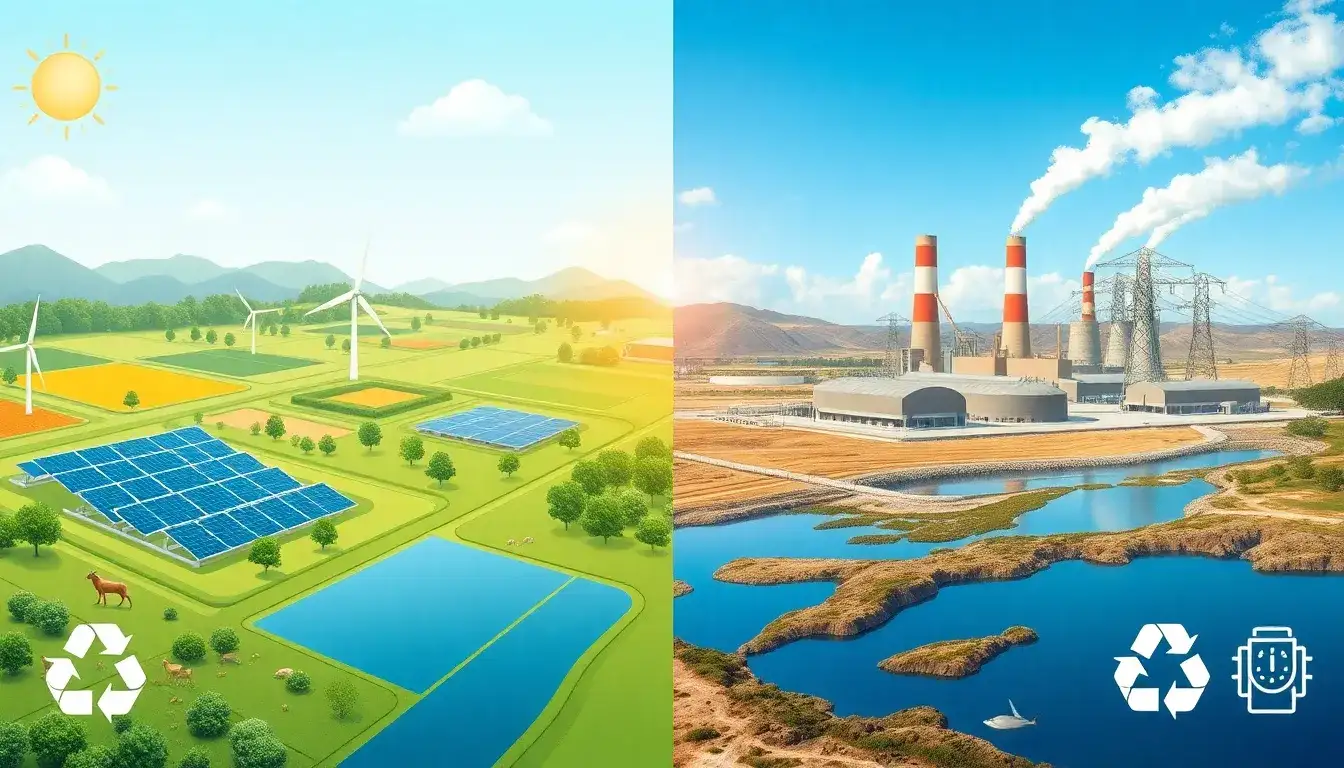
Environmental Impacts of Utility-Scale Batteries
- Reduced Greenhouse Gas Emissions: Utility-scale batteries can significantly reduce carbon emissions by storing excess energy from renewable sources, such as wind and solar power, thereby reducing the need for fossil fuels. However, the production phase of batteries contributes to emissions, with a carbon footprint ranging from 59 to 119 kg CO₂ per kWh of battery capacity.
- Environmental Benefits Over Traditional Generation: Battery storage can decrease impacts related to climate change, photochemical ozone formation, terrestrial acidification, and fine particulate matter compared to traditional fossil fuel-based power plants, such as natural gas plants.
- Life Cycle Assessment (LCA): The LCA of battery storage systems shows that the lithium-ion batteries and their inverters account for the largest environmental impacts, particularly in terms of climate change effects.
Environmental Impacts of Traditional Power Generation
- Higher Emissions: Traditional fossil fuel-based power plants, like those using natural gas, emit more greenhouse gases and other pollutants directly during operation, contributing significantly to environmental issues such as climate change and air pollution.
- Resource Extraction Impacts: The extraction and processing of fossil fuels have environmental impacts, including habitat destruction and water pollution.
Key Points for Comparison
| Aspect | Utility-Scale Batteries | Traditional Fossil Fuel Power |
|---|---|---|
| Carbon Emissions | Reduced emissions by utilizing renewables; higher production emissions. | High operational emissions. |
| Environmental Impacts | Lower operational impacts (e.g., air pollution). | Higher operational impacts (e.g., air pollution, habitat destruction). |
| Use of Renewables | Encourages integration of renewable energy sources. | Less compatible with renewable energy integration. |
Overall, while utility-scale batteries offer significant environmental benefits, especially in reducing operational emissions by leveraging renewable energy sources, their production phase contributes to environmental impacts. In contrast, traditional fossil fuel power generation has higher operational emissions but fewer production-related impacts compared to batteries.
Original article by NenPower, If reposted, please credit the source: https://nenpower.com/blog/what-are-the-environmental-impacts-of-utility-scale-batteries-versus-traditional-power-generation/

