

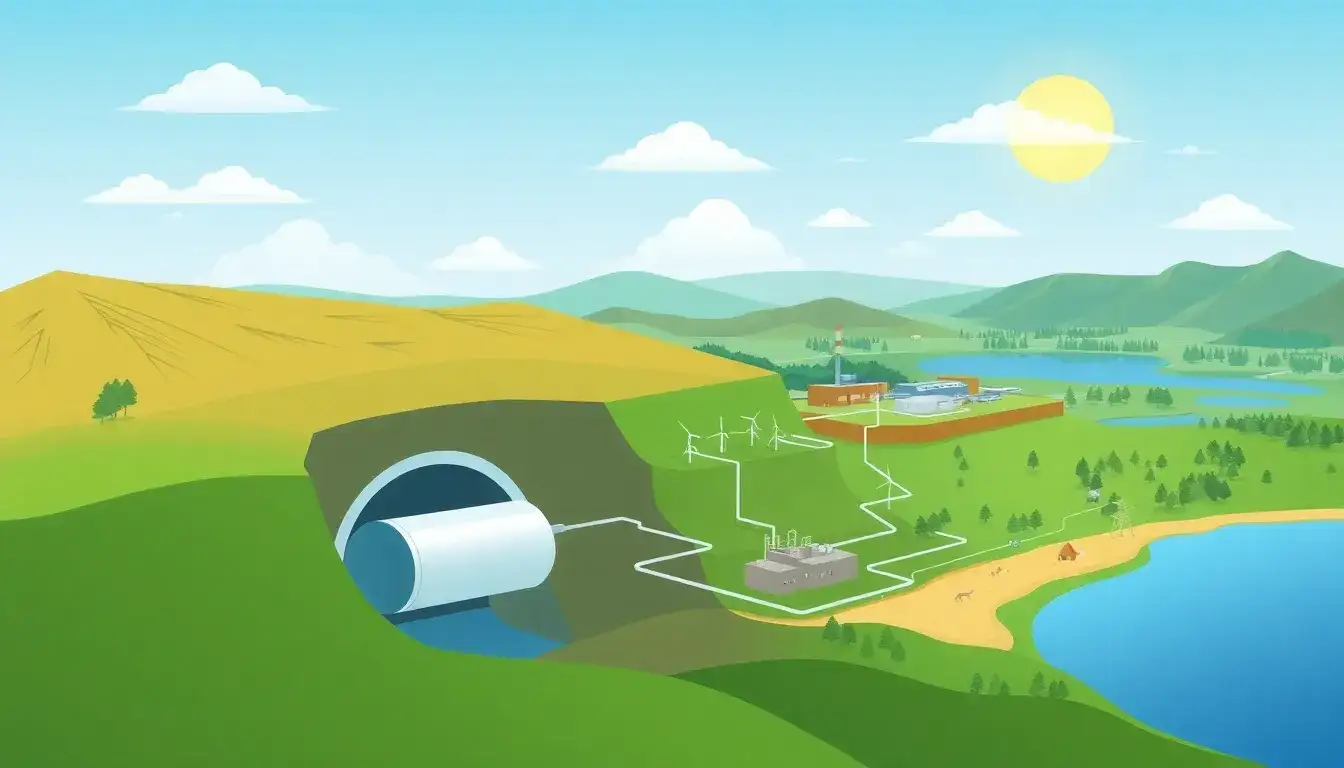
The environmental impacts of using natural gas in Compressed Air Energy Storage (CAES) systems stem mainly from the combustion of natural gas to reheat compressed air during power generation, which leads to air pollutant emissions similar to those of conventional gas turbines. These emissions contribute to acidification, particulate matter formation, photochemical oxidants, and greenhouse gas climate impacts.
Key Environmental Impacts of Natural Gas Use in CAES:
- Air Pollutant Emissions: Conventional CAES systems utilize natural gas combustion to reheat air before expansion in turbines, producing emissions such as nitrogen oxides (NOx), carbon dioxide (CO2), and particulates comparable to standard gas turbine facilities. This combustion process causes significant air pollution and contributes to climate change.
- Greenhouse Gas Emissions: The natural gas fuel consumption in CAES directly emits CO2, increasing the carbon footprint of the stored electricity. While CAES supports grid reliability and renewable integration, the fossil fuel use limits its overall climate benefits.
- Fuel Consumption and Resource Depletion: CAES plants consume natural gas, a non-renewable resource, which raises concerns about fuel sustainability and mineral resource depletion linked to fossil fuel extraction and infrastructure.
- Water Use: Natural gas-based CAES systems can involve water consumption for cooling and emissions control processes, potentially impacting local water resources and ecosystems.
- Land Use and Local Environmental Effects: The physical infrastructure of CAES, including air storage caverns and power generation units, involves land use changes that could affect terrestrial and aquatic ecosystems. Additionally, noise and local meteorological effects may occur, though these are not directly related to natural gas use itself.
Reduced Environmental Impact Options:
Advanced CAES designs such as Adiabatic CAES (ACAES) aim to minimize or eliminate the need for natural gas by recovering and reusing heat from compressed air, thus significantly reducing fossil fuel use and associated emissions. ACAES systems tend to have moderately increased environmental impacts related to thermal energy storage but lower greenhouse gas emissions compared to conventional CAES.
Summary Table of Environmental Impacts of Natural Gas in CAES
| Environmental Aspect | Impact Description |
|---|---|
| Air pollutant emissions | Emissions of NOx, CO2, particulates similar to gas turbines |
| Greenhouse gas emissions | Direct CO2 emissions from natural gas combustion |
| Fuel/resource consumption | Use of non-renewable natural gas and associated resource depletion |
| Water use | Cooling and emissions control water consumption |
| Land use and ecology | Facility footprint affecting terrestrial and aquatic ecosystems |
| Noise and local climate effects | Operational noise and potential local meteorological changes |
In conclusion, the use of natural gas in CAES systems leads to notable environmental impacts primarily through air pollution and greenhouse gas emissions, which detract from the sustainability benefits of energy storage. Emerging CAES technologies that reduce or eliminate natural gas use offer pathways to more environmentally compatible storage solutions.
Original article by NenPower, If reposted, please credit the source: https://nenpower.com/blog/what-are-the-environmental-impacts-of-using-natural-gas-in-caes-systems/

