

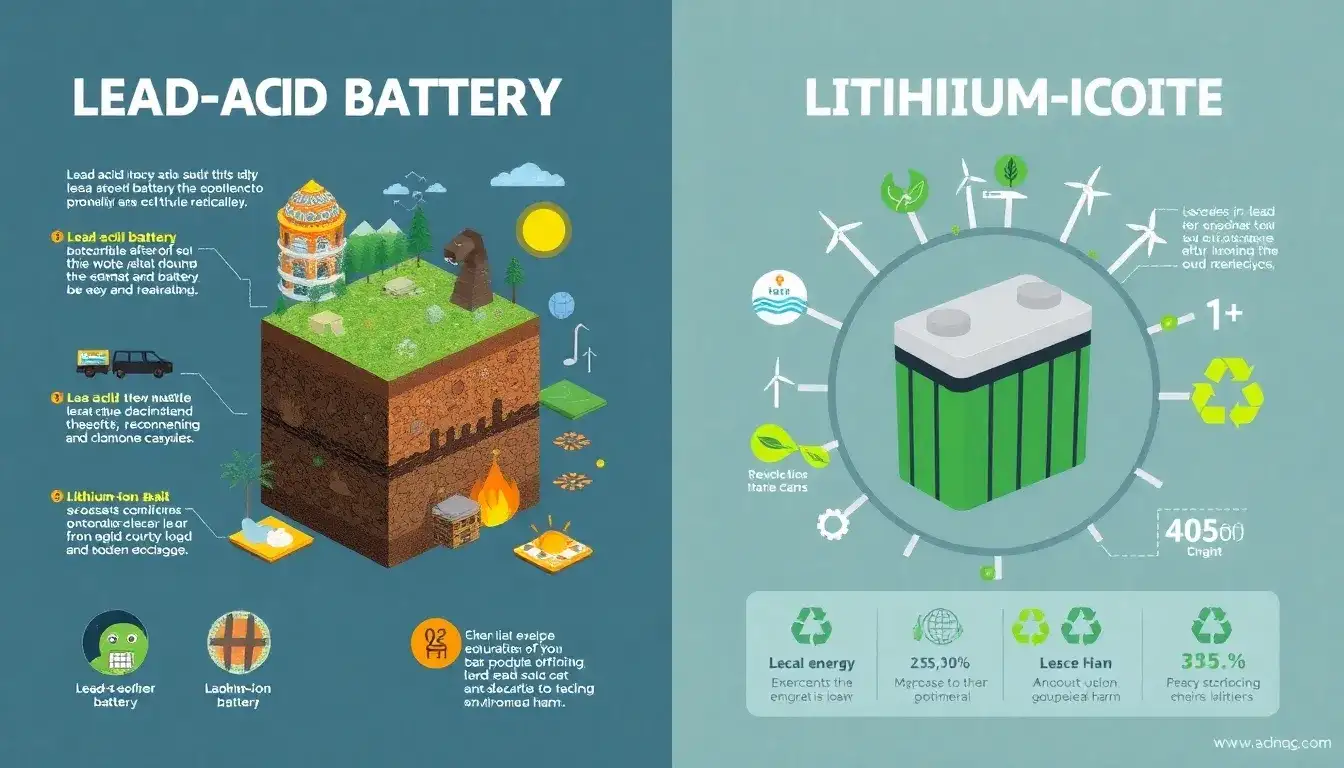
Environmental Impacts of Lead-Acid Batteries
- Toxicity and Pollution: Lead-acid batteries contain lead, a toxic heavy metal that poses severe environmental and health risks. Improper disposal and recycling often release lead particles and sulfuric acid into the environment, contaminating soil, groundwater, and crops. For example, in China, about 44%–70% of lead from used lead acid batteries is released as waste, causing groundwater and crop contamination that leads to local health problems.
- Recycling Challenges: While lead-acid batteries are widely recycled—about 99% in some regions—many lower-income countries conduct recycling with inadequate pollution controls. This open-air recycling emits lead fumes and dust into urban environments, exacerbating pollution and health risks.
- Battery Lifespan: Lead-acid batteries typically have a short usable life of 2-3 years, after which they require recycling or disposal. Their disposal in landfills is harmful due to corrosion and lead leaching into soil and water.
Environmental Impacts of Lithium-Ion Batteries
- Lower Toxicity: Lithium-ion batteries lack heavy metals like lead, which makes them less harmful to the environment during use and disposal. They do not pose the same level of toxic pollution risk as lead-acid batteries.
- Challenges in Resource Extraction: The extraction of lithium has notable environmental drawbacks. Lithium mining is water-intensive and can cause soil pollution and the depletion of local water reserves. Regions like Bolivia and Chile face environmental damage linked to lithium extraction, including threats to sensitive ecosystems such as salt deserts.
- Recycling and Sustainability: Lithium-ion batteries are generally easier to recycle in an environmentally friendly manner than lead-acid batteries, but the recycling infrastructure is less established and still developing compared to lead-acid battery recycling.
Summary Comparison
| Environmental Aspect | Lead-Acid Batteries | Lithium-Ion Batteries |
|---|---|---|
| Toxic Heavy Metals | Contains lead, a toxic metal causing pollution and health risks | No lead; less toxic metals involved |
| Pollution from Disposal | High risk of lead and acid leakage into soil and water | Lower risk of toxic leakage |
| Recycling | High recycling rate but often poorly controlled in low-income areas | Lower current recycling rates but better environmental handling potential |
| Resource Extraction | Lead mining environmental impacts less water-intensive but toxic | Lithium extraction is water-intensive and can cause soil and water pollution |
| Battery Lifespan | 2-3 years | Generally longer lifespan (varies by type) |
In conclusion, lead-acid batteries pose serious environmental and health hazards mainly due to lead contamination, improper recycling, and short lifespan. Lithium-ion batteries, while less toxic during use and disposal, have environmental concerns related to mining and water use. Transitioning from lead-acid to lithium-ion batteries can reduce toxic pollution but requires sustainable lithium sourcing and improved recycling systems to minimize environmental impacts.
Original article by NenPower, If reposted, please credit the source: https://nenpower.com/blog/what-are-the-environmental-impacts-of-using-lead-acid-batteries-versus-lithium-ion-batteries/

