

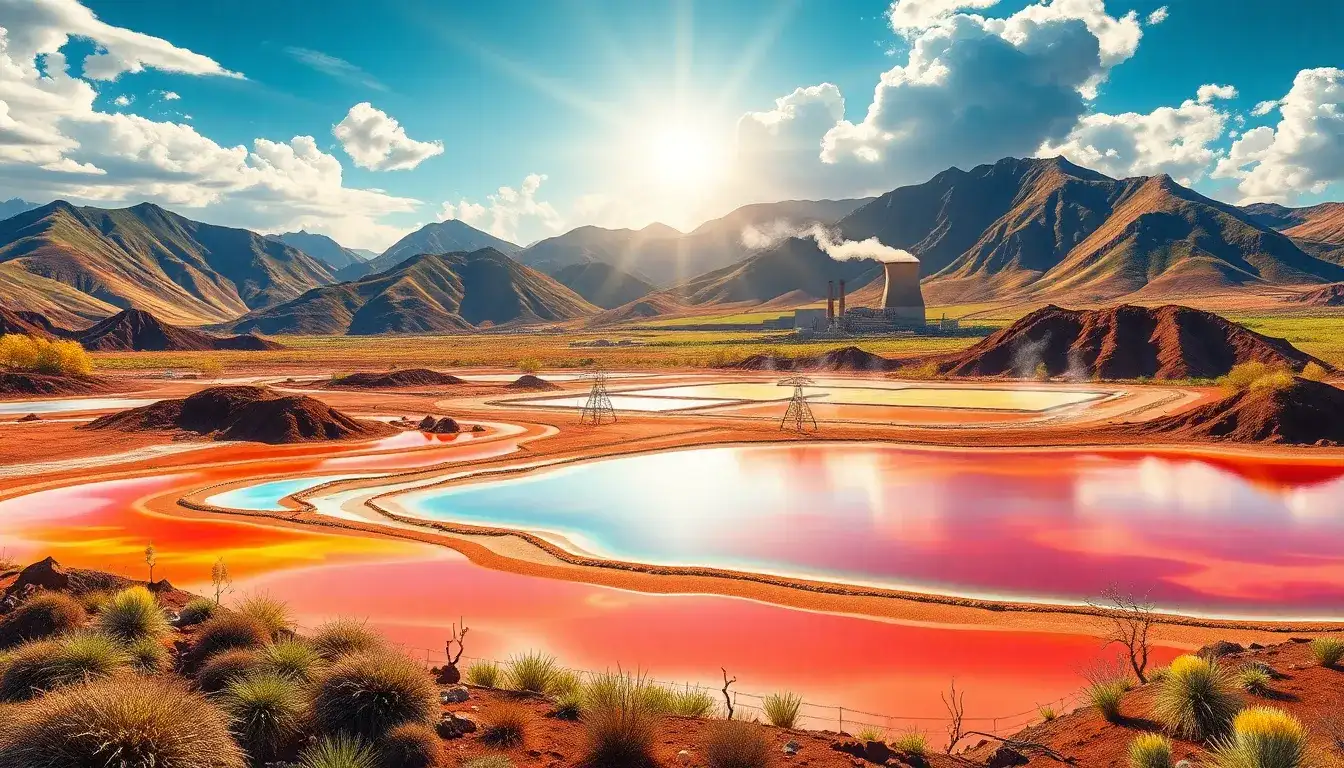
Environmental Impacts of Lithium Extraction from Geothermal Brines
Using geothermal brines for lithium extraction is considered a more sustainable alternative compared to traditional methods like open-pit mining and brine evaporation. Here are the key environmental impacts and benefits of this method:
Environmental Benefits:
- No New Land Use Required: Geothermal lithium extraction does not require additional land use since it integrates into existing geothermal power plant operations.
- Minimal Water Use: Unlike traditional methods, geothermal lithium extraction occurs within a closed-loop system, significantly reducing freshwater demand.
- Lower Carbon Footprint: Since geothermal power plants generate renewable energy, the carbon intensity of lithium extraction from their brine is lower compared to conventional methods.
- Reduced Development Timelines: This method can speed up supply to the battery market by integrating into existing facilities, reducing development timelines.
Potential Environmental Considerations:
- Solid Waste Production: While geothermal lithium extraction is generally sustainable, it can produce solid waste, although this impact is not as severe as other methods.
- Integration Challenges: The efficiency and scalability of integrating lithium extraction into existing geothermal operations might pose technical challenges that need careful management.
Overall, geothermal brine extraction offers a low-impact solution for lithium production, aligning with sustainable energy goals and reducing many of the environmental drawbacks associated with traditional lithium mining methods.
Original article by NenPower, If reposted, please credit the source: https://nenpower.com/blog/what-are-the-environmental-impacts-of-using-geothermal-brines-for-lithium-extraction/

