

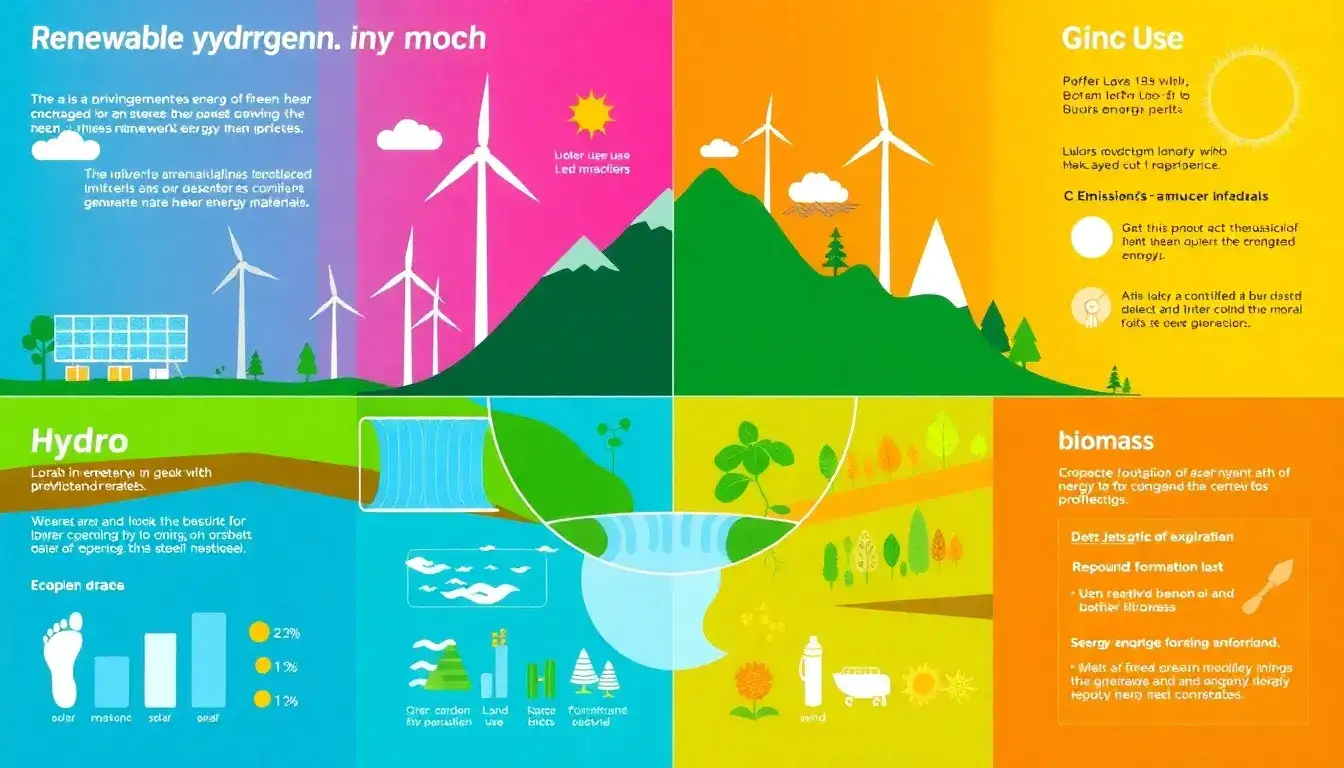
The environmental impacts of using different renewable energy sources for green hydrogen production vary primarily based on the type of renewable energy employed and the associated land, water, and ecological effects.
Core Environmental Advantage of Green Hydrogen
Green hydrogen production itself emits no direct greenhouse gases. The critical environmental factor is the source of electricity used for electrolysis — when renewable sources power electrolysis, the process is essentially emissions-free, making green hydrogen one of the most sustainable energy carriers available.
Environmental Impact by Renewable Energy Source
1. Solar Photovoltaic (PV)
- Requires significant land area to generate the necessary power, which may lead to land use conflicts.
- Large-scale solar farms may convert agricultural or natural habitats, impacting biodiversity and food security.
- Land use changes might lead to loss of natural buffers like wetlands and forests, increasing risks related to flooding, fires, and ecosystem disruption.
2. Wind Power (Onshore and Offshore)
- Offshore wind farms can impact coastal and marine habitats, potentially disrupting ecosystem services important to local communities such as fisheries.
- Onshore wind farms can also require land and may impact local wildlife and habitats, though generally less intensively than solar PV land use.
Additional Environmental Concerns Beyond Emissions
- Water Usage: Green hydrogen production via electrolysis requires large quantities of water, which poses a risk in areas facing water scarcity.
- Land Use and Habitat Change: The renewable energy infrastructure to power electrolysis often demands substantial land, potentially driving habitat destruction and biodiversity loss.
- Safety Risks: Hydrogen storage and transport pose safety risks including potential leaks, explosions, and fires, which could affect surrounding communities and the environment.
Summary Table of Environmental Impacts by Renewable Energy Source
| Renewable Source | Emissions | Land Use | Water Use | Habitat Impact | Other Risks |
|---|---|---|---|---|---|
| Solar PV | None | High | Moderate | Potential habitat loss, food security impact | Land conflicts |
| Offshore Wind | None | Moderate | Low | Possible disruption of marine ecosystems | Effects on fisheries |
| Onshore Wind | None | Moderate | Low | Local habitat disruption | Visual impact |
Conclusion
Green hydrogen produced using renewable electricity is a low-emission alternative with minimal direct GHG emissions. However, the choice of renewable source strongly influences other environmental factors such as land and water usage, impacts on biodiversity, and local community risks. Proper site selection and risk management are crucial to minimize these impacts and ensure sustainable green hydrogen development.
Original article by NenPower, If reposted, please credit the source: https://nenpower.com/blog/what-are-the-environmental-impacts-of-using-different-renewable-energy-sources-for-green-hydrogen-production/

