

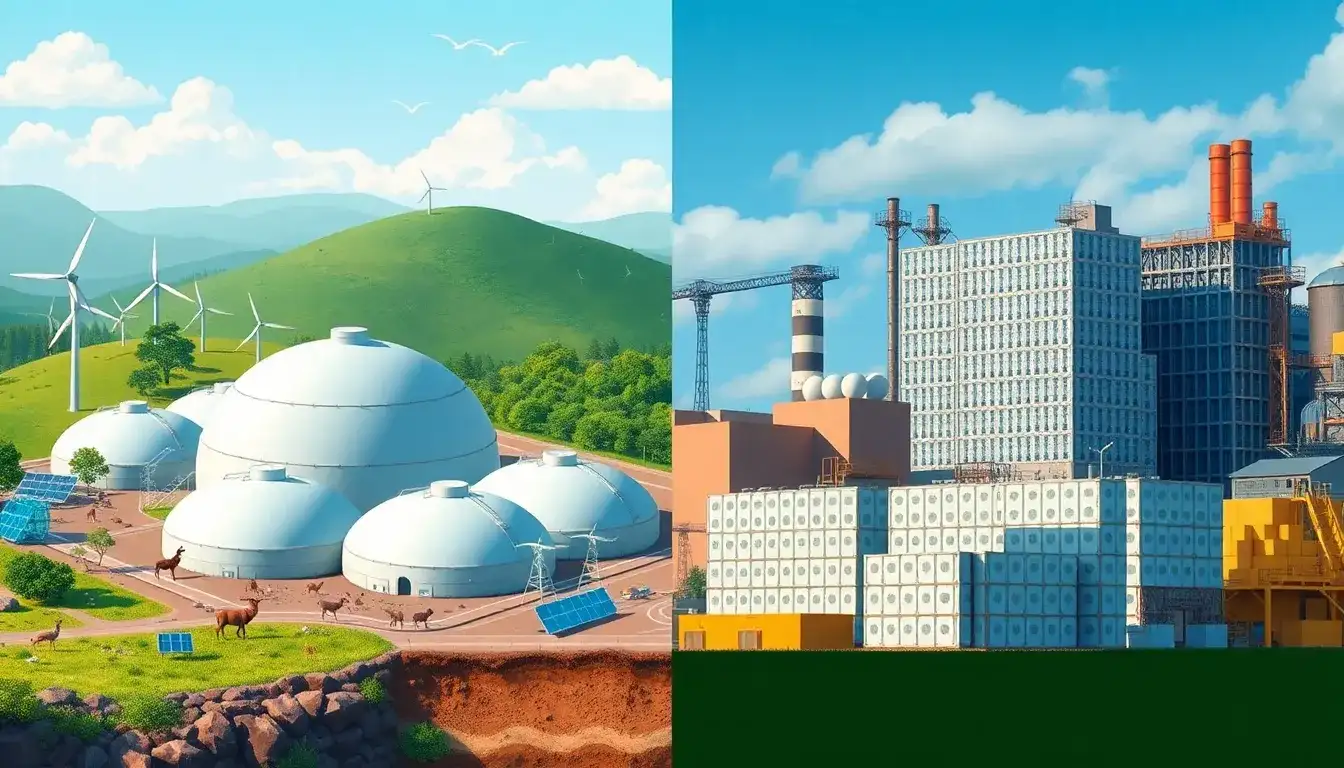
Environmental Impacts of Thermal Energy Storage (TES)
Benefits:
- Greenhouse Gas Emissions Reduction: TES can reduce greenhouse gas emissions by shifting energy consumption to off-peak hours when power plants are more efficient and cleaner. This reduces the need for peaking power plants, which are typically less efficient and more polluting.
- Water and Land Use: TES generally has low water and land use impacts, comparable to other energy storage systems.
- Emissions Reduction: By reducing peak demand, TES can help decrease emissions from power plants that would otherwise be activated during peak times.
Drawbacks:
- Material Usage: While TES can reduce emissions, it involves materials for construction and operation, though these are often less complex and less intensive than those for lithium-ion batteries.
- Efficiency Variance: The efficiency of TES systems can vary based on the application and type of storage used.
Environmental Impacts of Lithium-Ion Batteries
Benefits:
- Wide Applicability: Lithium-ion batteries are versatile and can be used in a wide range of applications from portable electronics to renewable energy systems.
- High Energy Density: These batteries offer high energy density, allowing them to store significant amounts of energy relative to their size.
Drawbacks:
- Material Extraction: The extraction of lithium, cobalt, and other metals required for battery production can have significant environmental impacts, including water pollution and habitat destruction.
- Energy Consumption and Emissions: The production of lithium-ion batteries involves high energy consumption and generates emissions, contributing to their carbon footprint.
- Recycling Challenges: While recycling technologies are advancing, the recycling of lithium-ion batteries remains challenging and less common than for other materials.
Comparison Summary
| Feature | Thermal Energy Storage | Lithium-Ion Batteries |
|---|---|---|
| Greenhouse Gas Emissions | Reduces emissions by optimizing energy use and reducing peak demand. | Contributes to emissions through production and energy consumption during use. |
| Material Usage | Less complex materials compared to lithium-ion batteries. | Requires lithium, cobalt, and other metals with significant environmental extraction impacts. |
| Efficiency and Versatility | Efficient in specific applications; less versatile than lithium-ion batteries. | High energy density and wide applicability but has recycling challenges. |
| Water and Land Use | Low impacts. | Medium to high impacts depending on mining and manufacturing processes. |
In summary, TES tends to have a lower environmental footprint in terms of emissions and material usage compared to lithium-ion batteries. However, lithium-ion batteries offer versatility and high energy density, making them critical for various applications, particularly in mobile and renewable energy sectors.
Note: The references provided do not include direct comparisons or specific emissions data for lithium-ion batteries. General knowledge about lithium-ion batteries was used to fill in those gaps.
Original article by NenPower, If reposted, please credit the source: https://nenpower.com/blog/what-are-the-environmental-impacts-of-thermal-energy-storage-versus-lithium-ion-batteries/

